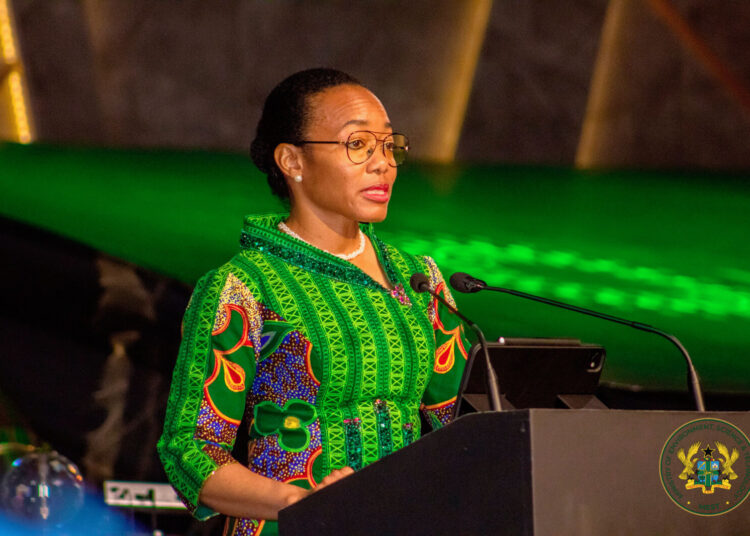
Hon. Dr. Zanetor Agyeman-Rawlings, Ghana’s Minister for Environment, Science and Technology, has issued a firm call to global industrial powers to bankroll the ecological rehabilitation of African territories scarred by decades of resource extraction.
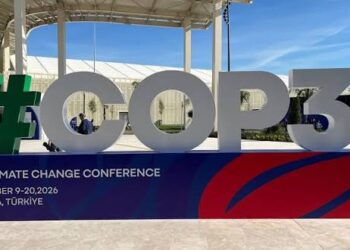
Delivering Ghana’s national statement at the Africa Day Ministerial Segment of the 31st United Nations Climate Change Conference (COP31) in Antalya, Türkiye, the Minister insisted that wealthy nations which built their economic prosperity on African ores must directly fund the revival of devastated rivers, forests, and arable lands.
Speaking in her capacity as representative of the current Chair of the African Group of Negotiators (AGN), Dr. Agyeman-Rawlings stressed that environmental remediation can no longer remain an afterthought or a voluntary corporate gesture.
Instead, she demanded that mandatory reclamation financing be legally embedded into every future bilateral and multilateral agreement governing Africa’s critical and traditional minerals, alongside fulfilling global pledges to triple climate adaptation financing by 2035.
“Those who built their prosperity on this exploitation have not treated its repair as a moral imperative. They must. Africa is not here to beg. We are here to demand a moral obligation.”
Dr. Zanetor Agyeman-Rawlings
Binding Reclamation Clauses in Mineral Agreements
For decades, the global extractives value chain has operated on an asymmetric model in which raw materials flow out of sub-Saharan Africa to fuel industrial expansion abroad, while host communities inherit depleted soils, heavy-metal-laden waterways, and deforested landscapes.
In Antalya, Dr. Agyeman-Rawlings maintained that repair funding must be “written into any agreement for Africa’s minerals,” signaling a decisive shift in how African states intend to negotiate access to transition metals such as lithium, cobalt, bauxite, manganese, and gold.

Across major mining jurisdictions from Ghana’s Birim, Pra, and Ankobra river basins to the Copperbelt of Zambia and the Democratic Republic of Congo legacy industrial pits and unregulated artisanal workings have left behind severe ecological liabilities.
In Ghana alone, degraded forest reserves and polluted water bodies have escalated raw water treatment costs and threatened cocoa-growing belts, demonstrating that post-mining land reclamation often exceeds the fiscal capacity of domestic budgets.
By linking mineral off-take agreements directly to binding restoration escrow mechanisms, the Ghanaian proposal seeks to internalize environmental costs at the point of trade rather than leaving host nations to clean up after reserves are exhausted.
Bridging the Widening Climate Adaptation Deficit
Beyond direct mine-site rehabilitation, Ghana’s intervention at COP31 targets the acute shortfall in international climate adaptation funding.
According to the United Nations Environment Programme’s (UNEP) Adaptation Gap Report 2026, developing economies will require approximately US$305 billion annually by 2035 to shield communities and ecosystems from escalating climate shocks.
However, international public adaptation finance flows reached only between US$28.2 billion and US$31.7 billion in 2024 translating to roughly 10 cents for every dollar required.
UNEP’s latest assessment further underscores that even if donor countries honour commitments to triple public adaptation finance by 2035, the resulting pool of US$85 billion to US$120 billion per year would still satisfy only 20 to 29 per cent of projected developing-world needs.
Compounding this deficit is the structure of existing disbursements; over half of all adaptation finance recorded in 2024 was extended as debt-creating loans rather than non-repayable support.
Consequently, Ghana has anchored the African Group of Negotiators’ stance on securing pure grant financing, explicitly calling for “delivery on the call to triple adaptation finance by 2035, with grant-based resources flowing to water security, forests and resilient landscapes.”
Aligning Green Minerals with Continental Resilience
The urgency behind Dr. Agyeman-Rawlings’ message is heightened by the accelerating global energy transition, which relies heavily on Africa’s estimated 30 per cent share of global critical mineral reserves.
As industrialized economies race to secure supply chains for electric vehicle batteries, solar panels, and wind turbines, African policymakers warn against repeating the historical resource curse under a green banner.
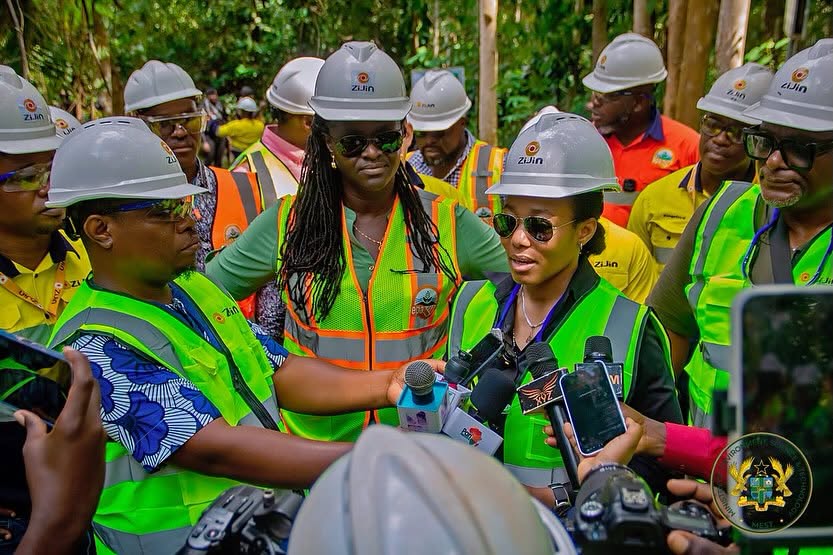
Through continental frameworks such as the African Green Minerals Strategy and the African Continental Free Trade Area (AfCFTA), Accra is advocating for a unified negotiating front that pairs domestic value addition with strict environmental safeguards.
In her broader address to delegates, the Minister underscored the mutual dependency defining modern climate diplomacy, noting that “the world needs Africa’s minerals to secure its future,” while “Africa needs the world to honour its obligations to ours”.
Without dedicated grant-backed restoration funds and enforceable environmental clauses, extractive expansion risks compounding climate vulnerability across water-stressed African basins.
For Ghana and its continental peers, ensuring that mineral beneficiaries finance ecological recovery is not merely a negotiating tactic at COP31, but an essential prerequisite for sustainable resource governance.
READ ALSO: Minority Accuses NDC of Hypocrisy Over Presidential Jet Acquisition