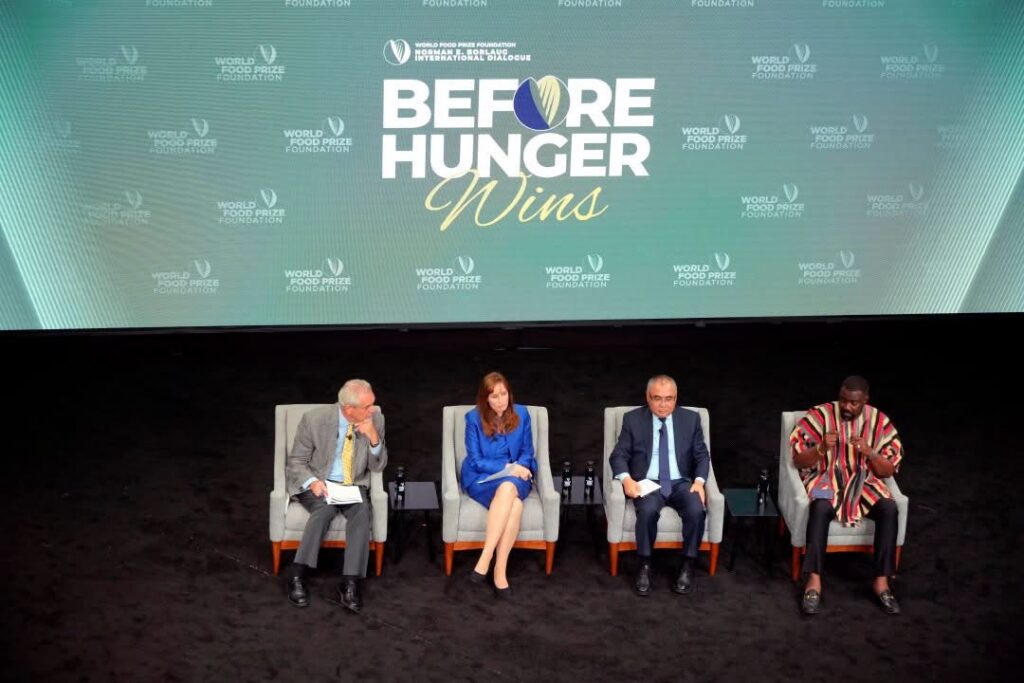
Ghana has presented its agricultural progress, investment prospects and persistent production challenges to international stakeholders at the World Food Prize Foundation in Iowa, United States, as the country seeks to strengthen partnerships capable of transforming its agrifood sector.
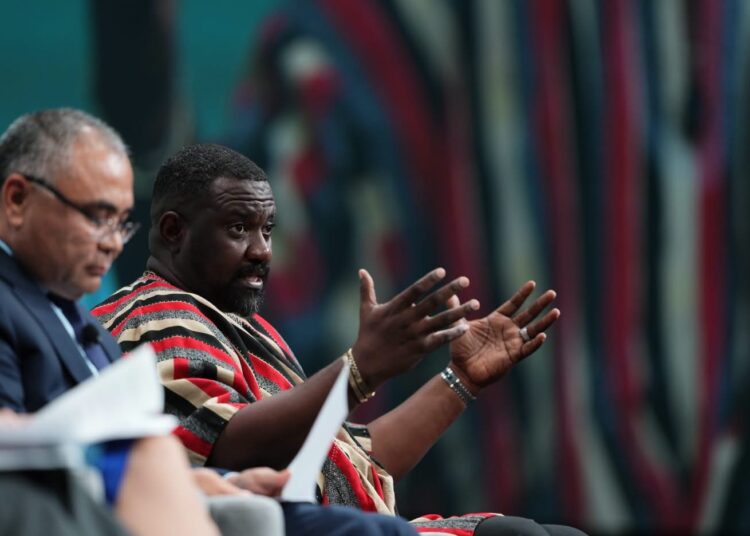
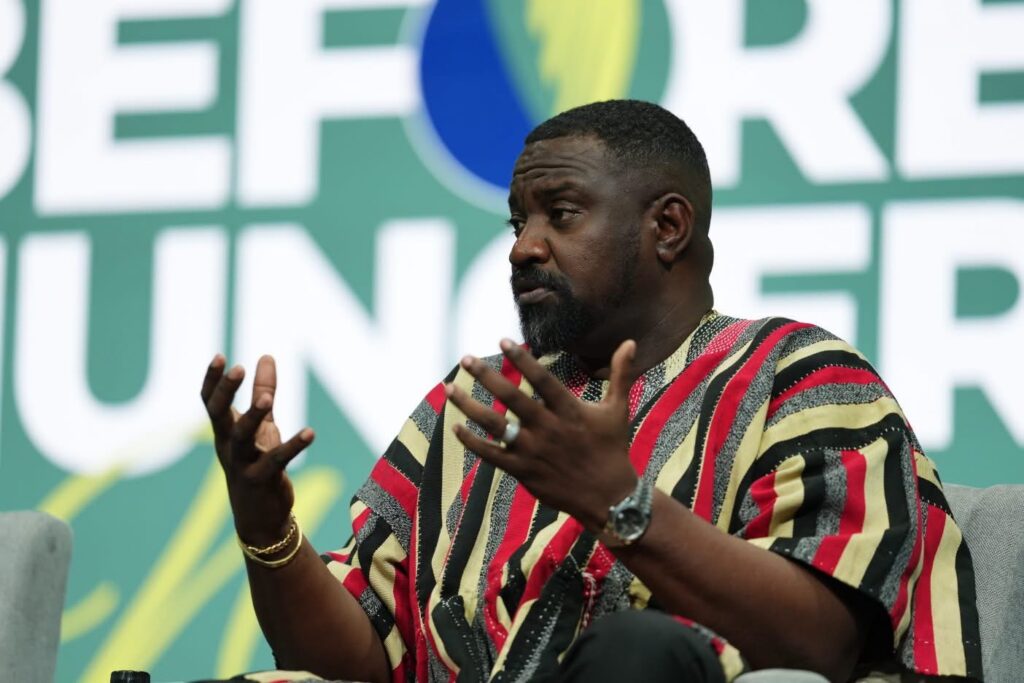
The Deputy Minister for Food and Agriculture, Hon. John Dumelo, attended the international gathering last week, where Ghana’s agricultural development agenda was presented to an audience engaged in global food security, agricultural innovation and investment.
The visit also provided an opportunity for discussions with businesspeople interested in exploring Ghana as a potential partner in agriculture. The engagements come as the government pursues increased domestic food production, improved agricultural productivity and greater private-sector participation to reduce dependence on imported food.
The World Food Prize Foundation’s 2026 Norman E. Borlaug International Dialogue took place in Des Moines, Iowa, bringing together policymakers, agricultural experts and other stakeholders to discuss solutions to global hunger and food insecurity.
“The 2026 Norman E. Borlaug International Dialogue will feature global leaders and experts addressing critical issues in food security, including intensifying conflict, climate volatility and deepening inequality.”
World Food Organization
Ghana Highlights Agricultural Progress
Ghana’s participation comes at a time when agricultural production is receiving renewed attention as a driver of economic growth, employment creation and food security.
The government’s Feed Ghana Programme, introduced in April 2025, is intended to increase domestic food production, improve the supply of essential commodities and strengthen the agricultural value chain. Its priorities include crops, poultry production and support for farmers and agribusinesses.
These developments provide a basis for presenting Ghana to international investors as a market with opportunities across agricultural production, processing, storage, distribution and technology.
The country is also targeting rice self-sufficiency by 2028. The Ministry of Food and Agriculture has announced plans to increase production through interventions such as the Regional West Africa Resilient Rice Value Chains Development Project, supported by an US$18.8 million grant from the African Development Bank.
The project is expected to develop 3,200 hectares of land for rice cultivation, improve yields from 3.5 to 4.5 tonnes per hectare and benefit more than 20,000 smallholder farmers.
“Rice self-sufficiency is targeted for 2028, with national rice production expected to reach 3.31 million metric tonnes.”
Deputy Minister for Food and Agriculture, Hon. John Dumelo
These targets illustrate the scale of production and value chain investment Ghana is pursuing. For prospective partners, the opportunities extend beyond farming to include irrigation systems, improved seeds, mechanisation, milling, packaging and access to reliable markets.
Investment Prospects Meet Persistent Challenges
The side meetings with businesspeople in Iowa were significant because agricultural transformation requires financing, technical expertise and commercial partnerships alongside government policies.
Ghana’s agricultural sector, however, continues to face structural constraints that could affect investment returns.
These include inadequate irrigation infrastructure, climate related production risks, limited mechanisation in some farming communities, post-harvest losses and gaps between primary production and processing capacity.
The Food and Agriculture Organization’s country brief on Ghana, published in August 2025, estimated cereal production in 2024 at approximately 6.2 million tonnes, around 27 per cent above the average of the preceding five years.
However, the FAO also highlighted the effects of dry spells on crop production and reported that approximately two million people faced acute food insecurity between June and August 2025.
“The 2024 aggregate cereal production is officially estimated at about 6.2 million tonnes, approximately 27 percent above the average of the previous five years.”
Deputy Minister for Food and Agriculture, Hon. John Dumelo
The findings demonstrate why sustained productivity gains must be accompanied by measures that protect farmers against unpredictable weather and improve the resilience of food supply chains.
Expanding irrigation, strengthening agricultural research, improving access to finance and investing in storage could help reduce production risks while making agricultural enterprises more attractive to investors.
Ghana’s investment proposition will therefore depend not only on the availability of agricultural land and demand for food, but also on the reliability of infrastructure, access to inputs, market arrangements and the capacity of businesses to operate profitably.
Partnerships Could Accelerate Transformation
The Iowa engagement offers an opportunity to connect Ghana’s agricultural priorities with international expertise and commercial capital.
The importance of such partnerships is reinforced by the sector’s contribution to the national economy. Ghana Statistical Service figures reported by March 2026 showed that agriculture accounted for 22.8 per cent of gross domestic product in 2025.
The sector’s economic significance makes improvements in productivity and value addition relevant not only to food security but also to employment, industrial development and export earnings.
The Iowa visit has provided a platform to present the country’s agricultural ambitions and engage potential commercial partners. Whether those discussions generate lasting benefits will depend on follow-up negotiations and the development of investments capable of addressing production constraints while strengthening local value chains.
READ ALSO:CDD-Ghana Fellow Questions Leniency in NDA’s Procurement Scandal Convictions