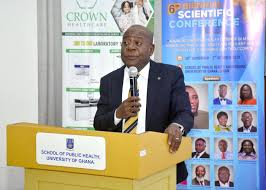
The Pro-Vice-Chancellor for Research, Innovation and Development at the University of Ghana, Professor Samuel Nii Ardey Codjoe, has called for stronger pathways to translate African scientific research into practical solutions for industry, healthcare and agriculture.
Speaking at the official opening of the 2026 Africa Research Chairs Initiative at the University of Ghana, Legon, Professor Codjoe urged universities, governments, research institutions, industry and development partners to deepen collaboration so that research findings can support productive enterprises, improve public services and advance sustainable development.
“Our scientific output has grown yet too little of its reaches the markets. The clinic, the farm or the factory floor.”
Professor Samuel Nii Ardey Codjoe
Professor Codjoe stated that African institutions must strengthen the links between scientific discovery and its practical application, arguing that unclear and underfunded pathways often prevent research from delivering its full value to society.
University Research Must Drive Societal Transformation
Welcoming participants on behalf of the University of Ghana Council, management, faculty, staff and students, Professor Codjoe described the gathering as an important opportunity to affirm the role of research, innovation and economic collaboration in Africa’s development.
He welcomed chairs and partners from Botswana, Burkina Faso, Mozambique, Tanzania, Uganda and Zambia, noting that their participation reflected a shared commitment to building research capacity across the continent.
“Research must move beyond academic publications to deliver practical solutions that improve lives, strengthen industries and drive sustainable development across Africa.”
Pro-Vice-Chancellor for Research, Innovation and Development at the University of Ghana, Professor Samuel Nii Ardey Codjoe
Ghana hosts two chairs under the initiative: the Chair in Food Security at the University of Ghana and the Chair in Technology, Entrepreneurship and Youth Employability at the Kwame Nkrumah University of Science and Technology. Professor Codjoe also welcomed colleagues from KNUST, highlighting the range of themes supported by the programme.
He explained that the two Ghanaian chairs connect research on food systems with work on the enterprises and ideas that young Africans can develop. Their presence, he added, demonstrated the initiative’s focus on partnerships between South Africa and other African countries.
Professor Codjoe described the gathering as evidence of a collective commitment to ensuring that each generation of Africans develops home-grown solutions while contributing confidently to the global scientific community.

Closing the Gap Between Research and Industry
The Pro-Vice-Chancellor observed that scientific output had increased, but the route from laboratory findings to commercial and public use remained weak. He identified unclear, underfunded pathways as a major challenge in moving discoveries from academic settings into markets and essential services.
He stressed that universities could not limit their responsibilities to teaching and publishing scholarly work. Instead, they must act as catalysts for societal transformation, provide reliable evidence for public policy, partner with industry and create opportunities for talent and ideas to flourish.
“University must also serve as a catalyst for societal transformation, a trusted source of evidence for public policy, a partner to industry and a platform for nurturing the talent and ideas that will shape the future.”
Pro-Vice-Chancellor for Research, Innovation and Development at the University of Ghana, Professor Samuel Nii Ardey Codjoe
Professor Codjoe stated that the University of Ghana viewed hosting the initiative as both an honour and a responsibility. He explained that the institution was committed to strengthening research excellence, promoting international partnerships, supporting emerging scholars and ensuring that knowledge generated on campus contributed to tangible improvements in people’s lives.
Partnerships Key to Africa’s Innovation Agenda
Professor Codjoe pointed to collaboration with the Ministry of Environment, Science and Technology and the Kwame Nkrumah University of Science and Technology as an example of institutional cooperation supporting Ghana’s science, technology and innovation agenda.
He called for governments, universities, research institutions, businesses and development partners to work together to build a research ecosystem in which promising ideas receive the support required to develop.
Under such a system, he explained, discoveries should have clear routes to application, while research outputs should help establish productive enterprises, strengthen public services and contribute to sustainable development.
The initiative, he noted, represents an investment in Africa’s intellectual capital through support for research leadership, stronger institutional capacity and expanded opportunities for collaboration. These efforts can help establish the foundations for a continent increasingly driven by knowledge, research and innovation.

The opening ceremony also underscored the importance of linking academic expertise with enterprise, encouraging participants to consider how scientific work can produce economic and social outcomes.
Professor Codjoe’s call placed universities at the centre of that effort, urging them to connect researchers with industry and public institutions so that findings can move beyond academic publications and address practical needs.
The 2026 Africa Research Chairs Initiative brings together participating chairs and partners from across the continent. Its focus on research capacity and collaboration reflects a broader effort to strengthen African-led knowledge production and support solutions shaped by the needs and opportunities of African communities.
READ MORE: Evacuees Deny Claims of Unequal Payments After Repatriation