Japanese Prime Minister, Sanae Takaichi has announced the establishment of a new Disaster Management Agency, describing it as a central pillar of the government’s efforts to protect lives, strengthen emergency preparedness and build a more disaster-resilient country.
In a post on X, Takaichi said that she attended the agency’s inauguration ceremony and addressed its staff, stressing that protecting the lives and livelihoods of citizens was one of the government’s most important responsibilities.
Japan has experienced numerous natural disasters that have claimed lives and damaged communities. Takaichi said that although natural hazards cannot be prevented entirely, advance preparation and effective mitigation measures can reduce their impact.
“Protecting the lives and livelihoods of the people is one of the nation’s most important duties.
“Our country has been struck by numerous disasters in the past, and each time, precious lives have been lost. In the face of looming national-scale disasters like the ‘Nankai Trough Earthquake,’ we cannot prevent natural disasters themselves, but we can reduce the damage through prior preparations.”
Sanae Takaichi
The Japanese Prime Minister described the agency as a command centre responsible for coordinating disaster management across the government, covering preparations before disasters, immediate emergency response, evacuation shelter arrangements, the distribution of essential supplies, and eventual recovery and reconstruction.
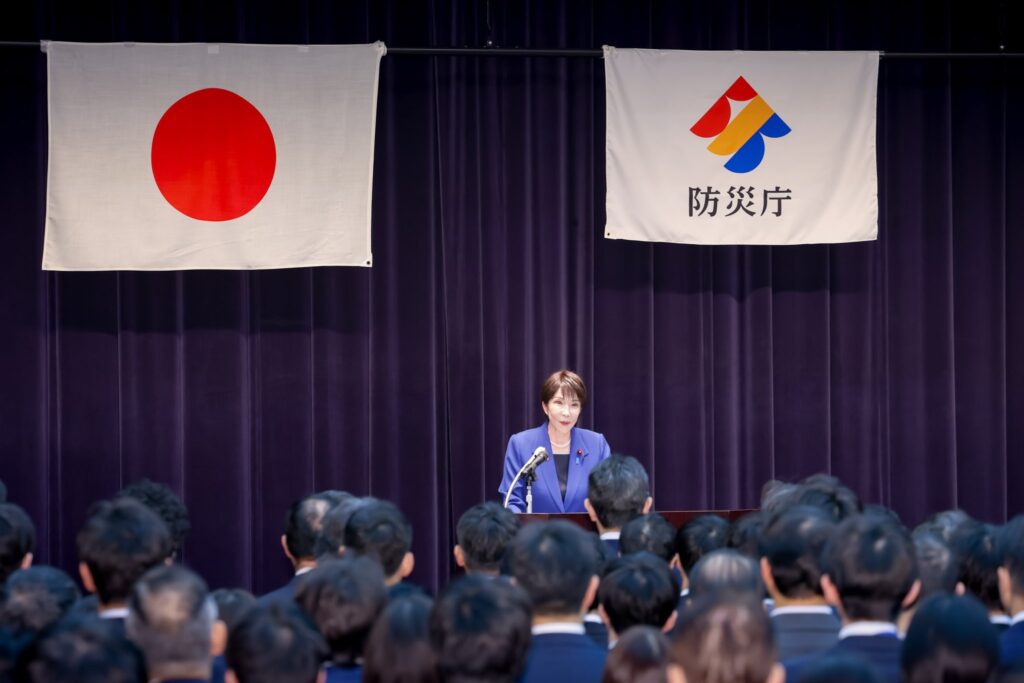
According to Takaichi, the agency will work to address gaps in disaster preparedness, strengthen coordination among government institutions and ensure that regional risks are not overlooked.
She said it would also improve disaster response capabilities through closer cooperation among relevant organisations, including during periods when no emergency is taking place.
Another priority will be improving conditions in evacuation shelters and providing more coordinated support to communities affected by disasters. The agency is expected to remain involved from the initial emergency response through recovery and reconstruction, offering a central point of contact for affected areas.
Takaichi also emphasised the importance of collaboration beyond government institutions. She said the agency would encourage stronger partnerships among businesses, universities, non-profit organisations, volunteers and other members of civil society.
The approach is intended to bring together expertise and resources from different sectors to improve preparedness and strengthen the country’s ability to respond when disasters occur.
Disaster Preparedness As A Growth Strategy
Beyond emergency management, Takaichi presented disaster resilience as part of her broader ambition to make Japan stronger and more prosperous.
She said that the government would seek to develop the disaster prevention industry into a driver of economic growth while promoting Japanese knowledge, products, services and infrastructure internationally.
The initiative signals an approach that links public safety with technological development and economic opportunity. By encouraging cooperation between government, academia, industry and civil society, the agency is expected to support the development and wider application of disaster prevention measures.
Japan’s experience with earthquakes and other natural hazards has made disaster preparedness an important part of its public policy. The establishment of the agency reflects the government’s stated intention to strengthen coordination across the different stages of disaster management rather than treating preparation, emergency response and reconstruction as separate responsibilities.
Government Pledges Comprehensive Preparedness
Takaichi warned that disasters could strike at any time and called for a sustained commitment to protecting citizens. “Disasters can strike at any moment, even today,” she said, reaffirming the government’s determination to safeguard lives and livelihoods.
“We will protect the lives and livelihoods of the people without fail. To that end, we will make no compromises. With this resolve, we aim to become the world’s leading disaster-resilient nation, with the entire government united in giving its all.”
Sanae Takaichi
Disaster Management Minister Goshi Hosono addressed a press conference after a Cabinet meeting today, making “urgent requests” to the public, local governments and central government ministries and agencies.
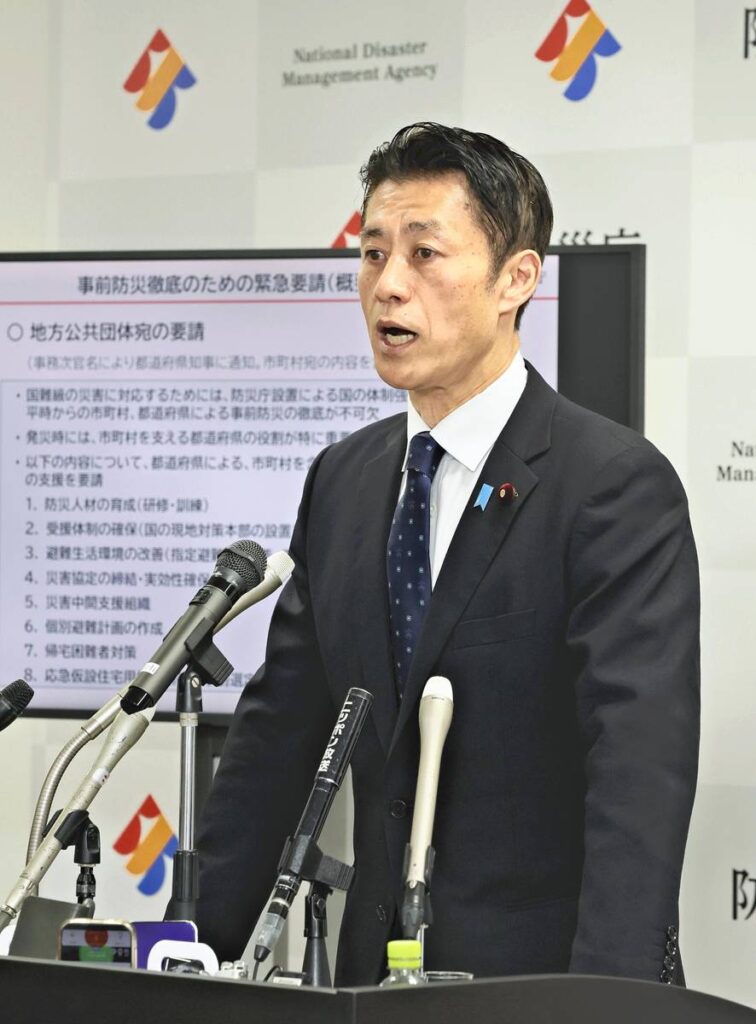
His requests for the public included having an at least three-day and preferably one-week stockpile of water and food, carrying out earthquake-resistant retrofits on residences and furniture, and confirming evacuation sites and routes.
Hosono urged prefectural and municipal governments to review the implementation of measures to improve the conditions in evacuation centers and related to people unable to return home. Among his requests made to government ministries and agencies was the furthering of measures to prepare for a Nankai Trough megaquake and a major earthquake centered directly beneath Tokyo, including the reduction of areas where wooden houses are concentrated. The Minister will request relevant reports be filed by the end of the year.
The agency’s establishment places emphasis on disaster prevention, emergency coordination and long-term recovery. Its work will focus on strengthening preparedness before disasters occur while ensuring that communities receive coordinated support when emergencies strike and during the process of rebuilding.
However, the effectiveness of the new institution will depend on how its responsibilities are implemented, how well it coordinates with existing organisations and whether preparedness measures translate into improved protection for communities.
READ ALSO: Belgian Premier Resigns After Failed Budget Negotiations