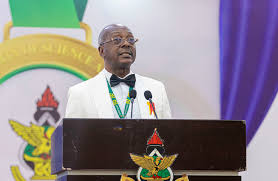
The Dean of the Kwame Nkrumah University of Science and Technology (KNUST) School of Veterinary Medicine, Prof. Benjamin Emikpe, has said government support extended to the school has placed it firmly on a path toward long-term sustainability, crediting strong institutional leadership with converting limited funding into meaningful, lasting gains.
Speaking on the school’s progress, Prof Emikpe said that while the level of government support given to the veterinary school has been modest, effective leadership has ensured that even this limited backing has produced tangible results in positioning the school toward eventual self-sufficiency.
Prof Emikpe was candid in acknowledging that the support extended by government to the School of Veterinary Medicine has not been extensive, but stressed that the quality of leadership guiding the institution has played a decisive role in maximising the impact of the resources made available.
“The government should give us all the support, the little support that has been given to veterinary has, through leadership, positioned us to be moving towards sustainability,”
Prof. Benjamin Emikpe
Sustainability Framed as the Real Measure Of Success
Central to Prof Emikpe’s submissions was his argument that government support should not be evaluated solely on the basis of how much funding is disbursed, but on how effectively institutions convert that funding into self-sustaining outcomes.

He argued that many development projects across various sectors ultimately fail not because they lack initial funding, but because they are not designed with a clear sustainability agenda from the outset.
“How much of this money have we turned around to make us self-sustainable, many projects are dying because they do not have a sustainability agenda,”
Prof. Benjamin Emikpe
He pointed to KNUST’s own approach as a demonstration that sustainability can be built into institutional planning from an early stage, arguing that this focus has become an important signal of the school’s broader institutional maturity.
Moving From Greatness To Eminence
Prof Emikpe framed the school’s progress in terms of an evolving institutional ambition, describing a shift from simply being a great academic institution to becoming what he termed an “eminent” one.
He explained that this transition reflects a deeper institutional consciousness, one that goes beyond global recognition alone to actively prioritise sustainability, value for money, and long-term institutional resilience.
According to him, this shift in mindset also extends to leadership succession, with the school placing deliberate emphasis on ensuring that its progress is not tied to individual leaders alone, but is supported by structured succession planning capable of sustaining institutional gains well into the future.
Model Institutions Can Learn From
Prof Emikpe suggested that KNUST’s approach to sustainability within the veterinary school offers a broader lesson for how public institutions in Ghana might rethink their relationship with government funding.
Rather than treating financial support as an end in itself, he argued that institutions should treat it as a foundation for building systems capable of enduring beyond the immediate funding cycle.
He maintained that this emphasis on sustainability, combined with a conscious effort to demonstrate value for money, positions the School of Veterinary Medicine not merely as a beneficiary of government support, but as a model of how limited public resources can be strategically deployed to achieve long-term institutional stability.
Despite highlighting the progress achieved so far, Prof Emikpe maintained that continued government support remains necessary for the school to build further on its current trajectory.
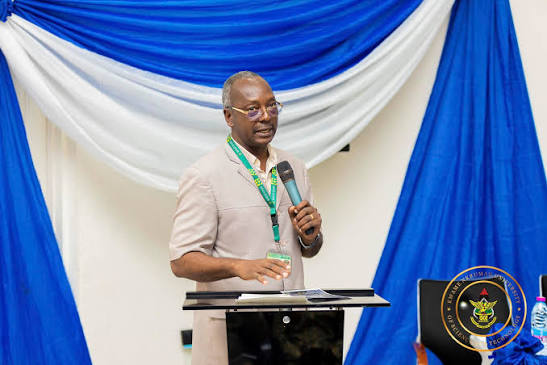
He reiterated his call for government to extend whatever support it can toward the veterinary school, expressing confidence that, guided by the same standard of leadership that has driven progress thus far, such support would continue to be channelled effectively toward strengthening the institution’s long-term sustainability and academic standing.
READ MORE: CSSPS Explains Placement Formula as 55,000 Excluded Candidates Get Reprieve