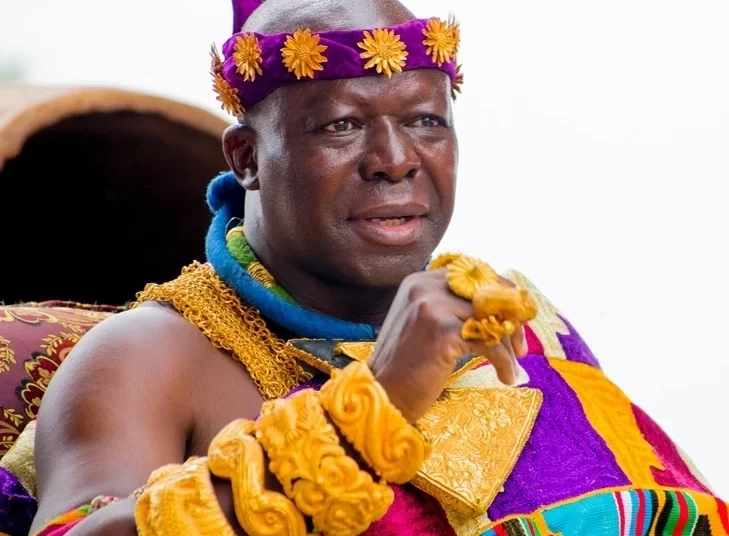
The Chancellor of Kwame Nkrumah University of Science and Technology (KNUST) and Asantehene, Otumfuo Osei Tutu II, has issued a strong warning to chiefs, individuals, and legal practitioners against attempts to lay claim to lands belonging to the university.
Addressing concerns over recurring disputes involving portions of KNUST lands, the Asantehene stressed that the property remains vested in the Golden Stool and has been dedicated to the university for its academic mission and future development.
He cautioned that efforts to challenge the ownership of the land through the courts would not be tolerated. His remarks come amid growing concerns over land litigation and encroachment involving institutional lands, particularly within rapidly developing areas around the KNUST enclave in Kumasi.
Land Vested in the Golden Stool
Otumfuo Osei Tutu II stated that chiefs have an important responsibility in safeguarding lands under their authority and ensuring that such properties are not subjected to disputes that undermine public institutions.
“The lands belong to the Golden Stool. The chiefs are critical because the lands are all vested in the Stool,” he said. The Asantehene emphasized that the ownership and status of KNUST lands should not be a matter of uncertainty.

According to him, any attempt by individuals to pursue ownership claims over lands already allocated to the university undermines established arrangements and threatens the institution’s long term development.
“Anyone within the KNUST or wherever it is who condones for people to take matters of land to court, just because you can get a judgment of over a thousand acres of the university land for you to go and sell it wherever, I say no” .
Asantehene, Otumfuo Osei Tutu II
Concern Over Legal Challenges
The Asantehene also directed criticism at legal practitioners who support claims over university lands despite being aware of the status of such properties. He questioned why trained professionals would assist litigants seeking ownership rights over lands designated for a public university.
“And I wonder why some lawyers would want to do that when you are also a trained professional,” he said. Otumfuo argued that professionalism should not simply be measured by the willingness to pursue every case brought before a court.
Instead, he suggested that legal practitioners should exercise sound judgment, particularly when dealing with matters involving public institutions and lands whose ownership is widely known.

According to him, lawyers have a duty to uphold professional standards and should carefully consider the broader implications of legal actions that may affect educational institutions and national assets.
“With all due respect, professionalism does not necessarily mean that any case at all has to be taken to court when you know that this land is for the university”.
Asantehene, Otumfuo Osei Tutu II
Protecting a Strategic National Asset
The Asantehene’s comments highlight the importance of protecting lands reserved for higher education and public development. KNUST remains one of Ghana’s leading public universities and continues to expand its academic, research, and infrastructure footprint to meet growing demand for tertiary education.
Land disputes involving educational institutions have often raised concerns about encroachment, unauthorized development, and prolonged litigation that can affect institutional planning and investment.
By reaffirming the status of KNUST lands, Otumfuo signaled his determination to safeguard the university’s territorial integrity and prevent actions that could compromise its future growth.
His intervention also underscores the influential role traditional authorities continue to play in land administration and dispute resolution within Ghana, particularly in areas where customary ownership and public interest intersect.

Firm Position Against Future Encroachment
Otumfuo Osei Tutu II concluded his remarks with a firm warning to individuals pursuing ownership claims over university lands, making it clear that he would resist any such efforts regardless of the circumstances.
“Therefore, those who are attempting to do that, I am not going to allow that no matter what,” he said. The statement reinforces the Asantehene’s position that KNUST lands must remain protected from private claims and litigation that could undermine the institution’s mandate.
As debates over land ownership and development continue in various parts of the country, the Asantehene’s remarks are likely to renew discussions on the protection of public lands and the responsibilities of traditional leaders, legal professionals, and state institutions in preserving assets dedicated to national development.
READ ALSO: UK UNGOVERNABLE? The Legislative Cure to Political Stability