
The Coordinator for the Computerised School Selection and Placement System (CSSPS), Sherif Sulemana, has provided a detailed technical explanation of how this year’s Senior High School placement process works, following concerns over candidates initially excluded for scoring a grade nine in core subjects, and questions raised over the tie-breaking mechanism used when multiple candidates compete for the same limited school spaces.
Speaking on the ongoing placement exercise, Sulemana confirmed that government has moved to address the situation of more than 55,000 candidates who, under the initial run of the placement system, would have been excluded from placement entirely for obtaining a grade nine in English Language or Mathematics.
According to Sulemana, the Deputy Minister for Education had briefed the country on the release of school placement results, providing details on the number of candidates placed, the current vacancy situation, and specifically on the candidates affected by the grade nine exclusion criteria.
He confirmed that the Ministry, keen to ensure that no prospective secondary school candidate is deliberately left out of the system, has intervened to provide a pathway for the affected 55,000 candidates to be incorporated into the placement process.
Explaining The Ranking and Placement Formula
“Every candidate deserves a fair opportunity. The goal of the CSSPS is to ensure that no student is left behind, while making placement decisions based on merit, available spaces, and clearly defined criteria.”
Sherif Sulemana

He clarified that this means affected candidates would largely be placed into day schools, noting that while some schools have available boarding facilities and classroom space, the numbers of such spaces remain relatively low, limiting the placement options available within that specific track.
Sulemana was also asked to address the persistent mismatch between candidate preferences and available vacancies, particularly concerning Category A schools.
He acknowledged that approximately 313,000 candidates had applied to Category A schools, against a total of only about 76,000 available spaces within that category, noting that releasing examination results ahead of school selection had not resolved this underlying imbalance as had been anticipated.
Providing a detailed breakdown of how placements are determined, Sulemana explained that candidates are first ranked based on their aggregate scores, ranging from six at the top to fifty-four at the lower end, before being matched against their school and programme choices, alongside available space, including residential capacity.
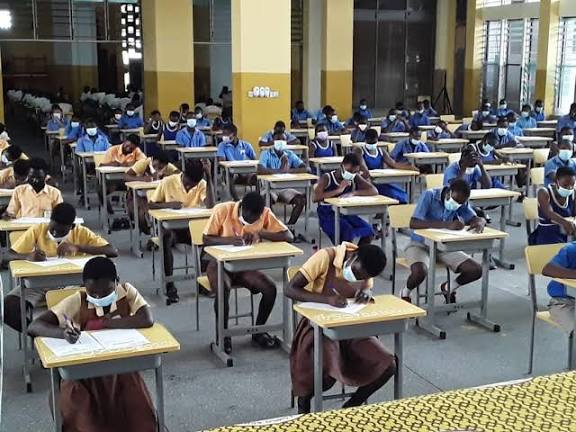
He explained that where two candidates with differing aggregate scores compete for the same school, preference is given to the candidate with the lower, and therefore stronger, aggregate score.
However, in cases where two candidates hold identical aggregate scores, the system then turns to their raw scores to differentiate between them and determine placement priority.
Tie-Breaking Mechanism and English Language Priority
Sulemana further explained that where candidates share both an identical aggregate score and an identical raw score, the system defaults to comparing their raw score specifically in English Language, with the candidate holding the higher English score given priority in placement.
Only where English scores are also identical does the system then turn to Mathematics as the next differentiating factor.
When pressed on why English Language, rather than a subject more directly relevant to a chosen programme such as Science or Mathematics, is used as the primary tie-breaker, Sulemana engaged directly with the concern, acknowledging that the mechanism could be viewed as potentially unfair for candidates applying to science-related programmes.

Where subjects such as Mathematics or Integrated Science might arguably serve as more relevant differentiators than English Language performance alone.
The exchange highlighted an area of the placement methodology that continues to draw scrutiny from stakeholders, particularly candidates and parents seeking greater clarity on how fine-margin placement decisions are ultimately made within Ghana’s centralised school selection system.
READ MORE: Eduwatch Raises Policy Concerns Over 54,985 Unplaced BECE Candidates