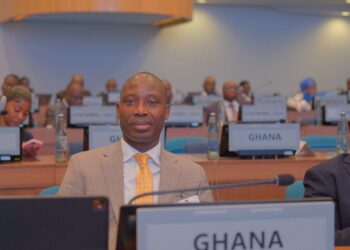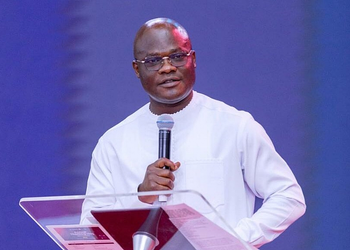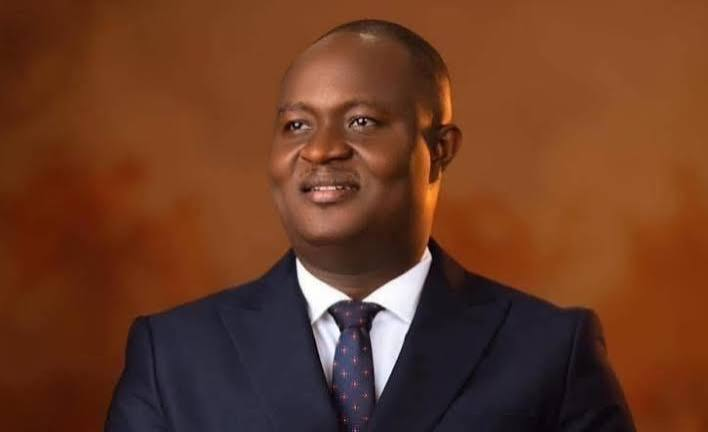
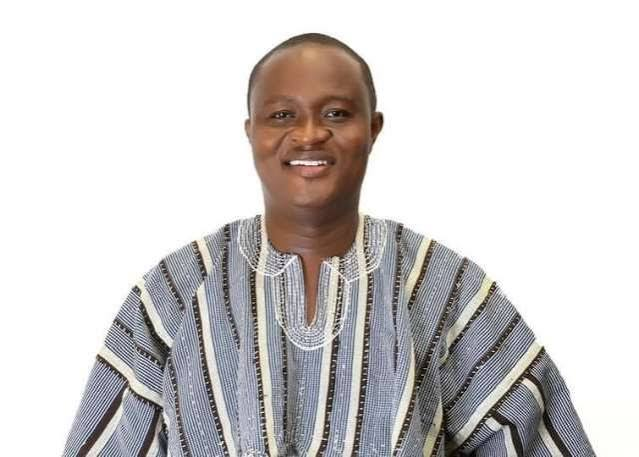
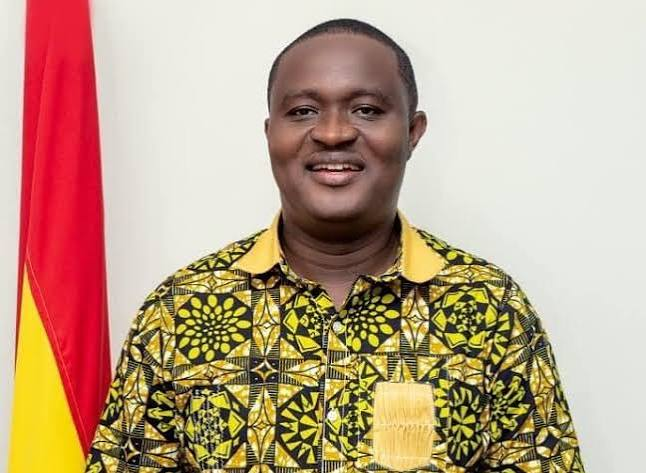
New Patriotic Party (NPP) Communications Team member, Kwasi Kwarteng, has argued that abolishing the Free Senior High School (Free SHS) policy would not automatically guarantee increased funding for basic education, pushing back against suggestions that scrapping the programme would resolve financing challenges facing Ghana’s basic education sector.
Speaking on the matter, Kwarteng maintained that there is no assurance that resources currently allocated to Free SHS would be redirected toward basic education should the policy be discontinued, describing the assumption underlying such proposals as fundamentally flawed.
Kwarteng was direct in questioning the logic behind calls to abolish Free SHS as a means of addressing basic education’s funding needs, arguing that there is no built-in mechanism ensuring that any freed-up resources would automatically flow toward the basic education sector.
“If Free SHS were abolished today, what guarantees that those resources would automatically flow to basic education? None,”
Kwarteng
Response To Eduwatch’s Funding Inequality Assessment
Kwarteng’s comments followed an earlier assessment by Africa Education Watch (Eduwatch), whose Executive Director, Kofi Asare, had argued that the implementation of Free SHS had worsened funding inequality between secondary and basic education in Ghana.
According to Eduwatch’s analysis, the expansion of secondary education under the Free SHS policy has resulted in significantly more resources being channelled toward secondary education compared to the basic education level.
While Kwarteng did not dispute the broader concern over underfunding at the basic level, he firmly rejected the suggestion that reducing spending on Free SHS would necessarily resolve the challenges facing basic education financing.
Rejecting Free SHS As A “Scapegoat”
Kwarteng argued that resource allocation decisions depend on a wide range of broader factors, including overall government revenue, national spending priorities, administrative efficiency, and deliberate expenditure choices made across the public sector, rather than being determined solely by the existence of the Free SHS policy.
“Free SHS cannot therefore become the convenient scapegoat for every historical weakness in basic education financing,”
Kwarteng
Kwarteng further disputed attempts to draw a direct causal relationship between the introduction of Free SHS and the underfunding of basic education, pointing out that secondary education already accounted for a significant share of national education expenditure even before the policy was introduced in 2017.
He maintained that while basic education requires significantly greater investment, the challenges facing the sector cannot be attributed solely to the Free SHS policy.
Higher Per-Student Costs at SHS Level Explained
Addressing comparisons of spending levels between the two tiers of education, Kwarteng argued that higher expenditure per student at the secondary level does not necessarily indicate neglect of basic education.
He noted that secondary education inherently involves additional costs not typically associated with basic schooling, including boarding, feeding, laboratory equipment and other specialised facilities.
According to him, the more important consideration is whether the level of funding allocated to basic education is sufficient to provide acceptable learning outcomes, rather than simply comparing expenditure between the two levels.
Call For Investment Across Both Levels
Rather than framing the issue as a binary choice between Free SHS and stronger basic education financing, Kwarteng called for increased investment across the entire education system, arguing that Ghana need not sacrifice one level of education to strengthen the other.
He maintained that the country can pursue accessible secondary education while simultaneously strengthening the basic education sector through increased investment and improved resource allocation.
Kwarteng’s position therefore centres on the need for a broader approach to education financing, rather than treating the abolition of Free SHS as an automatic solution to the funding challenges confronting basic education.
His argument also shifts attention toward the wider question of government revenue, spending priorities and the effectiveness with which resources are distributed across the education system.
Ultimately, Kwarteng maintained that Ghana should not have to choose between strengthening the foundations of basic education and maintaining access to secondary education, but should instead pursue adequate investment across both levels to improve outcomes throughout the education system.
READ MORE: KNUST Veterinary School Credits Government Support for Driving Long-Term Sustainability