Government has reiterated its commitment to leveraging economic zones and manufacturing clusters as strategic instruments to accelerate industrialization, boost exports and create decent, sustainable jobs for Ghanaians.
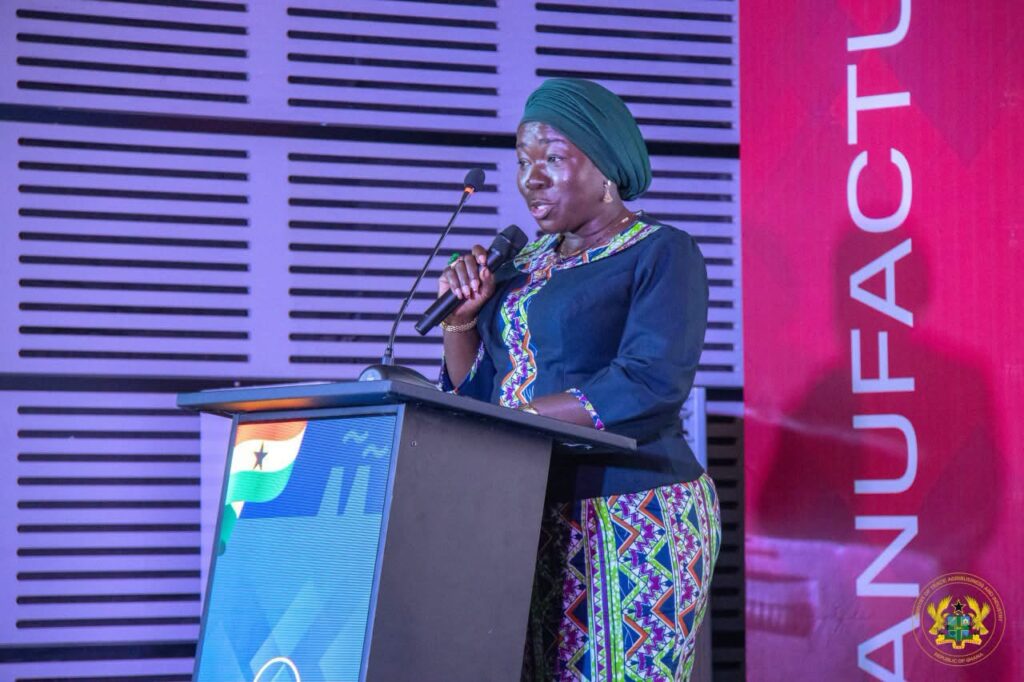
The assurance was given by the Minister for Trade, Agribusiness and Industry, Hon. Elizabeth Ofosu-Adjare, on behalf of the Vice President of the Republic, H.E. Prof. Jane Naana Opoku-Agyemang, at the 2026 Economic Zones Chamber Policy Roundtable in Accra.
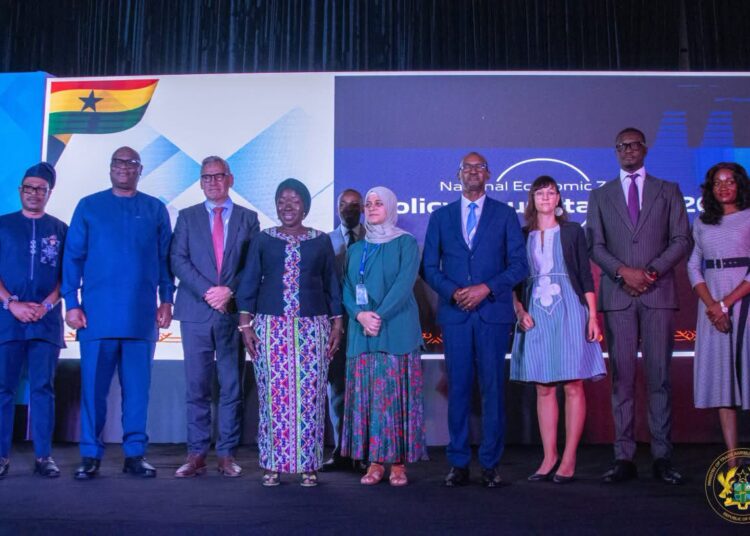
The roundtable, convened by the Economic Zones Chamber in collaboration with the Ghana Free Zones Authority (GFZA), the Ghana Investment Promotion Centre (GIPC) and other trade facilitation agencies, assembled policymakers, investors, industrialists, development partners and members of the diplomatic community to chart a new path for making Ghana’s economic zones more competitive, inclusive and employment focused.
Delivering the Vice President’s keynote address, Hon. Ofosu-Adjare said government recognizes that Ghana’s improving macroeconomic stability must be felt in the real economy through production, business growth and jobs.
“Macroeconomic stability is necessary but not sufficient. It must translate into increased production, business expansion, lower cost of doing business and, more importantly, creation of decent jobs for our people. Economic zones and manufacturing clusters are at the heart of how we intend to do that.”
Hon.Ofosu-Adjare
She said government is repositioning economic zones beyond the traditional view of fenced export processing enclaves, to integrated ecosystems for value addition, technology transfer, skills development and regional value chain integration.
Clustering to Cut Production Cost by 25%
According to the Minister, the clustering approach will enable businesses to share critical infrastructure including power, water, logistics, warehousing and broadband connectivity, thereby reducing production cost by up to 25 percent while improving productivity and market access, particularly for Small and Medium Enterprises (SMEs).
“Manufacturing clusters reduce cost, improve efficiency and de-risk investment. When you cluster agro-processors around Buipe and Kumasi, or light manufacturers around Tema and Dawa, you create economies of scale. You make it easier for a young entrepreneur to access a cold chain, a packaging plant or an export facilitation desk without having to build it alone.”
Hon.Ofosu-Adjare
She announced that government is undertaking comprehensive reforms to revitalize the zones regime. Key among them is the review of the Ghana Free Zones Act to align it with the African Continental Free Trade Area (AfCFTA) protocols, the expansion of infrastructure in existing zones, and the development of new district-based light industrial parks under the flagship 24-Hour Economy programme.
Hon. Ofosu-Adjare further disclosed that Cabinet has approved a new Economic Zones Development Policy anchored on five priority clusters: agro-industrial parks, textile and garment zones, pharmaceutical and health industrial zones, electric vehicle and component assembly clusters, and digital services and outsourcing zones.
“Each of these zones is designed with a clear jobs and exports target. We are not building zones for prestige; we are building them to solve two critical problems unemployment, especially among our youth and women, and our persistent trade deficit.’’
Hon.Ofosu-Adjare
Gov’t to Tie Zone Incentives to Jobs, Local Content and Exports
She added, Government will transition from blanket tax holidays to a performance-based incentive regime where benefits enjoyed by zone enterprises will be tied to verifiable metrics such as actual jobs created, local raw material utilization, skills transfer and export earnings.
A major highlight of the event was the launch of the 2026 Investor Opportunities Factsheet by the Minister. The factsheet is a comprehensive compendium detailing priority investment areas, incentive packages, land banks, utility tariffs and ready-to-invest project pipelines across all economic zones in the country.
Jointly compiled by the Ghana Free Zones Authority and the Economic Zones Chamber, the factsheet also maps value chain gaps in high-potential sectors including cocoa processing, cashew and shea processing, horticulture, fisheries, textiles and garments, pharmaceuticals and light manufacturing.
“The factsheet we are launching today is more than a document. It is a signal to the investor community that Ghana is ready, Ghana is organized and Ghana has a clear plan for where capital should go to generate the highest social and economic returns.”
Hon. Ofosu-Adjare
She used the opportunity to invite both local and foreign investors to take advantage of Ghana’s stable democratic environment, competitive and youthful labour force, improved energy supply and preferential access to a 1.4 billion-person market under AfCFTA.
In her remarks, the Chief Executive Officer of the Ghana Free Zones Authority said Ghana currently hosts over 400 active zone enterprises with combined annual exports exceeding $2.5 billion. He said the Authority is targeting a 40 percent increase in export earnings from the zones within the next three years, driven largely by value-added agriculture and light manufacturing.
The President of the Economic Zones Chamber, on his part, welcomed government’s renewed focus but called for urgent reforms in customs procedures, exchange rate stability and power reliability to make Ghana’s zones competitive with peers like Rwanda, Kenya and Ethiopia.
Hon. Elizabeth Ofosu-Adjare say government will continue to listen, to reform and to co-create the enabling environment that allows businesses to grow, to export and to create jobs for our young people.
The roundtable is expected to issue a communique that will feed into deliberations at the National Industrial Competitiveness Forum slated for October 2026.
READ ALSO:Oil Shock Raises Inflation Risk in Ghana’s Transport Fare Debate