The Ghana Free Zones Authority (GFZA) is positioning free zones as important drivers of African economic integration, investment, industrialisation and regional value chain development as Ghana continues to deepen its participation in continental trade.
Deputy Chief Executive Officer (Operations) of the Ghana Free Zones Authority, Mr. Lateef Apau Wiredu, makes the case for a broader and more strategic role for free zones at the International Conference on Free Zones held in Algiers, Algeria.
The conference, organised by the World Trade Centre Algiers, brings together policymakers, investors, business leaders and international experts to examine how free zones can support investment promotion, export growth, industrial competitiveness and stronger regional value chains.
Mr. Wiredu participates in two panel discussions at the conference, where he shares Ghana’s experience over three decades of operating a Free Zones Programme and highlights emerging opportunities for the sector to contribute more significantly to Africa’s economic transformation.
He explains that Ghana’s experience demonstrates that free zones can evolve beyond traditional industrial enclaves and become platforms for wider economic participation and industrial development.
The Single Factory Scheme
A major feature of Ghana’s approach is the Single Factory Scheme, which allows qualifying companies to operate as free zone enterprises outside designated industrial enclaves.
The model enables free zone activities to spread into communities across the country and provides opportunities for businesses in different regions to participate in export-oriented production.
Mr. Wiredu says the approach reflects the need to adapt free zone policies to the realities of modern economies and the objectives of continental integration.
“Ghana Has 30 Years of Free Zones Experience,” he says, highlighting the country’s long standing efforts to use the programme as a tool for investment, employment creation, export development and economic diversification.
The Ghana Free Zones Authority is established under the Free Zones Act, 1995 (Act 504), and begins operations in 1996. Its mandate includes promoting economic development through the establishment and regulation of free zones.
And also attracting foreign direct investment, creating employment, increasing foreign exchange earnings, promoting joint ventures, transferring technology and diversifying exports.
The programme provides a range of incentives to eligible investors, including exemptions from certain duties and levies on imports for production and exports, income tax incentives and simplified customs procedures.
Free Zone enterprises are also required to maintain an export-oriented business model, with at least 70 per cent of annual production of goods and services designated for export.
However, Mr. Wiredu argues that incentives alone are no longer sufficient to make free zones competitive in an increasingly integrated global economy.
“Modern Free Zones must go beyond tax incentives and cheap labour and not stressing the importance of creating an investment environment supported by efficient institutions, infrastructure and predictable regulations.’’
Deputy CEO of GFZA, Mr. Lateef Apau Wiredu
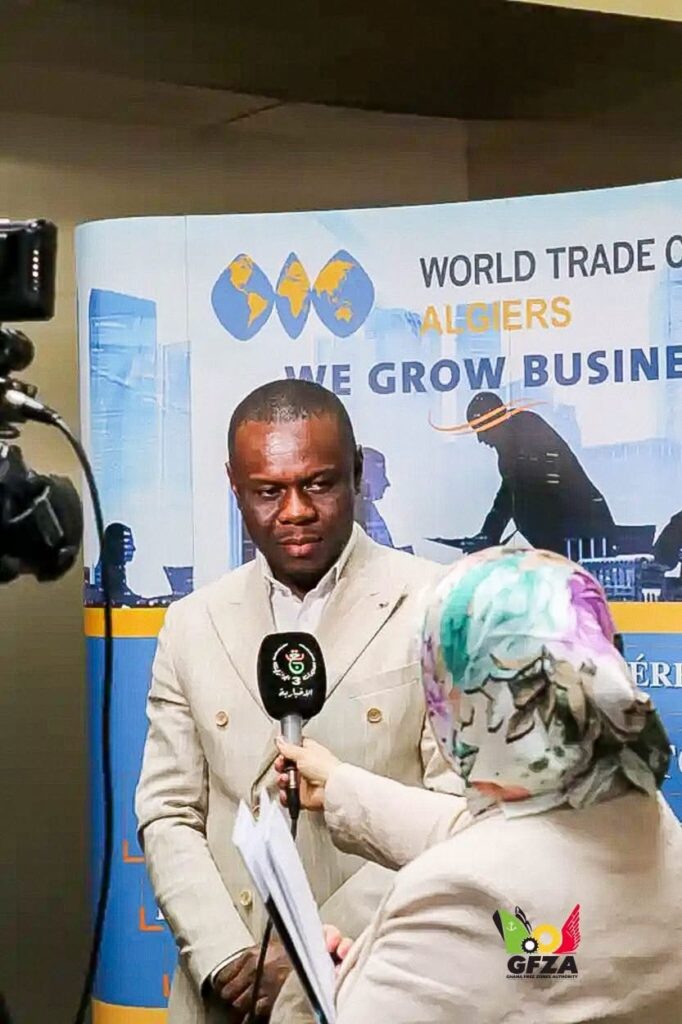
According to him, the competitiveness of free zones increasingly depends on factors such as regulatory predictability, quality infrastructure, efficient trade facilitation and the ability of businesses to connect with suppliers and markets across borders.
He therefore places regional value chain development at the centre of the future of Africa’s free zones
“Regulatory predictability, infrastructure, trade facilitation and strong regional value chain linkages essential components of a modern free zone system.’’
Deputy CEO of GFZA, Mr. Lateef Apau Wiredu
AfCFTA to Expand Intra-African Trade
The emphasis comes at a time when African economies are seeking to use the African Continental Free Trade Area (AfCFTA) to expand intra-African trade, strengthen manufacturing and encourage businesses to produce goods that can compete across continental markets.
For Ghana, the Free Zones Programme provides a platform for export oriented companies to take advantage of the country’s strategic location and access to regional and continental markets.
GFZA continues to promote Ghana as an investment destination while supporting enterprises with licensing, regulatory facilitation and aftercare services.
The Authority’s participation in the Algiers conference therefore provides an opportunity to share Ghana’s policy experience while learning from other African and international free-zone jurisdictions.
Mr. Wiredu also stresses the importance of cooperation among African countries, particularly through South-South knowledge exchange, as countries seek practical approaches to industrialisation and export led growth.
“The Participation of the GFZA Underscores its Commitment to South-South Knowledge Exchange,” he says, noting the importance of sharing experiences and developing approaches that can help African economies derive greater value from free zones.
The discussion also highlights the changing role of free zones from isolated production areas into integrated economic ecosystems that connect manufacturing, logistics, investment, technology, skills development and international markets.
Positioning the Country as a Competitive Hub
In Ghana, this approach aligns with the broader objective of positioning the country as a competitive hub for export oriented manufacturing and regional trade. The GFZA identifies foreign direct investment, employment, export diversification, technology transfer and skills development among the core objectives of the Free Zones Programme.
The Single Factory Scheme further strengthens the potential of the programme by allowing businesses outside conventional free-zone enclaves to participate in export-oriented production. This creates opportunities for industrial activity to reach more communities while supporting value addition and employment.
Mr. Wiredu’s participation in the Algiers conference also reinforces the GFZA’s efforts to strengthen international partnerships and position Ghana’s Free Zones Programme within the wider African investment and trade landscape.
He is accompanied at the conference by Mr. Kingsford Kwaku Jagre, Head of AfCFTA and Strategic Partnerships, reflecting the Authority’s focus on connecting free-zone development with Ghana’s continental trade and investment agenda.
As African countries pursue deeper economic integration, the experience shared by Ghana demonstrates the growing importance of free zones as instruments not only for attracting investors but also for building productive capacity, expanding exports and linking domestic industries to regional and global value chains.
The Algiers conference consequently provides a platform for Ghana to present its three decades of experience while contributing to the wider conversation on how free zones can become stronger engines of African industrialisation, trade and economic integration.
READ ALSO:Offshore Gold Mining Threatens Livelihoods – Concerned Experts to Gov’t