Education policy think tank, Eduwatch, has warned that enrolment figures alone cannot show whether every eligible learner in Ghana is able to enter and complete secondary education, calling for a credible financing pathway to close persistent gaps in the country’s education sector.
The warning was contained in Volume 39 of Eduwatch’s Education Alert policy brief, published on 14 August 2026, which examined financing and access concerns raised in the International Monetary Fund’s (IMF) recent assessment of Ghana’s education sector.
According to the IMF, Ghana would require education spending equivalent to about 5.8 percent of its Gross Domestic Product (GDP) by 2030 to meet education-related Sustainable Development Goal (SDG) benchmarks.
The country currently spends approximately 3.1 percent of GDP on education, pointing to a substantial financing gap between current expenditure levels and the resources required to meet national development ambitions.
The IMF noted that education and health constitute Ghana’s largest development spending needs, reflecting persistent gaps in service coverage and essential inputs.
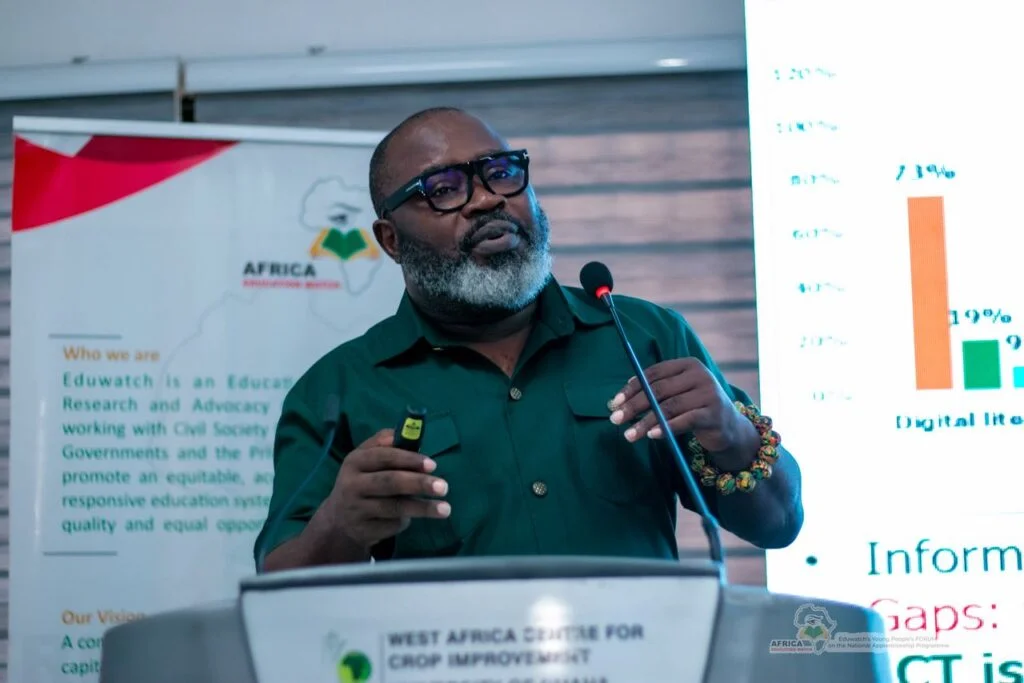
Not Simply About Spending More
It cautioned that expanding access without adequately financing the inputs required to deliver quality education risks increasing participation without corresponding improvements in learning outcomes.
Eduwatch’s Alert emphasised that the financing challenge facing Ghana is not simply about increasing expenditure, but about ensuring that additional resources translate into tangible improvements.
This includes adequately and equitably distributed teachers, classrooms and infrastructure, teaching and learning materials, school-level financing, effective supervision, and stronger foundational learning.
The brief stressed that this is particularly important at the basic education level, where weaknesses in access, retention and completion ultimately constrain the number of children who can progress to and benefit from the Free SHS/TVET programme.
“Education spending must be assessed by what it delivers: equitable access, sustained participation and better learning.”
Eduwatch
Better Targeting of Free SHS/TVET
The IMF also called for greater efficiency and better targeting of the Free SHS/TVET programme, particularly toward poorer households.
Eduwatch echoed this concern, framing it as part of a broader equity imperative requiring education financing to increasingly prioritise low-income households, rural communities, deprived districts, out-of-school children and learners at risk of dropping out.
While stressing that universal interventions remain important, Eduwatch noted that achieving genuinely universal access requires disproportionately greater support directed toward those facing the greatest barriers to education.
A central theme of Eduwatch’s Alert was the distinction between enrolment and actual educational attainment. The organisation noted that while Free SHS/TVET has widened opportunity for many Ghanaian learners, enrolment figures alone cannot demonstrate whether every eligible learner is able to both enter and complete secondary education.
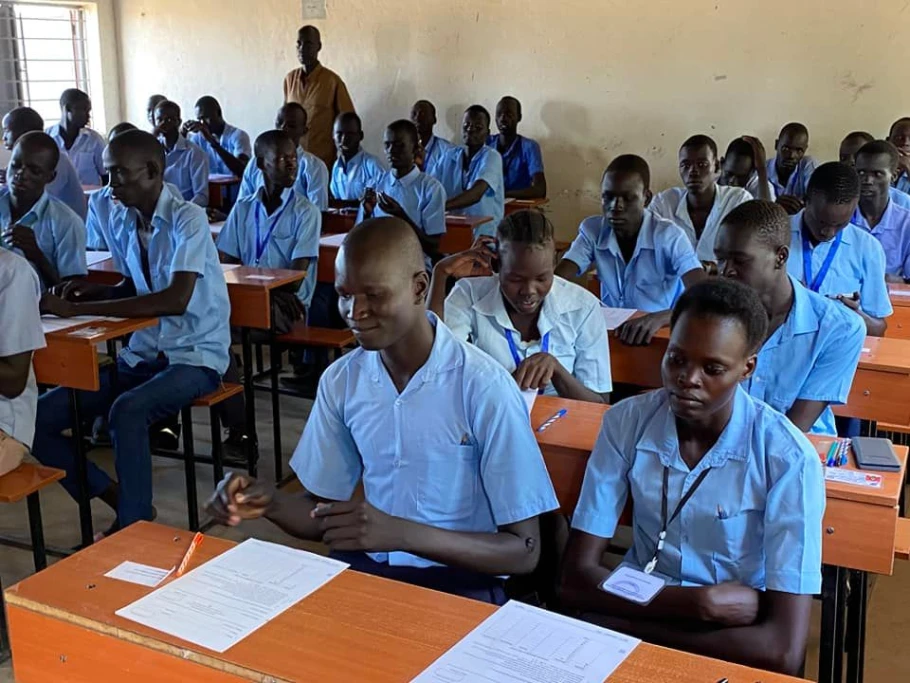
“Available school spaces, teachers, infrastructure and learning materials must keep pace with demand, particularly in underserved areas.”
Eduwatch
Secondary Enrolment Still Below SDG Benchmark
The IMF’s assessment highlighted that Ghana’s secondary education enrolment remains below the relevant SDG benchmark despite significant improvements in access.
Ghana’s Secondary Gross Enrolment Ratio stood at approximately 75.7 percent in 2024, substantially above the Sub-Saharan African average of about 46 percent, though slightly below the global average of approximately 77 percent.
Despite this comparatively strong regional performance, Ghana’s progress remains insufficient when measured against the 100 percent benchmark for universal access to secondary education by 2030. At 75.7 percent, the country remains approximately 24 percentage points below this target, with only a few years remaining to close the gap.
The IMF’s concern, as highlighted in Eduwatch’s Alert, does not diminish the progress achieved under Free SHS/TVET. Rather, it underscores a fundamental policy issue, removing fees at the secondary level, while critical, does not automatically guarantee universal secondary education access, particularly where school spaces, teaching staff and infrastructure fail to keep pace with rising enrolment demand.
Eduwatch called for a credible financing pathway that protects basic education, plans proactively for rising secondary enrolment, and directs additional resources specifically to learners and districts facing the greatest barriers to accessing and completing their education.
Implications For Policy Direction
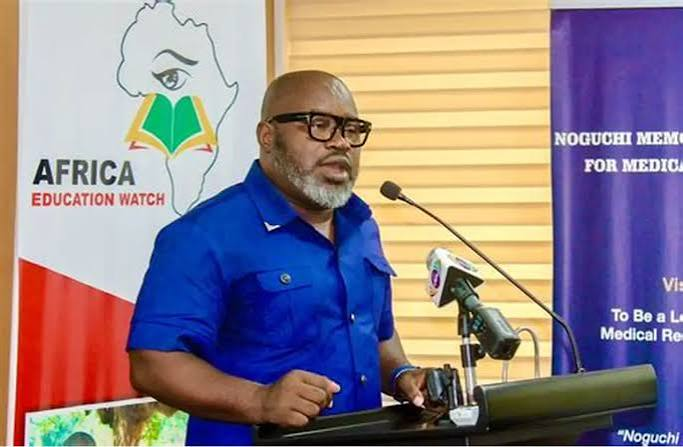
Taken together, the IMF’s assessment and Eduwatch’s policy brief point to a clear message for policymakers, expanding access through fee removal must be matched by sustained investment in the underlying systems and resources that determine whether learners can remain in school and achieve meaningful learning outcomes.
As Ghana continues to navigate the financing demands of its education sector, attention will likely turn to how government responds to calls for a more targeted and sustainable financing framework, and whether future budgetary allocations reflect the equity-focused priorities outlined by both the IMF and Eduwatch in addressing the country’s persistent education financing gap.
READ MORE: Bawumia Tells NPP to Dissolve Camps and Unite for 2028 Victory