Labour has strengthened its position at the top of Britain’s political polls, opening a five-point lead over Reform UK as Prime Minister Andy Burnham’s early months in office appear to have restored some support for the governing party.
A recent poll placed Labour on 30% compared with 25% for Reform, marking a notable change in the political landscape after Reform made significant gains during the devolved and local elections.
Reform’s recent performance has also proved volatile. While a YouGov poll released only recently placed the party ahead of Labour for the first time since August, another poll conducted a week earlier had put Reform in third place behind Labour and the Conservatives.
Such fluctuations underline the uncertainty surrounding the current political environment, where relatively small changes in public opinion have the potential to reshape the electoral standings of the major parties.
Labour’s improvement, however, has been more consistent. The party has recorded its strongest ratings since its landslide victory in the 2024 general election, with Burnham appearing to recover some of the support that had previously moved away from Labour during Sir Keir Starmer’s leadership.
The latest YouGov figures indicate that only 49% of former Labour voters noted they would support the party when Starmer stood down in June. That proportion has since risen to 63% under Burnham.
The change has been particularly pronounced among younger voters. Support for Labour among people aged between 18 and 24 has risen from 14% to 27% during the same period, while only 7% of voters in that age group currently indicate support for Reform.
The figures suggest that Burnham has begun to rebuild parts of Labour’s electoral coalition at a time when the government is attempting to establish a political identity distinct from the previous administration.
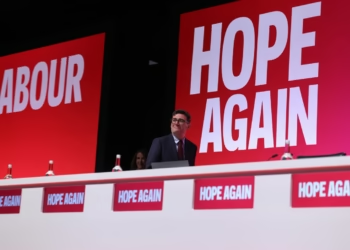
During his first Labour Party conference speech as Prime Minister, Burnham pledged to strengthen collaboration with European partners and highlighted industries he argued had been “harmed by Brexit.”
The intervention has added a new dimension to the political contest between Labour and Reform, with Farage’s party having built much of its appeal around opposition to the European Union and the political settlement that followed the 2016 Brexit referendum.
Reform Loses Momentum as Labour Rebuilds Its Coalition
Labour’s rise has coincided with a period of difficulty for Reform UK, which only months ago appeared capable of overtaking the governing party and establishing itself as the dominant force on the British right.
Reform’s gains in May’s devolved and local elections demonstrated the extent of the challenge facing Labour. Those results raised questions about whether the governing party could retain support beyond its 2024 general election victory and whether Reform could transform its growing popularity into a sustained national electoral advantage.
The subsequent political trajectory has been less favourable to Farage.
Controversies surrounding donations have created additional pressure on Reform, while competition from Restore Britain has opened another front on the right of British politics.
Farage’s personal standing has also weakened. One pollster places his latest favourability rating at minus 36, representing a decline from a previous low of minus 27 last summer.
The deterioration matters because Farage remains central to Reform’s political identity. His personal appeal has been one of the party’s principal assets, particularly among voters seeking an alternative to the Conservatives and Labour.
A sustained decline in his favourability could therefore make it harder for Reform to maintain the momentum it demonstrated during the May elections.
The Conservatives, meanwhile, have experienced a modest recovery since Burnham took office. The party has averaged around 20 points since June, suggesting that some of the political space created by Reform’s fluctuations could also benefit the Conservatives.
The movement among smaller parties has been less encouraging.
The Liberal Democrats have gradually fallen to around 11 points in recent polling, while Green support has declined more sharply, dropping from 14 points in April to about 10.
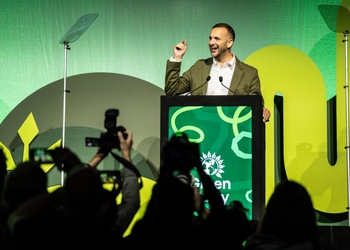
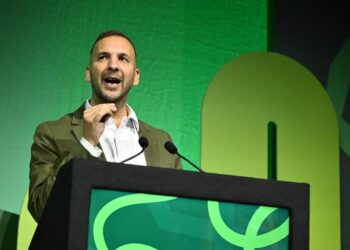
The decline represents a challenge for Green Party leader Zack Polanski, who is due to contest the Holborn and St Pancras by-election later this month as the party’s candidate.
These figures point towards a political environment in which Labour is benefiting from a consolidation of support while its principal challenger faces questions over whether its earlier gains can be sustained.
That does not necessarily mean Reform’s electoral threat has disappeared.
The volatility in polling indicates that its support remains capable of recovering quickly, particularly if Labour’s current advantage proves temporary or if the government encounters difficulties over the economy, public services or the delivery of its policy agenda.
READ ALSO: GSE’s 4.66% Monthly Fall: Analyst Names Stocks That Could Drive GSE’s Market Revival