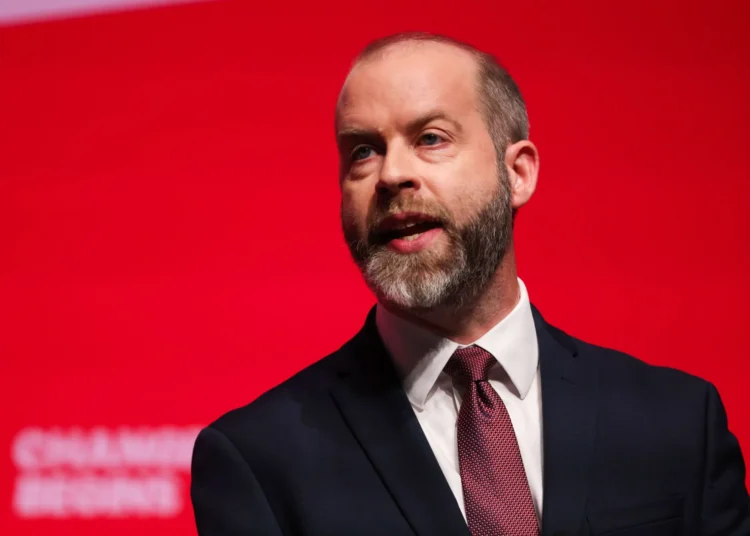
UK Business Secretary Jonathan Reynolds has defended the government’s efforts to strengthen relations with the European Union (EU), insisting that the proposed agreements do not contradict Labour’s 2024 election manifesto.
According to Jonathan Reynolds, “this agreement we’re seeking is entirely consistent with the red lines that were in the Labour manifesto, so we’re not talking about an institutional relationship with Europe in any way today at this summit.”
“We are talking about something that improves the very hard Brexit the Conservative Party chose to give the country. Improving the terms of trade, as frankly we do with key partners around the world.”
Jonathan Reynolds
UK Business Secretary indicated that the negotiations were consistent with Burnham’s so-called ‘Makerfield test’ under which the Prime Minister has pledged to assess government policies based on whether they improve the lives of people across the country, including those in disadvantaged communities.
“The Makerfield test that the Prime Minister set out is absolutely at the core of this. Does this deal, if we get it, improve the lives of everyone in the UK including some of the most disadvantaged, historically neglected communities?”
Jonathan Reynolds
Youth Mobility and Lower Food Prices
Jonathan Reynolds also rejected concerns that a proposed youth mobility arrangement with the EU could disadvantage young Britons by allowing more European nationals to compete for jobs in the UK.
Under the proposed scheme, young people from participating European countries could receive time-limited opportunities to travel, work and study in Britain, although the arrangement would not restore unrestricted freedom of movement.
He pointed to existing youth mobility arrangements with countries such as Australia, Canada and New Zealand, arguing that similar agreements had not been shown to harm employment opportunities for young people in the UK.
“Let’s look, by the way, at some of those European countries who have complete freedom of movement, like for instance, Denmark or the Netherlands, who have a far smaller number of people who are not in education, employment or training than the UK does.”
Jonathan Reynolds
Reynolds also cited Denmark and the Netherlands, where freedom of movement operates alongside lower numbers of young people not in education, employment or training, to challenge the argument that greater mobility necessarily reduces opportunities for domestic workers.
He also mentioned that reducing post-Brexit bureaucracy and border checks could help lower the costs faced by food and agricultural businesses, potentially easing pressure on consumers.
The Business Secretary noted that one in seven British businesses had stopped exporting altogether following Brexit, with the food and agricultural sectors experiencing some of the most significant pressures.
“Of course a lot of factors affect food prices, but if you’re taking bureaucracy out of it, you’re taking friction at the border out of it, you’re taking out some of the incredible amounts of physical and electronic checks that have to take place, of course that is a cost that you are removing.”
Jonathan Reynolds
The proposed food and agriculture agreement would involve Britain aligning with EU sanitary and phytosanitary (SPS) standards governing goods such as food and plants, to remove export checks that have complicated trade since Brexit.
Opposition Raises Concerns Over Regulatory Control
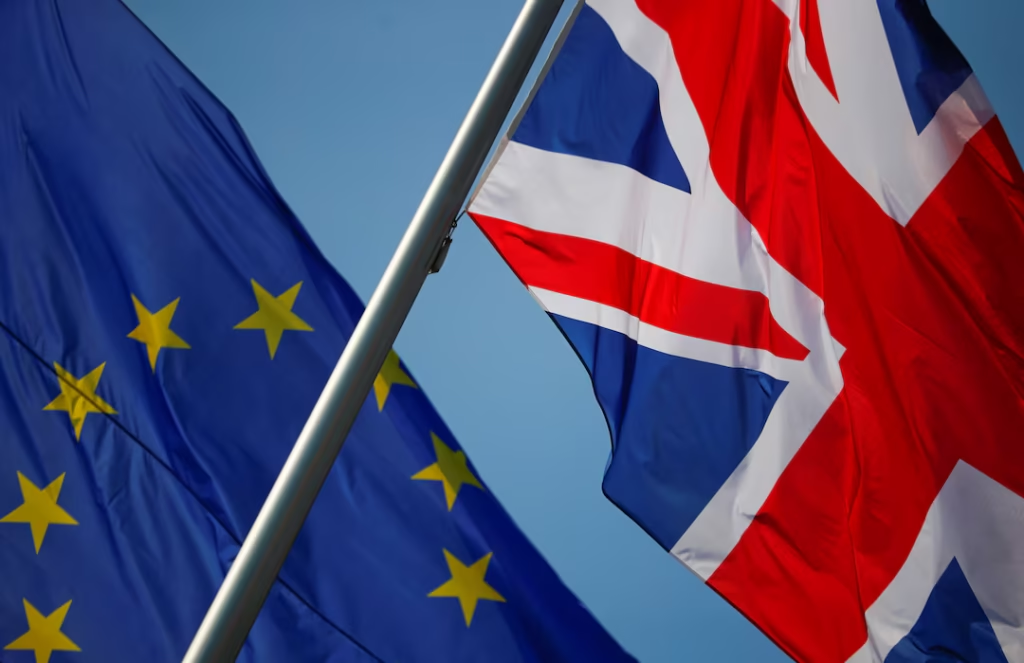
Despite the government’s defence of the negotiations, the proposed agreements have attracted criticism from opposition figures who argue that closer alignment with EU regulations could undermine Britain’s ability to determine its own trade policies.
Conservative Shadow Environment Secretary, Victoria Atkins, accused the government of preparing to “sell out” British farmers by requiring them to follow European rules without having a formal role in determining those regulations.
“They are forcing farmers to follow rules over which we have no say, no vote, and no veto, that benefit highly subsidised foreign farmers, and taxpayers are going to end up paying for the privilege.”
Victoria Atkins
Reform UK leader, Nigel Farage, also accused Burnham of committing a Brexit “betrayal” claiming that the proposed agreements would effectively return parts of the British economy to the EU’s regulatory framework.
He conceded that an agreement on agricultural standards could remove some barriers for food exporters, although he warned that it would compromise Britain’s regulatory independence.
“The Labour Party was elected, saying they would not rejoin the single market. Well, today we’re rejoining a chunk of it.”
Nigel Farage
Nigel Farage also criticised the prospect of Britain joining the EU’s carbon emissions trading scheme, describing it as a “disaster” for British industry.
Meanwhile, Burnham maintained that he remained prepared to walk away from negotiations if the proposed arrangements failed to deliver the best possible outcome for Britain.
READ ALSO: Ablakwa Announces Expanded Ghana-Norway Cooperation on Investment and Trade