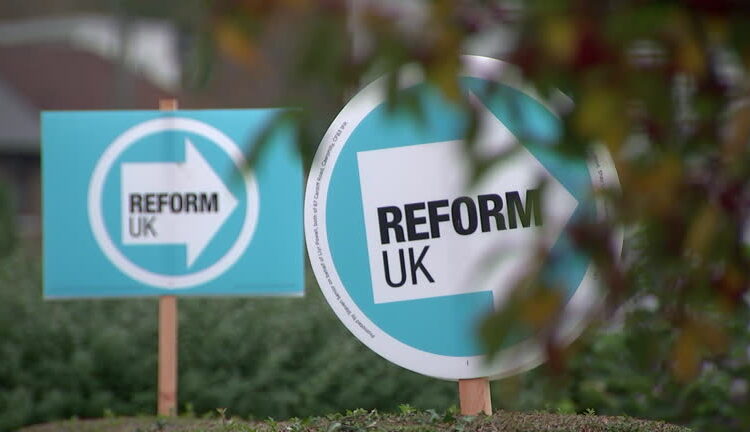
Reform UK’s growing donations are testing the limits of Britain’s political finance laws, bringing renewed scrutiny to the transparency of political contributions, the influence of wealthy individuals and the safeguards designed to prevent foreign money from entering the political system.
The controversy has several distinct elements, including a police investigation into the party’s funding, a parliamentary standards inquiry involving Reform leader Nigel Farage and two extraordinary £36 million donations recently made to the party.
In an exclusive interview with The Vaultz News, Dr Thom Oliver, Senior Lecturer in Politics at the University of the West of England, Bristol, stated that the developments should be considered separately because they involve different transactions and different legal questions.
According to Dr Oliver, the Metropolitan Police has expanded an “existing criminal investigation into Reform UK’s funding following an undercover investigation broadcast by Channel 4.”
“Reporters posing as representatives of a wealthy American donor funded more than £30,000 of polling which appeared to benefit Reform. Undercover footage also reportedly showed individuals associated with the party discussing whether further money could be provided through the donor’s UK-based son.”
Dr Thom Oliver
Dr Oliver explained that the central legal questions concern whether the polling amounted to a donation in kind, whether its actual source was legally permissible and whether it should have been declared.
The police are examining the material alongside the Electoral Commission and the Crown Prosecution Service.
However, Dr Oliver stressed that the investigation should not itself be interpreted as proof of wrongdoing.
Reform UK and the individuals involved have denied wrongdoing, while the investigation remains ongoing.
An investigation, he noted, means that there are questions requiring answers; it does not constitute a finding of guilt.
Nigel Farage Under Investigation

Apart from the police investigation, Nigel Farage is facing a parliamentary standards investigation over whether he should have declared a £5 million personal gift received from businessman Christopher Harborne before Farage became an MP.
“Farage maintains that it was an unconditional personal gift, reportedly connected to his security, and that the parliamentary declaration rules did not apply because it predated his election.”
Dr Thom Oliver
The issue has nevertheless added another layer to the broader debate surrounding Reform UK’s finances and the transparency expected of political figures.
At the same time, Reform has received two £36 million donations from cryptocurrency billionaires Ben Delo and Christopher Harborne.
Dr Oliver emphasised that “these donations are separate from the transactions currently at the centre of the police investigation.”
Reform UK maintains that both donations are lawful.
Nevertheless, their unprecedented scale has intensified questions about whether Britain’s political-finance framework sufficiently protects democratic equality when enormous sums of money can be concentrated in the hands of a small number of donors.
According to Dr. Oliver, Britain’s existing political-finance framework is based principally on the Political Parties, Elections and Referendums Act 2000.
Under the system, political parties can accept donations from “permissible donors,” including individuals registered to vote in the UK and companies that are registered and carrying on business in the country.
Overseas electors can also qualify as permissible donors, while there is currently no general limit on the amount that a permissible individual can donate.
Dr Oliver argues that this creates an important limitation within the existing system.
“The existing law is comparatively good at asking whether a donor fits an approved legal category, but less effective at establishing where the donor’s money ultimately originated and whether an eligible person or company is acting as a conduit for somebody else. “
Dr Thom Oliver
He added that the “electoral registration is therefore an imperfect proxy for a donor’s genuine economic and political connection to the United Kingdom.”
Government Moves to Tighten Rules
Meanwhile, UK government is seeking to address some of these concerns through the Representation of the People Bill, which is currently before Parliament.
The proposed legislation includes enhanced “know your donor” checks, tighter controls on company donations and stronger powers for the Electoral Commission, which regulates political finance.
It would also increase the maximum civil penalty from £20,000 to £500,000.
Dr Oliver explained that government amendments could further introduce an annual £100,000 limit on overseas contributors and a residency test for people returning to the UK.
Some provisions are intended to apply retrospectively from March 25, 2026, potentially making the residence and electoral status of Reform’s latest donors significant to the debate.
Reform has stated that the donations are lawful under the proposed rules.
However, Dr Oliver pointed to what he described as a conspicuous limitation of the proposed reforms: the absence of a general cap on donations from individuals who qualify as domestic donors.
The proposed changes could restrict certain avenues through which “foreign money enters British politics while leaving a UK-based billionaire able to donate tens of millions of pounds to a political party.”
Balancing Political Competition And Democratic Equality

Dr Oliver noted that a legitimate argument against reforms could be that they make it harder for new and smaller parties to compete with established political organisations.
New parties need resources to build campaigns, reach voters and challenge established political structures.
“A donation cap would therefore need to be accompanied by careful consideration of public funding, membership income and trade-union affiliations. Otherwise, reform could unintentionally protect the established parties from competition.”
However, Dr Oliver noted that the democratic concern extends beyond whether a direct exchange of money for political favours can be demonstrated.
According to him, extremely concentrated political funding can create perceptions of privileged access and unequal political influence even where there is no evidence of an explicit quid pro quo.
Funding Controversy Creates Political Risk
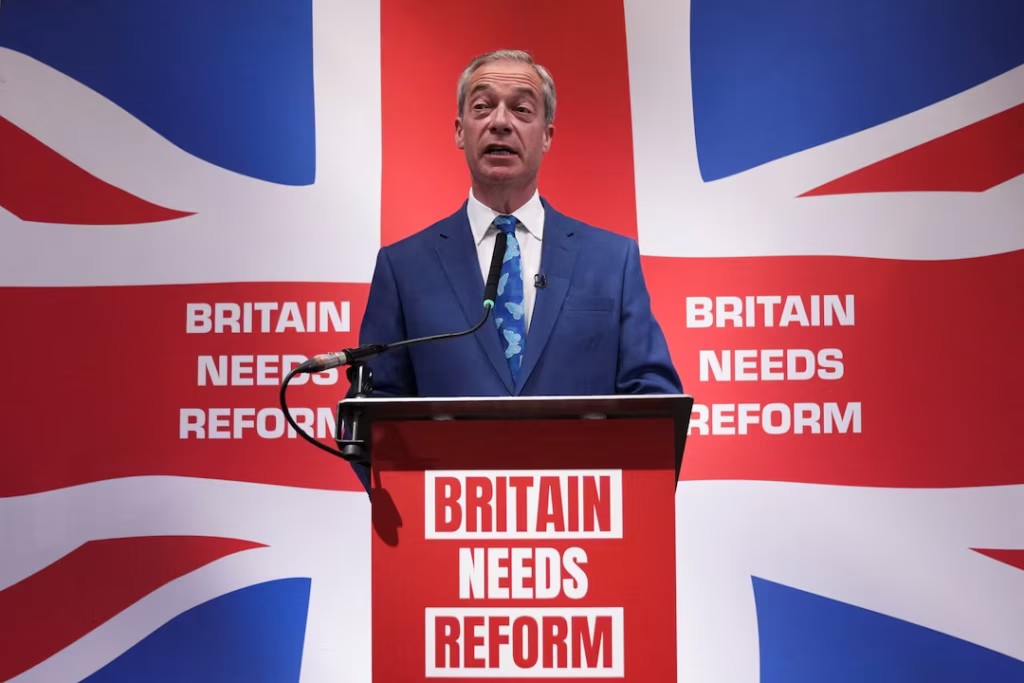
The controversy also carries political implications for Reform and its leader.
According to Dr Oliver, Nigel Farage is likely to portray the investigations, as well as any retrospective legislation, as an attempt by the political establishment to restrain a disruptive political challenger.
Such an argument could resonate strongly with Reform’s most committed supporters, particularly if the ongoing investigations do not ultimately establish wrongdoing.
However, the greater political risk could lie with voters considering Reform but uncertain about the party’s competence, judgement and integrity.
Reform has benefited from positioning itself as a vehicle for dissatisfaction with the political establishment.
But its growing financial resources and increasing political influence are likely to expose the party to more sustained scrutiny, particularly as it seeks to establish itself as a potential party of government.
The government, meanwhile, faces its own political challenge.
Any changes to political-finance rules must avoid appearing to have been designed specifically to constrain Reform UK.
If new restrictions are general, independently enforced and consistently applied across all political parties, Reform would find it more difficult to portray itself as the victim of political interference.
Conversely, poorly drafted or partisan reforms could strengthen Farage’s wider anti-establishment narrative and allow the party to frame the controversy as evidence of an attempt to prevent its political advance.
READ ALSO: Deloitte Calls for Low-Interest Bank to Power Ghana’s Industry