Ghana’s energy challenge is increasingly becoming less about whether the country has enough energy resources and more about how much it costs to keep the economy supplied.
The country has crude oil and natural gas, expanding renewable-energy ambitions and a substantial installed electricity-generation base.
Yet households and businesses remain exposed to two external pressures that Ghana has limited control over: international petroleum prices and the cost of fuels used to generate electricity.
That exposure is becoming more consequential as the economy expands.
‘Ghana’s 2026 Energy Outlook shows that electricity demand reached a peak of 4,283 megawatts in 2025, representing an 8.4% increase from the previous year. Total electricity consumption, including losses, also rose by 9.3% to 27,015 GWh.’
But meeting that demand still depends heavily on thermal generation.
Thermal plants accounted for 66.8% of electricity generated in 2025, compared with 32.4% from hydroelectric sources.
That composition exposes the electricity system to the price and availability of natural gas and other fuels, while the petroleum downstream market remains exposed to international crude and refined-product movements.
The Cost Of Keeping Ghana Powered
The significance of Ghana’s thermal dependence goes beyond the generation mix.
When fuel costs rise, the pressure can move through several layers of the economy. Generators face higher input costs; utilities face greater financial pressure; businesses experience higher operating expenses; and households ultimately encounter higher costs for transport, goods and services.
This creates a difficult policy equation.
Ghana needs reliable electricity to support industrialisation, but increasing reliance on thermal generation can also increase the sector’s exposure to fuel costs.
At the same time, shifting rapidly toward renewable generation requires substantial investment in generation, transmission, storage and system management.
The issue is therefore not simply whether Ghana should build more renewable capacity.
It is whether the country can diversify its energy system quickly enough to reduce its exposure to volatile fuel costs without compromising reliability.
That distinction is important because renewable generation does not automatically translate into energy security if the grid lacks the infrastructure required to absorb intermittent power.
Gas Is Becoming More Strategic
Natural gas occupies a particularly important position in this transition.
Ghana is pursuing an energy pathway in which gas continues to support electricity generation while renewable energy expands.
The Energy Commission has described energy efficiency, renewables and nuclear power as components of Ghana’s longer-term transition, while natural gas remains a strategic transitional fuel.
The logic is straightforward: gas-fired generation can provide dispatchable power when renewable resources are unavailable, helping to stabilise a system with increasing variable renewable penetration.
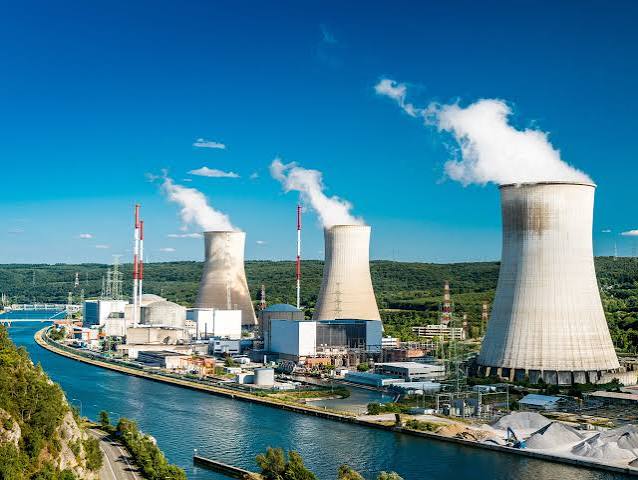
But that also means Ghana must ensure that its gas infrastructure and supply arrangements remain commercially and operationally sustainable.
The country cannot simply add renewable generation while leaving the underlying gas and transmission systems financially vulnerable.
Demand Is Rising Faster Than The Old System
The pressure is becoming more obvious because electricity demand is growing.
The Energy Commission reported that peak demand increased by 8.4% in 2025, while consumption increased by 9.3%.
That growth reflects more than population expansion.
Mining, manufacturing, commercial activity and broader electrification all increase demand for dependable electricity. Ghana’s industrial ambitions, including the proposed expansion of production under the 24-hour economy agenda, could place additional pressure on the power system.
This means Ghana faces a structural choice.
It can continue adding generation whenever demand rises, or it can place greater emphasis on efficiency, demand management and reducing losses so that existing generation produces more useful electricity.
The Energy Commission itself has argued that energy efficiency should be the first layer of the transition because reducing consumption can lessen the amount of additional electricity that needs to be generated.
That approach could become increasingly important as the cost of new generation rises.
Diversification Must Go Beyond Generation
Ghana’s energy transition therefore needs to be viewed as a system-wide exercise rather than a race to install more megawatts.
The country needs diversified generation, but it also needs stronger transmission infrastructure, better distribution performance, improved demand management and greater investment in technologies that allow different sources of electricity to work together.
The recent decision by the Public Utilities Regulatory Commission to leave electricity and water tariffs unchanged for the fourth quarter of 2026 illustrates another dimension of the challenge.
PURC said its review considered the cedi-dollar exchange rate, inflation, natural-gas prices and the hydro-thermal generation mix.
That combination demonstrates how interconnected Ghana’s energy costs have become.
The exchange rate affects imported equipment and fuel-related costs. Gas prices affect thermal generation. The generation mix affects the cost of electricity. Inflation affects the broader operating environment.
Energy policy can therefore no longer be separated neatly into petroleum, gas, electricity and renewables.
They increasingly form one economic system.
Ghana’s Investment Window Is Opening
There are nevertheless signs that the country is trying to broaden that system.
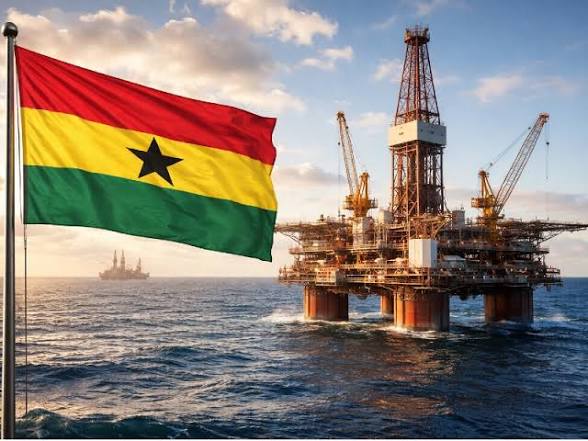
Ghana has attracted renewed interest in its upstream petroleum sector, with Shell and Chevron signing a preliminary agreement in September concerning production rights over the South Deepwater Tano Cape Three Points block.
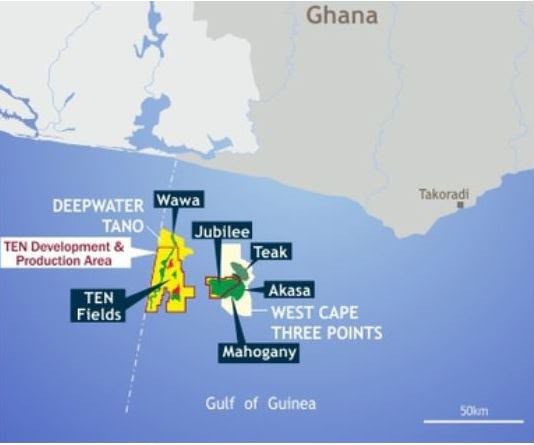
GNPC has also been engaging potential partners on new upstream opportunities, while the country continues to pursue renewable-energy development.
These developments matter because Ghana needs investment across the energy chain.
New petroleum investment can help sustain domestic hydrocarbon production and gas supply. Renewable investment can reduce dependence on fossil-based generation over time. Transmission investment can enable the grid to absorb new generation. Efficiency investment can reduce the amount of new capacity required.
The objective should not be to choose one of these pathways at the expense of the others.
It should be to make them work together.
The Real Test Is Resilience
Ghana’s energy problem is ultimately a resilience problem.
A system that has sufficient generation but is vulnerable to fuel-price shocks is not fully secure. A country with abundant renewable resources but inadequate transmission is not fully diversified. And a power system that generates enough electricity but loses too much of it before it reaches consumers is not operating efficiently.
The next phase of Ghana’s energy policy must therefore focus on reducing the number of points at which an external shock can destabilise the economy.
That means expanding renewable generation, maintaining dependable gas supply, improving transmission and distribution, investing in storage and efficiency, and creating conditions that allow private capital to finance long-term energy infrastructure.
The objective should be straightforward: more energy, produced more efficiently, with less exposure to factors Ghana cannot control.
That would make the energy transition more than an environmental programme.
It would make it an economic-security strategy.
READ ALSO: Ghana, Kyrgyzstan Move to Open West Africa–Central Asia Trade Corridor