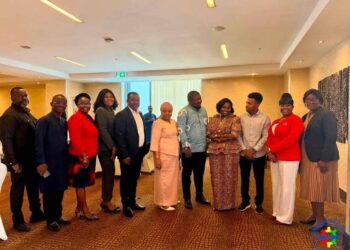
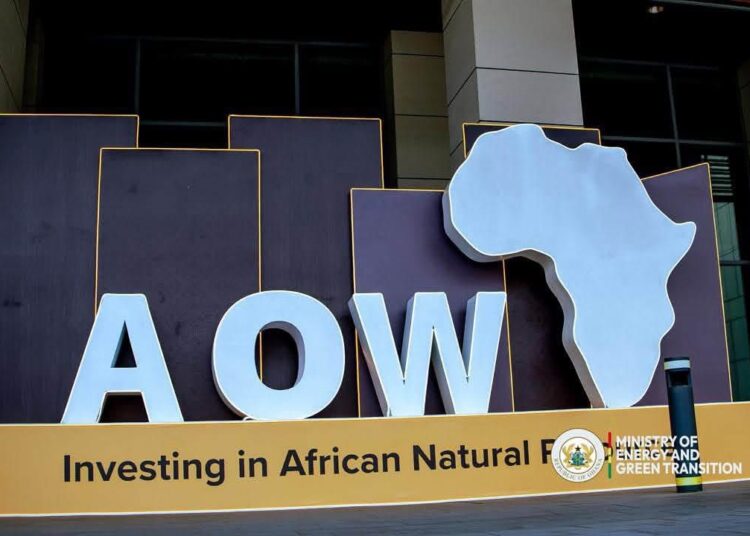
Ghana has used the opening of Africa Oil Week 2026 in Accra to signal a renewed push to attract investment into its upstream petroleum sector, with the government placing fiscal and regulatory reforms at the centre of efforts to unlock new exploration, strengthen investor confidence and secure greater economic value from the country’s hydrocarbon resources.
The Minister for Energy and Green Transition, Dr. John Abdulai Jinapor, said Ghana’s latest reforms are intended to create a more competitive, predictable and responsive investment environment while ensuring that increased investment in the petroleum sector translates into broader economic opportunities.
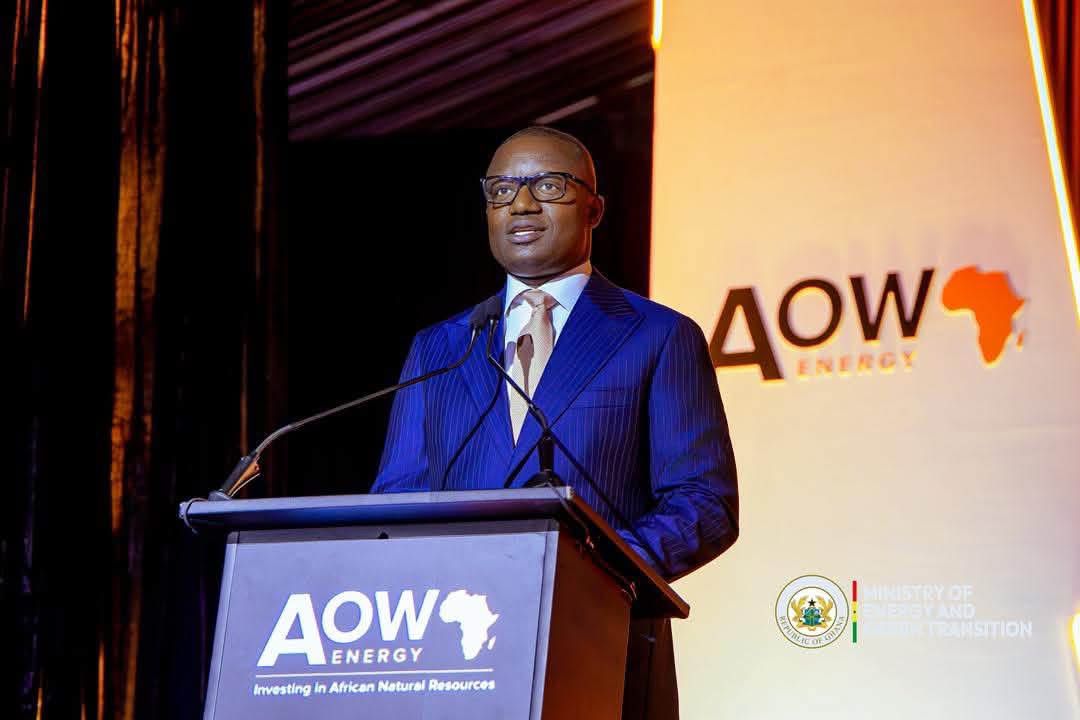
Speaking during the opening of AOW 2026, Dr. Jinapor welcomed Ministers, heads of delegation, industry leaders, investors and development partners to Ghana and positioned the conference as an opportunity to move beyond discussions about Africa’s energy potential towards concrete investment and development outcomes.
“Our ambition is to move from resource extraction to value creation, drive industrialisation, create jobs and strengthen energy security.”
Dr. John Abdulai Jinapor, Minister for Energy and Green Transition
The minister’s remarks come as Ghana seeks to maintain the attractiveness of its upstream sector at a time when petroleum-producing countries across Africa are competing for increasingly selective global capital.
Fiscal Reforms Target Upstream Competitiveness
At the heart of Ghana’s message at AOW 2026 is the argument that attracting investment requires more than the availability of petroleum resources.
Investors must also see a regulatory and fiscal framework capable of providing sufficient certainty for projects that require substantial capital and long development timelines.
Dr. Jinapor said Ghana had undertaken comprehensive fiscal and regulatory reforms designed to improve the competitiveness of the upstream sector and unlock further exploration and development.
The emphasis on predictability is particularly important for petroleum investment because exploration expenditure is incurred before commercial success is established.
Companies therefore assess not only geological prospects but also taxation, contractual arrangements, regulatory processes, infrastructure availability and the broader political and economic environment before committing capital.
Ghana’s challenge is consequently to strike a balance between competitiveness and national benefit.
Offering terms attractive enough to bring in capital can help accelerate exploration, but excessively generous arrangements can weaken the share of value retained by the state and the wider economy.
The government’s stated objective is therefore not simply to maximise investment volumes, but to attract capital under conditions that provide a fair and lasting return to Ghana.
That position closely reflects the broader conversation at the conference.
At the Africa Oil Week Presidential Dinner, Vice President Prof. Naana Jane Opoku-Agyemang argued that Ghana remains open to serious, long-term investment but stressed that the greater opportunity lies in developing resources in ways that build domestic capacity and retain more value within African economies.
“Ghana remains open to serious, long-term investment that is mutually beneficial.”
H.E. Prof. Naana Jane Opoku-Agyemang, Vice President of Ghana
The convergence of the two positions provides a clear indication of the government’s investment philosophy: international capital remains necessary, but the ultimate objective is to use that capital to build productive capacity rather than deepen dependence on external actors.
Exploration Takes Centre Stage At AOW 2026
The renewed focus on exploration is also reflected in developments announced during the opening of the conference.
Ghana, GNPC, Shell Overseas Holdings Limited and Chevron Sub-Saharan Africa Ventures Ltd. have signed an MoU concerning the acquisition of petroleum exploration and production rights over the South Deepwater Tano Block, with GNPC Chief Executive Kwame Ntow Amoah signing on behalf of the Corporation.
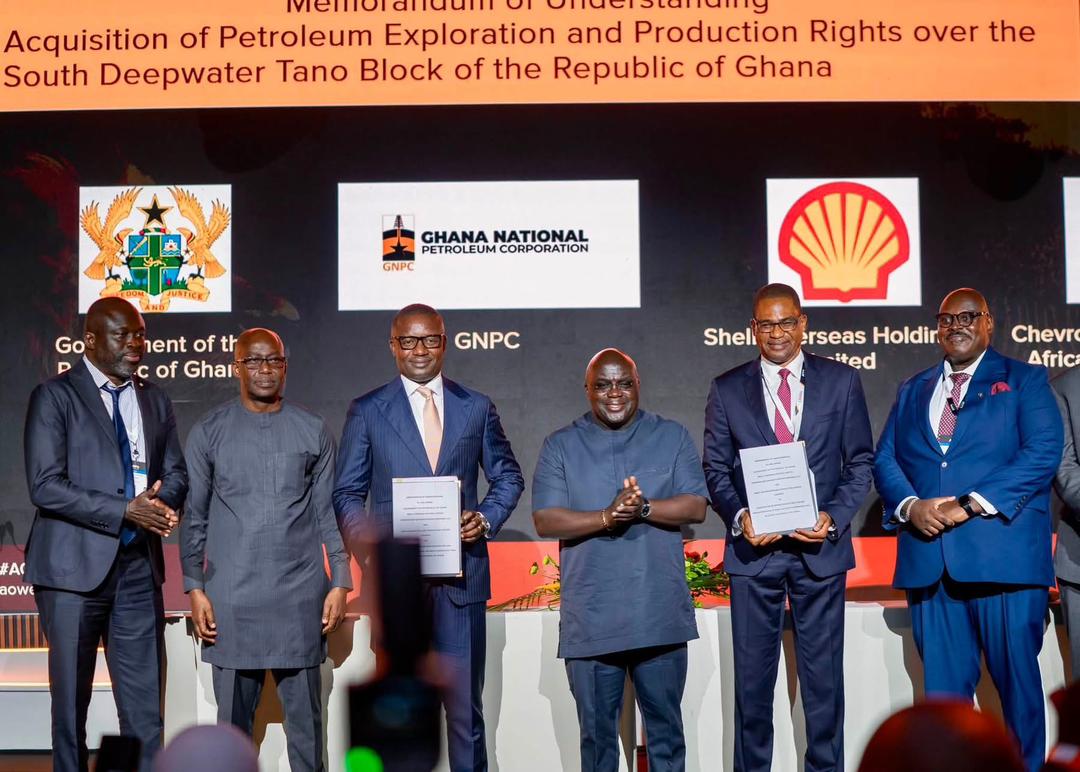
The agreement provides a practical example of the type of investment partnership Ghana is seeking to encourage through its upstream reforms.
For Ghana, expanding exploration is strategically important because existing production assets cannot indefinitely sustain petroleum revenues without replenishment of the resource base.
New discoveries are therefore necessary to maintain future production potential and create a pipeline of projects capable of supporting government revenues, employment and domestic industry.
The South Deepwater Tano development also demonstrates why international partnerships remain important.
Deepwater exploration involves substantial financial and technical risks, making cooperation between national institutions and experienced international companies critical to moving prospective acreage towards commercial evaluation.
However, the significance of the MoU will ultimately depend on implementation. An agreement to pursue exploration does not automatically translate into a commercial discovery or production.
The geological results, investment decisions and subsequent development economics will determine whether the opportunity generates lasting value.
This makes the fiscal and regulatory reforms highlighted by Dr. Jinapor particularly relevant.
If Ghana wants to attract capital into increasingly complex exploration opportunities, the investment environment must remain sufficiently competitive to justify the risks companies assume.
From Investment To Industrial Development
The more ambitious element of Ghana’s AOW 2026 message is the government’s insistence that petroleum development should contribute to industrialisation.
Rather than treating crude oil and natural gas primarily as commodities for export, the government wants the sector to generate wider economic linkages through local businesses, technical skills, infrastructure development, employment and energy security.
That approach places the upstream sector within a much larger national development strategy.
Oil and gas investment can create direct revenue, but its economic impact can be significantly broader when local firms participate in supply chains, Ghanaian professionals acquire specialised technical capabilities and petroleum infrastructure supports other productive sectors.
The Minister therefore framed the government’s objective as a transition from extraction towards value creation.
“AOW 2026 must translate dialogue into investment, investment into partnerships, and partnerships into tangible development for Ghana and Africa.”
Dr. John Abdulai Jinapor, Minister for Energy and Green Transition
That statement captures one of the central tests facing the conference.
Africa has hosted numerous energy conferences where governments and investors have discussed the continent’s resource potential.
The more difficult task is converting those discussions into financial commitments, exploration programmes, infrastructure projects and jobs.
For Ghana, the pressure to deliver is heightened by the country’s existing petroleum infrastructure and institutional experience.
The challenge is no longer simply establishing itself as an oil-producing country. It is determining how petroleum resources can support a broader economic transformation while the global energy system continues to evolve.
GNPC’s positioning at AOW 2026 reflects that shift.
The Corporation has placed investment, exploration, partnerships and greater value for Ghana at the centre of its engagement, while the government has emphasised reforms intended to make the sector more responsive to investors.
The emerging picture is therefore one of Ghana attempting to reposition its upstream industry around both capital attraction and value retention.
The balance will be critical. A petroleum sector that fails to attract investment risks leaving prospective resources undeveloped.
A sector that attracts investment without building domestic economic linkages risks reproducing the extractive model that has limited the transformative impact of natural resources across parts of Africa.
AOW 2026 has consequently opened with a more consequential question than how much oil and gas Africa possesses.
The question is whether African states can create the fiscal, regulatory, technical and institutional conditions necessary to turn those resources into long-term economic capacity.
For Ghana, Dr. Jinapor’s opening message is that the country intends to compete for investment while demanding that investment produce a wider development dividend.
“Africa’s energy future must be shaped with ambition, pragmatism and a clear focus on sustainable prosperity for our people.”
Dr. John Abdulai Jinapor, Minister for Energy and Green Transition
READ ALSO: BoG Digital Credit Rules Could Reshape Borrowing Costs and Access