
Government is intensifying efforts to restructure Ghana’s energy economy by investing in domestic gas processing and state-owned power generation, a strategy officials believe could significantly reduce electricity production costs, lower consumer tariffs and strengthen the country’s long-term energy security.
The twin initiatives, announced by Finance Minister Dr. Cassiel Ato Forson during the presentation of the 2026 Mid-Year Budget Review, form part of a broader plan to maximise the country’s natural gas resources while reducing dependence on imported fuels and privately generated electricity.
At the centre of the strategy is the development of a 100 million standard cubic feet per day modular gas processing facility, alongside plans to construct a 1,200-megawatt state-owned combined-cycle gas-fired power plant in the Central Region.
Rather than treating upstream gas production and electricity generation as separate sectors, government is increasingly integrating both as part of a single energy value chain designed to improve efficiency, create jobs and generate long-term fiscal savings.
Government, in partnership with the private sector, is developing a 100 million standard cubic feet per day modular gas processing facility.
Finance Minister Dr. Cassiel Ato Forson told Parliament.
Building Value Beyond Gas Production
Although Ghana has expanded domestic natural gas production in recent years, processing infrastructure has not kept pace with growing supply.
The proposed modular processing facility is intended to address that gap by increasing the country’s capacity to process natural gas locally before it is supplied to power plants and industrial consumers.
According to the Finance Minister, land acquisition for the project has already been completed, while environmental assessments, engineering design, financial due diligence and project structuring are currently underway.

Government expects the project proposal to be submitted to Parliament for consideration, with financial close anticipated before the end of 2026.
Beyond infrastructure development, the project carries significant economic expectations.
Dr. Forson said the facility is projected to create nearly 1,000 jobs while generating approximately US$2 billion in benefits to the state over the next five years through fuel savings, foreign exchange savings, taxes, levies and dividend receipts.
The projected gains illustrate government’s broader objective of extracting greater domestic value from Ghana’s natural gas resources instead of relying primarily on raw production.
State-Owned Generation Returns
Alongside expanded gas processing, government is also moving ahead with plans to develop a 1,200MW state-owned combined-cycle gas-fired power plant at Kafodzidzi-Aburabana in the Komenda-Edina-Eguafo-Abirem Municipality.
The project represents one of the largest planned public investments in electricity generation in recent years and reflects renewed emphasis on strategic state participation within Ghana’s power sector.
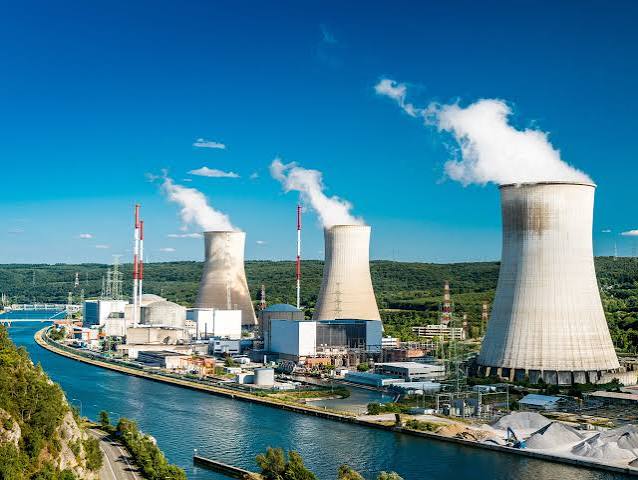
According to the Finance Minister, feasibility studies have confirmed the project’s commercial viability, while environmental approvals, engineering work and permitting processes continue to progress.
The first 600MW phase is expected to be commissioned in 2028.
Combined-cycle gas-fired plants are regarded as among the most efficient thermal generation technologies because they utilise waste heat from gas turbines to produce additional electricity through steam turbines, enabling higher efficiency and lower fuel consumption than conventional thermal plants.
For Ghana, where fuel costs account for a significant portion of electricity generation expenses, improved efficiency could have important implications for the financial sustainability of the power sector.
Procurement Strategy Reduces Costs
The Finance Minister also highlighted government’s procurement approach as a key cost-saving measure.
Instead of purchasing equipment through intermediaries, government secured gas turbines directly from GE Vernova, a decision he said reduced procurement costs by between 35 and 45 per cent compared with third-party sourcing.
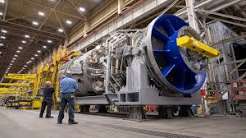
To reduce costs, Government secured the gas turbines directly from GE Vernova, achieving savings of between 35% and 45% compared with third-party procurement
Finance Minister Dr. Cassiel Ato Forson
The approach reflects increasing attention to cost management in large public infrastructure projects, particularly within the energy sector where capital expenditure often determines long-term electricity pricing.
Lower Tariffs the Long-Term Goal
Perhaps the most significant policy objective outlined in the budget review is government’s expectation that expanded domestic gas utilisation and more efficient electricity generation will eventually reduce electricity tariffs.
According to Dr. Forson, the power plant is expected to lower electricity generation costs sufficiently to support tariff reductions of between 10 and 20 per cent.
While electricity tariffs remain subject to regulatory review by the Public Utilities Regulatory Commission (PURC), lower production costs could strengthen the financial position of utilities while easing cost pressures across the economy.
The project is also expected to generate more than 2,000 direct and indirect jobs during its first phase, providing an additional economic benefit beyond electricity supply.
An Integrated Energy Strategy
Taken together, the modular gas processing facility and the planned combined-cycle power plant illustrate an important shift in Ghana’s energy policy.
Rather than expanding generation capacity alone, government appears to be pursuing a more integrated strategy that connects upstream gas production, processing infrastructure and electricity generation into a single value chain.
The approach could reduce imported fuel requirements, improve foreign exchange management and strengthen domestic energy security while supporting industrial growth.
If successfully implemented, the projects would also complement government’s wider gas-to-power agenda, which has increasingly become the cornerstone of efforts to lower electricity generation costs and improve the reliability of Ghana’s power system.
Beyond the infrastructure itself, the investments signal a broader policy ambition, to ensure that Ghana’s natural gas resources contribute not only to export revenues but also to cheaper electricity, stronger industrial competitiveness and long-term economic resilience.
READ ALSO: GH¢400m Set Aside To Expand Public Transport Fleet — Finance Minister