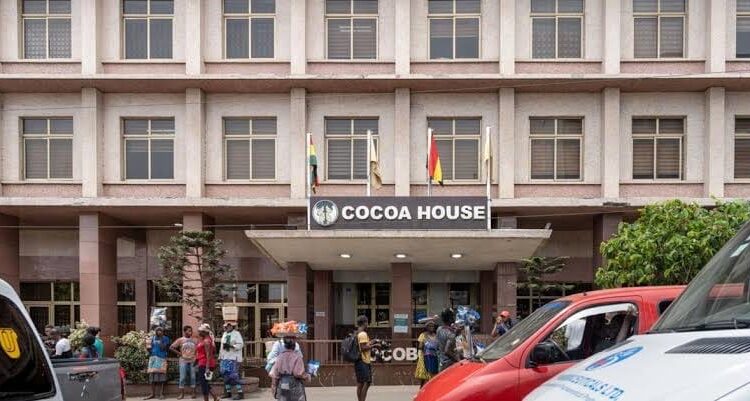
Cocoa Board (COCOBOD) has introduced a new incentive to fight the increasing smuggling of cocoa beans across Ghana’s borders, offering whistleblowers one-third of the value of any intercepted contraband.
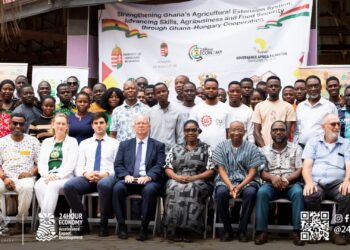
The announcement was made by Dr Ofosu-Ampofo during a stakeholder engagement on cocoa smuggling held at Hohoe in the Volta Region. The engagement brought together chiefs, farmers, security agencies, transport operators and border communities to discuss the growing threat of cocoa smuggling, which COCOBOD says is undermining the country’s production figures and revenue.
Dr Ofosu-Ampofo said the Board had observed a worrying trend, particularly in the Volta and Oti regions, where large volumes of cocoa beans are being illegally transported into neighbouring Togo.
According to him, an assessment of inputs supplied to farmers in the two regions compared to the actual output declared showed a huge disparity, raising red flags. He explained that the cost of subsidized inputs, chemicals, seedlings and extension services invested in the area did not correspond to the volume of cocoa officially purchased.
“As a policy, we decided to come and engage the stakeholders and find out some of the push and pull factors that had resulted in this unprecedented level of smuggling.”
Dr. Ofosu-Ampofo
He said COCOBOD will incorporate the findings and recommendations from the engagement into its policy framework to redesign existing initiatives to reflect current realities on the ground.
New Measures to Protect Cocoa Sector
As part of efforts to improve the welfare of farmers and discourage smuggling, Dr Ofosu-Ampofo disclosed that government, through COCOBOD, has developed a new scholarship scheme targeting children of cocoa farmers entering tertiary institutions.
He said the initiative is aimed at providing direct benefits to farming families and making cocoa farming more attractive and rewarding. He added that research has shown that the Volta and Oti regions possess some of the best soils for cocoa cultivation in the country, with lands that remain free from illegal mining, popularly known as “galamsey”.
According to him, the Cocoa Research Institute of Ghana (CRIG) has also developed hybrid cocoa varieties that have reduced the gestation period from planting to first harvest from three years to 27 months.
He therefore called on the business community, public servants, politicians and other private individuals interested in agriculture to take advantage of what he described as a golden era to invest in cocoa plantations, especially in the Volta and Oti enclave.
Dr Ofosu-Ampofo revealed that COCOBOD has outlined a series of measures and will collaborate with the Regional Security Councils (REGSEC) in both Oti and Volta to clamp down on smuggling and reduce it to the barest minimum.
Smuggling Routes Exposed
Giving details of the smuggling operations, the Director of Special Services at COCOBOD, Mr Jake Kudjo Samahar, listed several routes being used by smugglers. For the Oti Region, he mentioned Jasikan-Bodada, Asato-Kadjebi, Nkonya-Jasikan, Poase Cement-Obuasi, Dodofie-Dodo Amanfrom and Pampawie-Amapayo-Ahamansu, all leading into Togo.
In the Volta Region, the routes include Tsito-Bame-Kpedze, Logba-Leklebi, and Alavanyo-Hohoe-Kpando-Fodome-Wli, also connecting to Togo.Mr Samahar lamented that political interference has been a major setback in the fight against smuggling, as some individuals attempt to influence the release of impounded goods and suspects.
He disclosed that between August 8 and September 29, 2025, a total of 14 vehicles carrying smuggled cocoa beans were impounded by the Sogakope Taskforce. However, only one of the vehicles is currently parked at the police station, with the rest reportedly released under questionable circumstances.
Regional Minister Issues Stern Warning
The Volta Regional Minister, Mr James Gunu, who was present at the engagement, stressed that the Volta Region is strategically positioned not just to transit cocoa but to grow it on a large scale. He said the region will not be allowed to become a transit point for smuggling.
Mr Gunu described the fight against cocoa smuggling as a national duty, noting that every bag of cocoa smuggled out of the country translates into lost jobs and revenue within the cocoa value chain. “The fight against cocoa smuggling is a clarion call since any bag of cocoa smuggled reflects a job lost in the cocoa sector,” he said.
The world’s second largest producer of cocoa, has in recent years been grappling with the smuggling of beans to neighbouring countries, particularly Ivory Coast and Togo, where prices are perceived to be higher due to currency advantages and immediate cash payments.
COCOBOD says the practice deprives Ghana of foreign exchange, reduces the availability of beans for local processing, and distorts national production data.
The Board believes that combining stakeholder engagement, community based surveillance, enhanced security collaboration and the newly announced whistle-blower reward will help deter smugglers and protect the livelihoods of Ghanaian cocoa farmers.
The Hohoe engagement is expected to be replicated in other border regions as part of a nationwide campaign to curb cocoa smuggling.
READ ALSO:AMA Fines Six Food Vendors GH¢1,100 For Operating During National Sanitation Day