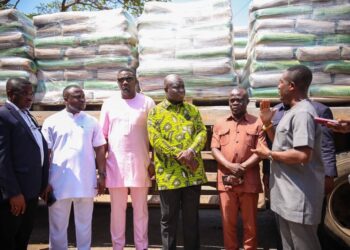
Ghana’s efforts to achieve rice self sufficiency must go beyond increasing domestic production to include improved quality, modern processing technology and stronger market confidence, the Minister for Trade, Agribusiness and Industry, Hon. Elizabeth Ofosu-Adjare, has stated.
The Minister reaffirmed Government’s commitment to strengthening the domestic rice industry, emphasising the need to align production volumes with consumer expectations and quality standards to make locally produced rice competitive against imported alternatives.
She made the remarks during an introductory engagement with players in the rice value chain where she called for coordinated action among farmers, processors, millers, traders and other stakeholders to address challenges confronting the industry.
“We must ensure that quality matches quantity in our efforts to achieve rice self-sufficiency. Increasing production alone is not enough if the rice produced does not meet the expectations of consumers.”
Minister for Trade, Hon. Elizabeth Ofosu-Adjare
The engagement was aimed at strengthening collaboration between Government and industry stakeholders while identifying practical interventions to improve production, processing, distribution and marketing of locally produced rice.
Production Must Match Consumer Demand

The Minister said the development of Ghana’s rice industry required policies informed by the realities of farmers, millers, processors and traders, rather than interventions that address production in isolation.
Ghana has historically relied on imported rice to supplement domestic production, despite its potential to expand cultivation through irrigation, improved seeds, mechanisation and increased investment in agricultural infrastructure.
Hon. Ofosu-Adjare said Government was committed to creating a sustainable market for locally produced rice by strengthening institutional procurement and ensuring that domestic producers had access to reliable buyers.
“One of our immediate priorities is to ensure that public institutions, including schools, hospitals and prisons, source their rice requirements from local producers.”
Minister for Trade, Hon. Elizabeth Ofosu-Adjare
Modern Processing, Quality Assurance A Necessity To Expand Market
The Minister stressed that improving the quality of locally produced rice was essential to building consumer confidence and expanding its market share.
Also, she urged farmers and processors to invest in modern equipment, including colour sorters, destoners and graders, to improve the appearance, cleanliness, uniformity and overall quality of rice produced in Ghana.
Colour sorters help remove discoloured grains and foreign materials, while destoners separate stones and other unwanted particles from rice. Grading equipment helps ensure consistency in grain size and quality, which are important considerations for consumers and commercial buyers.
The adoption of such technologies could help address some of the quality concerns associated with locally produced rice, including impurities, uneven grain sizes, discolouration and inconsistent milling standards.
“Ghanaian consumers are increasingly particular about the quality of rice they purchase. Local producers must invest in the necessary equipment and technology to meet these expectations and build confidence in the Ghanaian rice brand.”
Minister for Trade, Hon. Elizabeth Ofosu-Adjare
Stakeholders Call for Stronger Collaboration

The President of the Ghana Rice Inter-Professional Body (GRIB), Nana Adjei Ayeh II, who led the delegation, welcomed Government’s decision to foster closer collaboration with stakeholders across the rice value chain.
He said the engagement provided an opportunity for industry players to contribute to the development of policies and interventions that could address persistent challenges affecting rice production and processing.
GRIB represents interests within the rice industry and provides a platform for stakeholders to engage on issues relating to production, processing, marketing and industry development.
“We welcome Government’s decision to foster closer collaboration with farmers, millers and other stakeholders. Support is also needed to curb charlatans in the rice production value chain and protect the integrity of the industry.”
President for GRIB, Nana Adjei Ayeh II
The call for stronger regulation and stakeholder coordination highlights the importance of establishing clear operational standards, strengthening monitoring mechanisms and ensuring that industry participants adhere to recognised practices.
She said such measures could help protect farmers and processors from unfair competition, improve traceability and strengthen consumer confidence in locally produced rice.
The Minister’s emphasis on quality and institutional demand signals a broader approach to rice sector development, with production, processing and market access expected to work together.
As Government continues to pursue domestic agricultural production and import substitution, the rice industry will be expected to demonstrate its capacity to supply the market with sufficient quantities of rice that meet acceptable quality standards.
The success of the initiative will ultimately depend on the ability of farmers, millers, processors, traders and policymakers to translate commitments into practical interventions that improve productivity, reduce inefficiencies and strengthen the competitiveness of Ghanaian rice.
READ ALSO:Carrefour Enters Ghana’s Retail Market to Attract Investments and Domestic Enterprise