Ghana’s electricity-sector challenge is not only about how much power the country generates. It is increasingly about the cost of financing the system that generates, transmits and distributes that electricity.
The International Monetary Fund’s latest assessment of Ghana’s state-owned enterprises identifies financing costs as one of the biggest constraints on the financial performance of major SOEs, with energy companies among the entities carrying significant debt and financing burdens.
The report records GH¢9.4 billion in aggregate financing costs in 2024 across major SOEs, almost six times their combined earnings before interest and tax of GH¢1.57 billion.
The IMF says the bulk of these financing costs originated from a limited group of highly indebted entities, including energy-sector SOEs.
The significance for Ghana’s energy sector goes beyond corporate balance sheets.
When energy companies spend a large proportion of their operating resources servicing financing costs, fewer resources remain available for maintenance, network expansion, new generation assets, system upgrades and other investments needed to support a growing economy.
This creates a cycle in which inadequate financial performance limits investment capacity, while investment needs continue to grow.
The Cost Of Capital Is Becoming An Energy Issue
Energy infrastructure is inherently capital intensive.
Power plants require substantial upfront investment. Transmission networks involve long-distance infrastructure and expensive equipment.
Distribution systems require continuous capital expenditure as demand expands and old equipment reaches the end of its useful life.

The financing structure therefore matters almost as much as the infrastructure itself.
A project financed at high cost can produce electricity or network services that are more expensive over its lifetime.
Where a state-owned utility already has weak cash generation, additional borrowing can increase the pressure on tariffs and government finances.
The IMF’s findings point to this interaction between financing and operational sustainability.
“Financing costs are the critical drag on profitability of the largest SOEs.”
International Monetary Fund Technical Assistance Report
The report’s conclusion is particularly significant for energy because the sector cannot simply postpone investment.
Electricity demand continues to evolve, infrastructure ages and Ghana must also adapt its power system to changing generation technologies.
The policy challenge is therefore to find financing structures that allow necessary investment without continuously increasing the debt burden of energy-sector institutions.
Tariffs Remain Central To The Equation
Financing costs cannot be separated from electricity tariffs.
The IMF identifies tariffs below cost recovery as one of the structural weaknesses affecting regulated SOEs.
Where tariffs do not reflect the actual cost of producing and delivering services, utilities struggle to generate enough cash internally.
That creates a difficult policy choice.
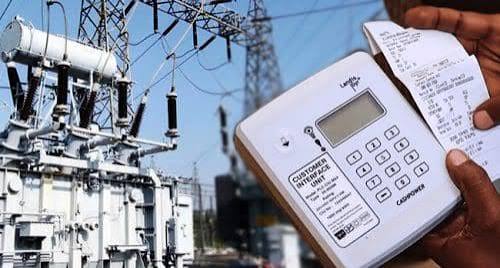
If electricity prices are increased rapidly to reflect full costs, households and businesses face higher bills.
But if tariffs remain below cost for too long, the resulting financial gap eventually has to be absorbed elsewhere, through government transfers, borrowing, arrears or delayed payments to suppliers.
The problem is particularly acute in energy because electricity is an essential input into almost every productive activity.
Higher power costs affect manufacturers, mines, businesses, hospitals, schools and households.
Yet keeping tariffs artificially low without addressing the underlying cost structure can simply shift the burden from electricity consumers to taxpayers.
The IMF therefore treats tariff design as part of the wider financial sustainability problem rather than an isolated pricing issue.
Debt Can Crowd Out Energy Investment
For Ghana, the concern is that excessive financing costs can eventually crowd out productive investment.
Suppose an energy company has limited cash available after paying staff, purchasing fuel, maintaining equipment and meeting other operating expenses.
If a large share of that cash must then be devoted to interest and debt-service obligations, capital projects become harder to finance.
The company may then need government support or additional borrowing to finance the next investment cycle.

That creates a feedback loop.
More borrowing increases financing costs. Higher financing costs weaken profitability. Weaker profitability reduces internally generated funds.
Lower internally generated funds increase dependence on government or new borrowing.
Breaking that cycle requires more than debt restructuring.
It requires a business model in which electricity-sector entities can generate sufficient operating cash while still providing affordable and reliable electricity.
Energy Investment Must Be Linked To Financial Returns
The IMF’s findings are particularly relevant as Ghana prepares for further investment in its electricity infrastructure.
The report records more than GH¢14 billion in physical-asset investment by ten infrastructure-related SOEs in 2024, with electricity accounting for GH¢8.75 billion.
That level of investment demonstrates the scale of Ghana’s infrastructure ambitions.
But it also means the financial consequences of investment decisions will become increasingly important.
Every major project needs a clear answer to questions around financing, operating costs, expected revenue, maintenance and long-term affordability.
For the energy sector, this is particularly important because electricity infrastructure is difficult to liquidate or repurpose if a project proves uneconomic.
A poorly structured power project can therefore become a long-term financial obligation.
A well-designed project, by contrast, can reduce operating costs, improve reliability and stimulate economic activity sufficient to generate broader economic returns.
The Real Test Is Sustainability
The IMF report ultimately raises a broader question about Ghana’s energy model.
The country needs investment, but investment must not simply expand the asset base of already financially constrained institutions.
The objective must be to create a power system in which investment, tariff revenue, operating performance and financing costs reinforce one another rather than work in opposite directions.
That requires better financial planning at the level of individual energy SOEs and stronger oversight at the level of government.
It also requires greater clarity around which costs are genuinely commercial and which arise from public-policy decisions.
For Ghana, the energy transition will require additional capital, not less.
Renewable generation, grid modernisation, storage, transmission upgrades and distribution improvements all require significant investment.

The question is therefore not whether Ghana should spend more on energy infrastructure.
It is whether the country can finance the next generation of energy infrastructure without reproducing the financial weaknesses of the existing system.
That is where the IMF’s warning on financing costs becomes particularly important.
The future sustainability of Ghana’s electricity sector will depend not simply on how much infrastructure the country builds, but on whether the financial architecture surrounding those assets is strong enough to keep them operating long after the construction contracts are signed.
READ ALSO: BoG Faces Rate-Cut Dilemma as Inflation Edges Higher