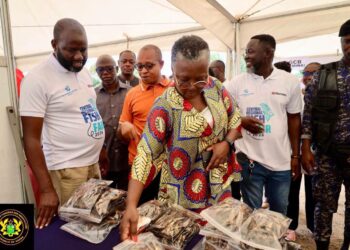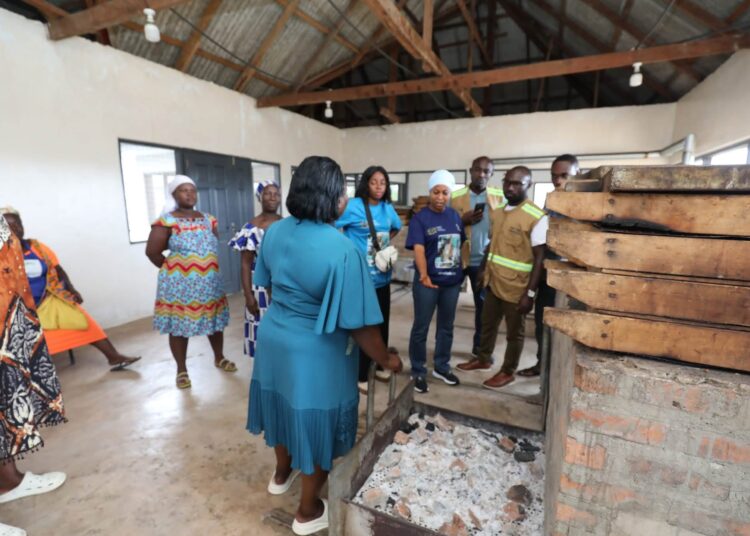
The Fisheries Commission is assessing the construction and utilisation of improved fish smoking ovens across five regions of Ghana to strengthen post-harvest management, improve the quality of smoked fish products and enhance market access for fish processors.
The monitoring and inspection exercise, conducted by the Commission’s Post-harvest Management and Trade Division (PHMTD), focuses on 20 ovens designed under the Food and Agriculture Organisation of the United Nations (FAO) Thiaroye Processing Technique (FTT).
The exercise follows the handover of 20 complete sets of FTT oven metal components to beneficiaries across Ghana in through a collaboration between the Fisheries Commission and the FAO.
The components are intended to support the construction and adoption of improved fish smoking facilities among fish processors.
“The monitoring exercise evaluates the construction status of the 20 FTT ovens and assesses their utilisation and contribution to improving the marketability of smoked fish products.”
The Fisheries Commission
The PHMTD team visits the Western, Central, Greater Accra, Eastern and Ashanti regions, where the beneficiaries and oven components are located.
The visits provide an opportunity for the Commission to establish the progress of construction, identify implementation challenges and assess how the technology supports fish processing activities.
The inspection forms part of efforts to promote improved fish smoking technologies that address challenges associated with traditional smoking methods.
Fish smoking remains an important post harvest preservation activity in Ghana, providing livelihoods for processors and traders while helping to maintain fish supplies beyond the immediate period of capture.
Improving Fish Processing Management
However, traditional fish smoking methods can expose processors to excessive smoke and heat, contribute to high fuel consumption and affect the quality and consistency of finished products.
Improved processing technologies therefore offer opportunities to strengthen product safety, reduce exposure to smoke and support more efficient fish processing practices.
The FAO Thiaroye Processing Technique is designed to improve fish smoking through a structured processing system that supports better control of heat and smoke.
Its adoption is expected to contribute to the production of smoked fish with improved quality, while helping processors manage the conditions under which fish is processed.
The monitoring exercise also enables the PHMTD to examine the extent to which beneficiaries put the supplied components to use. Assessing construction progress is important in determining whether the equipment reaches the operational stage and delivers the intended benefits to fish processors and their businesses.
”Assessing the status of the ovens helps identify gaps in construction and implementation while providing insight into the practical challenges beneficiaries encounter in adopting improved fish smoking technology.”
The Fisheries Commission
Beyond construction, the Commission is examining the relationship between the use of the ovens and the marketability of smoked fish products. Product quality, appearance, consistency and processing efficiency can influence consumer preference and the ability of processors to compete in local markets.
Efforts to Reduce Post Harvest Losses
Improved smoking facilities can also support efforts to reduce post-harvest losses by strengthening preservation practices and helping processors maintain the quality of fish during processing.
These benefits are particularly relevant to fishing communities, where inadequate processing and preservation facilities can affect incomes and the availability of fish products.
The involvement of the FAO highlights the importance of collaboration between national institutions and international development partners in advancing sustainable fisheries management.
Through the provision of the oven components, the partnership seeks to encourage the adoption of processing technologies that support better post-harvest handling and improved livelihoods.
Nevertheless, the extent to which the 20 ovens achieve these objectives depends on their proper construction, regular use and maintenance, as well as beneficiaries’ capacity to operate them effectively.
A continued monitoring can help identify areas requiring technical support and encourage the completion of facilities that remain under construction.
”The assessment provides an opportunity to determine how improved fish smoking ovens contribute to processing efficiency, product quality and the commercial prospects of smoked fish.”
The Fisheries Commission
Addressing Barriers in Fish Production
The findings from the exercise can inform subsequent interventions by the Fisheries Commission and its partners, particularly in addressing barriers to the adoption of improved fish processing technologies.
The initiative also reinforces the need to integrate post-harvest management into broader fisheries development strategies. Improving how fish is processed and marketed can complement efforts to promote responsible fishing, strengthen food security and create sustainable economic opportunities for women and other actors engaged in the fisheries value chain.
As the Commission evaluates the status of the 20 FTT ovens, the exercise underscores the importance of ensuring that investments in improved processing equipment translate into practical benefits for beneficiaries.
The assessment is expected to provide useful information on construction progress, technology utilisation and the contribution of improved smoking methods to the quality and marketability of Ghana’s smoked fish products, supporting continued efforts to modernise the fisheries sector.
READ ALSO:Government Backs Local Manufacturers