
Ghana is moving to deepen cooperation between the energy and defence sectors as concerns grow globally over the vulnerability of critical infrastructure to physical, cyber and operational threats.
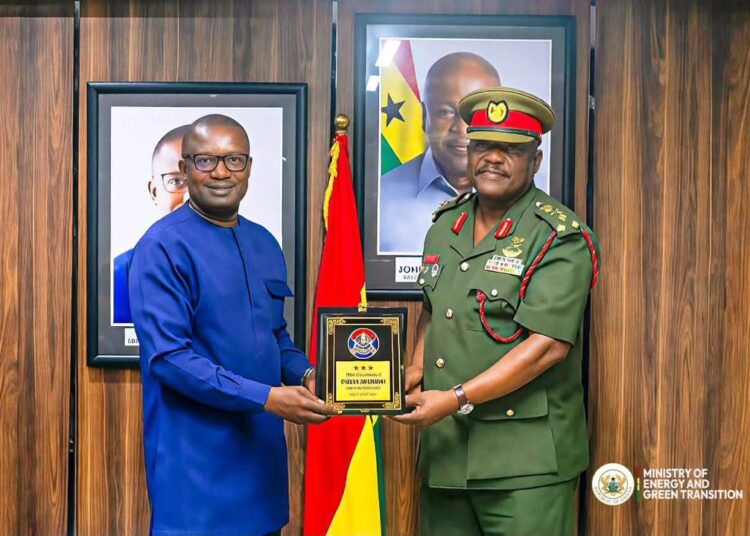
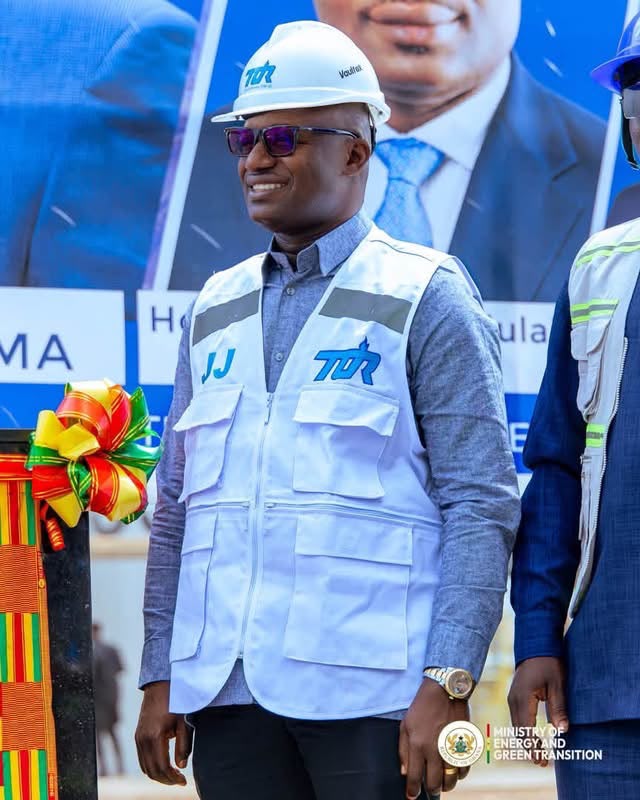
Energy and Green Transition Minister Dr. John Abdulai Jinapor announced that he had held discussions with Lieutenant General William Agyapong, Chief of Defence Staff of the Ghana Armed Forces, focused on strengthening collaboration in the protection of critical energy infrastructure, emergency preparedness and coordinated responses to potential threats affecting the energy sector.
The engagement signals a broader shift in how governments increasingly view energy systems: not simply as utilities that deliver electricity and fuel, but as strategic assets whose disruption can affect economic stability, public safety and national resilience.
We discussed areas where the Ministry and the Ghana Armed Forces can deepen collaboration, particularly in the protection of critical energy infrastructure, emergency preparedness, and coordinated responses to potential threats to the energy sector.
Energy and Green Transition Minister Dr. John Abdulai Jinapor
Why energy and defence are becoming linked
For many readers, the connection between soldiers and power plants may not be immediately obvious.
The relationship becomes clearer when considering the scale of infrastructure that keeps a modern economy functioning.
Power stations, transmission lines, gas pipelines, fuel depots, refineries, storage terminals and control systems are all part of the same national energy network.
A major disruption to any of these assets can affect electricity supply, fuel availability, transportation, telecommunications, health services and industrial production.
Around the world, governments have increasingly classified such facilities as critical national infrastructure.
Ghana has not publicly reported a specific imminent threat to its energy infrastructure.
However, the decision to strengthen coordination reflects a preventive approach rather than a reaction to a confirmed incident.
A changing security environment
The discussion also comes against the backdrop of a security environment that is becoming more complex.
Lieutenant General Agyapong has previously warned that modern threats increasingly include cyber risks, hybrid attacks, disinformation and other forms of disruption that require coordinated national responses.
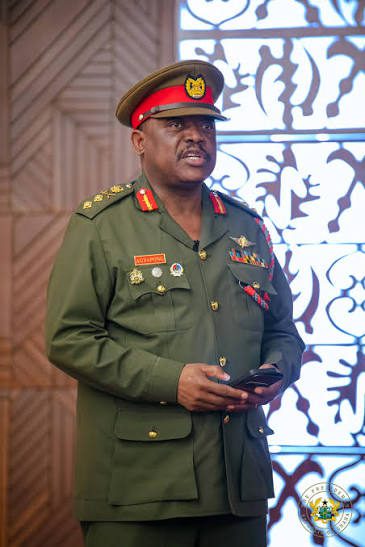
In his remarks, the Chief of Defence Staff emphasized the need for deeper collaboration between the military and other state institutions as part of a cohesive national security architecture.
Energy infrastructure is particularly exposed because many systems now depend on digital control networks, remote monitoring and interconnected communications.
A disruption does not necessarily require physical damage to create operational problems.
Ghana’s expanding energy footprint
The timing of the engagement is significant because Ghana’s energy infrastructure is expanding.
The country is pursuing a broader mix of hydro, thermal, solar and battery-backed generation while also seeking to strengthen gas transmission, refining and fuel-storage capacity.

Recent government discussions have highlighted the strategic importance of assets such as the Tema Oil Refinery, the Sentuo Refinery, gas infrastructure in the Tema corridor and large-scale power-generation facilities.
As the network grows, so does the need for coordinated protection, emergency planning and rapid-response capabilities.
Beyond military protection
The meeting should not be interpreted as a plan to place the armed forces in control of energy operations.
The deeper issue is coordination.

Energy emergencies often require multiple institutions to work together: regulators, utilities, fuel suppliers, local authorities, national security agencies and, in certain circumstances, defence forces.
“The real value of energy–defence cooperation is not the militarisation of the energy sector; it is the ability of institutions to respond quickly when a disruption affects national services.”
This can include support for contingency planning, logistics, communications, access control and continuity of operations.
The 24-hour economy and infrastructure resilience
The engagement also intersects with the government’s broader economic agenda.
A 24-hour economy requires infrastructure that is available continuously, not only during normal operating conditions.
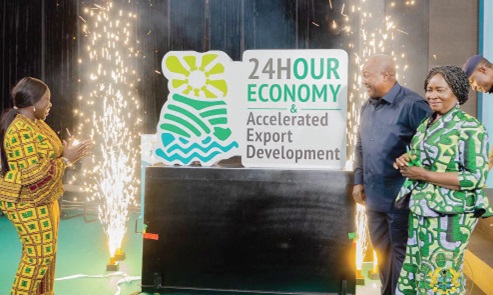
Reliable electricity, stable fuel supply and resilient gas systems become more important as industrial activity, transport and commercial operations extend further into the night.
In that context, infrastructure resilience becomes an economic issue as much as a security issue.
A wider regional trend
Ghana is not alone in moving toward closer coordination between energy and security institutions.
Many countries are integrating infrastructure protection into national security planning as energy systems become more interconnected and more dependent on digital technologies.

West African governments are also paying greater attention to the security of cross-border fuel trade, power interconnections and gas infrastructure.
The significance of the Jinapor–Agyapong engagement therefore lies less in any immediate operational announcement and more in the recognition that energy security is increasingly inseparable from national resilience.
What to watch next
No specific new security measures, joint operations or infrastructure-protection arrangements were announced after the meeting.
The key question will be whether the engagement leads to more formal coordination mechanisms between the Ministry of Energy and Green Transition and the Ghana Armed Forces.
Areas likely to attract attention include contingency planning for major power disruptions, protection of strategic fuel infrastructure, emergency logistics and coordination during national energy incidents.
A strategic signal
The broader message from the engagement is that Ghana is beginning to treat energy infrastructure as part of the country’s strategic security architecture.
That does not mean the sector is facing a declared emergency.
It means policymakers increasingly recognize that a modern economy depends on systems whose interruption can have consequences far beyond the energy sector itself.
As Ghana expands generation, gas infrastructure, refining and renewable-energy assets, the challenge will not only be building more infrastructure.
It will also be ensuring that the infrastructure can withstand disruption, recover quickly and continue supporting economic activity under a wider range of risks.
The meeting between Dr. John Abdulai Jinapor and Lieutenant General William Agyapong therefore represents more than a routine courtesy call.
It is a signal that the boundary between energy policy and national security planning is becoming increasingly important in Ghana’s long-term development strategy.
READ ALSO: Appeal Court Strikes Out AG’s Bid to Suspend Sedinam Tamakloe’s Acquittal