

Ghana’s plan to construct a 1,450-megawatt (MW) state-owned thermal power plant at Kafodzidzi-Abrobeano in the Central Region is emerging as one of the most consequential energy commitments in the 2027 Budget, but its success will depend on more than the construction of generating capacity.
The project will require a dependable supply of natural gas, adequate transmission infrastructure and a financing arrangement capable of avoiding the financial pressures that have weakened the electricity sector.
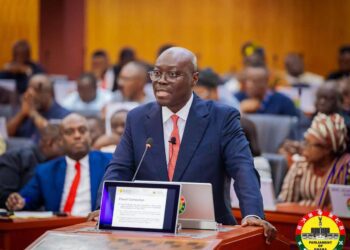
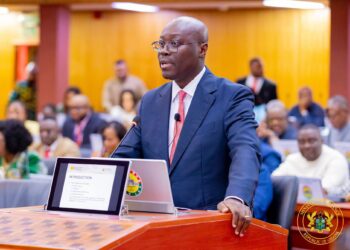
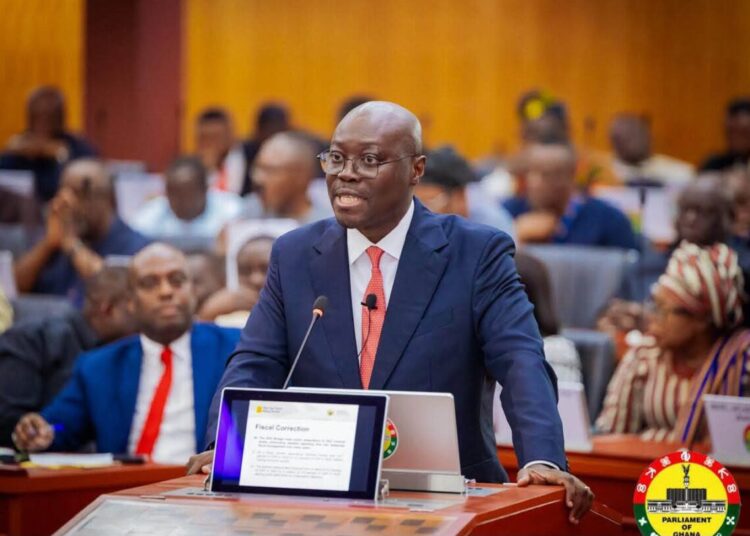
Presenting the 2027 Budget Statement and Economic Policy to Parliament on November 12, 2026, Finance Minister Dr Cassiel Ato Forson said construction would begin in December 2026. The first 600MW is expected to be ready by December 2028, with the remaining 850MW scheduled for completion by December 2030.
The plant is expected to be fully funded and owned by the state, marking a significant commitment to public ownership of additional generation assets.
Government also expects the facility to consume approximately 150 million standard cubic feet of additional gas per day from the Sankofa and Jubilee fields.
The announcement comes at a time when Ghana is attempting to resolve a difficult contradiction: the country has expanded its installed generation capacity, yet the financial and operational weaknesses of the power sector continue to expose the national budget to substantial costs.
More Capacity, But At What Cost?
The Energy Commission’s 2026 National Energy Statistical Bulletin records installed grid-connected generation capacity of 5,840MW in 2025, comprising 4,073MW of thermal capacity, 1,584MW of hydro and 183MW from other renewable sources. Dependable capacity, however, stood at 4,968MW.
The distinction is important. Installed capacity represents the maximum rated output of generating facilities, while dependable capacity reflects what plants can reliably deliver under specified conditions.
Adding another 1,450MW to the installed fleet does not automatically guarantee an equivalent increase in electricity available to consumers.
The Commission also recorded a system peak load of 4,283MW in 2025, an increase from 3,952MW in 2024. This demonstrates the growing demand confronting the electricity system, although the additional capacity must still be assessed against maintenance schedules, fuel availability, network constraints and the cost of generation.
Dr Forson framed the investment as central to the country’s industrial ambitions, declaring in Parliament:
“Energy capacity is economic capacity. It powers growth, jobs, and prosperity.”
The statement captures the government’s argument that new generation capacity is necessary to support industries expected to operate under the 24-Hour Economy programme.
However, the economic value of the plant will ultimately depend on whether it can deliver electricity at a competitive cost and operate consistently enough to reduce, rather than add to, the sector’s financial burden.
The Gas Requirement Is A Major Planning Issue
The proposed plant’s requirement for an additional 150 million standard cubic feet of gas per day deserves particular scrutiny. The Sankofa and Jubilee fields are expected to provide the fuel, but the budget announcement does not provide a detailed gas supply agreement, delivery schedule, pricing arrangement or explanation of how the additional volumes will be secured throughout the plant’s operating life.
This is not a minor technical consideration. Gas-fired generation depends on a continuous fuel supply. A power plant may be physically completed but remain underutilised if upstream production, processing, pipeline capacity or commercial arrangements cannot consistently deliver the required volumes.
The Energy Commission’s statistical bulletin shows that natural gas has become an increasingly important component of Ghana’s energy supply. Its share of total energy supply rose to 27.8 per cent in 2025, equivalent to 4,295 thousand tonnes of oil equivalent.
That growing dependence makes gas availability and pricing central to the reliability and affordability of electricity generation.
The proposed 150 million standard cubic feet per day would therefore represent a substantial additional demand on the domestic gas system.
Government will need to demonstrate that the Sankofa and Jubilee fields can meet this requirement alongside existing commitments to power plants, industrial users and other gas consumers.
The commercial terms will also matter. If the gas is priced in foreign currency or linked to international benchmarks, exchange-rate movements could influence the cost of electricity.
Ghana’s experience with fuel-related obligations shows that increasing generation capacity without addressing the cost and security of fuel supply can leave the sector exposed.
State Ownership Must Be Matched With Financial Discipline
The decision to fully fund and own the plant raises another important question: how will the state finance construction without creating additional fiscal pressure?
The Finance Minister disclosed that Ghana recorded an annual energy sector shortfall of about US$1.4 billion in 2025, while arrears to independent power producers and fuel suppliers stood at approximately US$1.7 billion.
These figures underline the scale of the financial difficulties that new generation investment must help resolve.
The IMF has similarly identified weaknesses in distribution performance, collections and costly generation arrangements as major contributors to the sector’s financial imbalance.
Its analysis cautions that the sector’s shortfall has remained substantial despite improvements in macroeconomic conditions and government interventions.
State ownership could allow Ghana to retain greater control over a strategic generation asset and its future returns. But public ownership alone does not guarantee lower tariffs.
The construction cost, financing terms, fuel price, maintenance expenditure, plant availability and operational efficiency will determine the actual cost of electricity produced.
Government must therefore publish a credible financing and procurement framework, including the expected capital cost, funding sources, construction milestones and projected generation cost.
Without these details, the promise of state ownership may be politically attractive but difficult to assess from a value-for-money perspective.
The 2030 Emergency Power Deadline
The project is also tied to government’s commitment to phase out emergency power plants by December 2030. That target will require the new thermal plant to be completed on schedule, while the proposed solar and battery facilities and transmission upgrades are delivered in coordination.
The first 600MW is expected two years after construction begins, leaving the remaining 850MW to be completed by the end of 2030.
Any delay in the second phase could affect the government’s ability to retire emergency generation without compromising supply reliability.
The proposed facility should therefore be judged not simply by its 1,450MW nameplate capacity, but by its delivered electricity, fuel security, cost per kilowatt-hour and contribution to reducing the sector’s annual financial shortfall.
Ghana’s challenge is no longer only to build more power plants. It is to ensure that every additional megawatt strengthens the reliability of supply without deepening the financial liabilities borne by consumers and taxpayers.
READ ALSO: Women’s Bank Gets Capital Boost Ahead of 2027 Launch