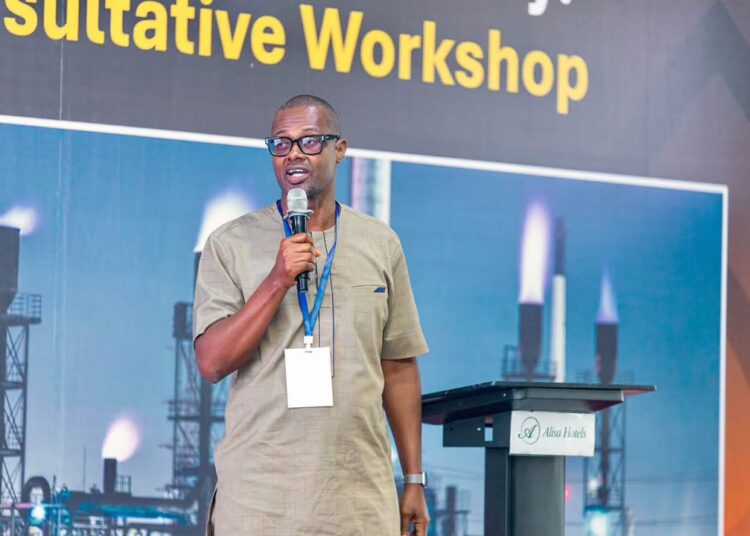
The Ghana National Petroleum Corporation (GNPC) has called for closer alignment between upstream gas production, processing infrastructure and market demand as Ghana works to secure reliable supplies for its growing gas economy.
The call was made by GNPC Director of Engineering, Simon Essilfie, during the Public Interest and Accountability Committee (PIAC) technical consultative workshop on building a resilient gas economy.
Mr Essilfie’s presentation focused on the technical realities of sustaining Ghana’s domestic gas supply, particularly the need to manage existing producing fields carefully while developing additional sources to meet future demand.
Managing Existing Gas Resources
A key concern highlighted at the workshop was the performance of Ghana’s existing upstream gas resources.
Production from the Jubilee, TEN and Sankofa-Gye Nyame fields remains central to the country’s domestic gas supply, making reservoir management increasingly important as the fields mature.
For GNPC, maintaining output from these assets requires decisions that balance current demand with the long-term productive capacity of the reservoirs.
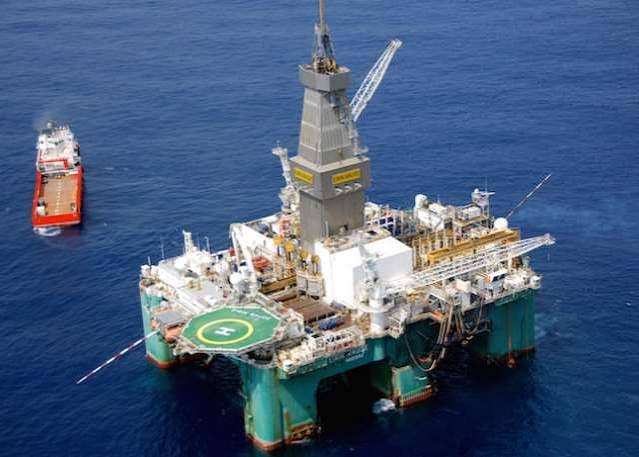
This is particularly relevant as Ghana continues to rely on gas for electricity generation and industrial activity. A disruption or decline in domestic gas availability can quickly translate into higher generation costs where thermal plants have to rely on more expensive liquid fuels.
Mr Essilfie therefore linked reservoir performance directly to the broader question of energy security.
“The task is to connect reservoir performance, infrastructure readiness and market demand as one system to support reliable and sustained gas supply for Ghana.”
GNPC Director of Engineering, Simon Essilfie,
The approach reflects a shift away from viewing gas production as an isolated upstream issue. The ability to deliver gas to consumers ultimately depends on whether production, processing, transportation and demand are developing at a pace that supports one another.
Infrastructure Bottlenecks Remain Critical
Beyond the reservoirs themselves, GNPC identified infrastructure constraints as another factor that could affect Ghana’s ability to sustain gas supplies.
Even where additional gas is available, inadequate processing and transportation capacity can prevent that gas from reaching power plants and industrial users when required.

This creates a situation where the country’s gas security depends not only on how much gas is produced, but also on whether the infrastructure required to move it is available and sufficiently reliable.
For Ghana, this has wider implications because the domestic gas system has become increasingly important to the electricity sector.
Natural gas-fired generation provides a substantial share of the country’s power supply, while industries also depend on gas as a relatively competitive fuel and feedstock.
Any infrastructure bottleneck can therefore have consequences beyond the petroleum sector, affecting electricity costs, industrial production and the wider economy.
New Resources And LNG In The Mix
GNPC is also looking beyond existing fields as Ghana seeks to accommodate rising domestic gas demand.
Mr Essilfie highlighted the need to progress new gas resources while also considering liquefied natural gas (LNG) as part of the country’s future supply options.
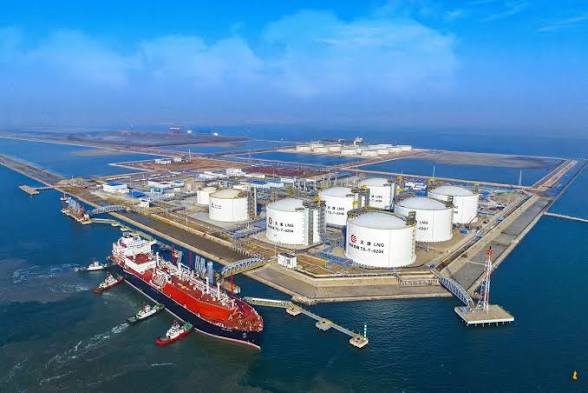
The inclusion of LNG points to the need for Ghana to maintain flexibility in how it sources gas. Domestic production can provide greater control over supply, but new resources require investment and time to develop.
LNG, meanwhile, can provide an additional source of supply when domestic production is insufficient, although its economics are exposed to international market conditions and infrastructure requirements.
The challenge for policymakers and industry stakeholders is therefore to determine how different supply sources can complement rather than compete with one another.
Demand Must Match Supply Planning
The workshop also underscored the importance of understanding how demand for gas is evolving.
Electricity generation remains a major source of gas demand, but industrial consumption is also expected to remain important as Ghana pursues greater industrialisation and seeks to expand domestic value addition.
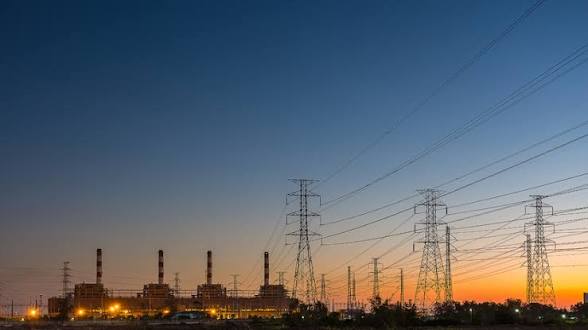
This means supply planning cannot be based solely on historical consumption. Producers and infrastructure operators need clearer visibility over future demand to determine when additional production, processing capacity or import arrangements will be required.
For GNPC, this makes coordination across the value chain essential.
A gas reservoir may have sufficient resources, but without processing capacity those resources cannot be monetised.
Similarly, infrastructure investment can become commercially difficult to justify if there is insufficient demand to support it.
The same applies to LNG: import infrastructure and long-term supply arrangements require sufficient demand and commercially viable offtake commitments.
Connecting Technical Decisions To Energy Security
The technical discussion comes at a time when Ghana is seeking to reduce vulnerabilities across its energy system.
Greater use of domestic gas has the potential to reduce dependence on imported liquid fuels for thermal power generation, while also supporting industrial users.

However, achieving that benefit requires more than increasing production.
Ghana must ensure that reservoirs are managed sustainably, processing facilities remain dependable, transportation networks have adequate capacity and future demand is sufficiently understood to support investment decisions.
The GNPC presentation therefore places the resilience of the gas economy within a wider systems question.
Rather than treating upstream production, infrastructure development and demand growth as separate policy areas, the three must be planned together.
For Ghana, that coordination could determine whether its expanding reliance on natural gas becomes a source of greater energy security or creates another vulnerability within the energy system.
The immediate task, as highlighted at the PIAC workshop, is to ensure that the country’s existing gas resources continue to perform while the infrastructure and new supply options required for future demand are developed in time.
READ ALSO: Mahama Calls for National Hate Speech Dialogue, Warns Against Arrests Over Criticism