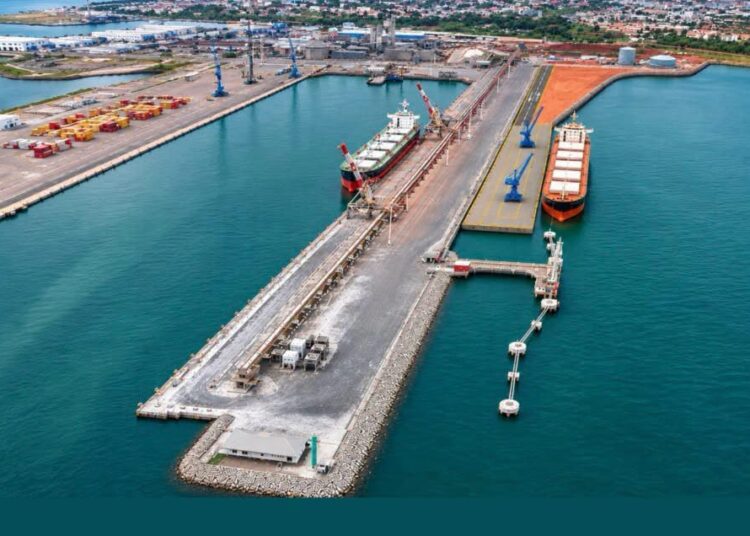
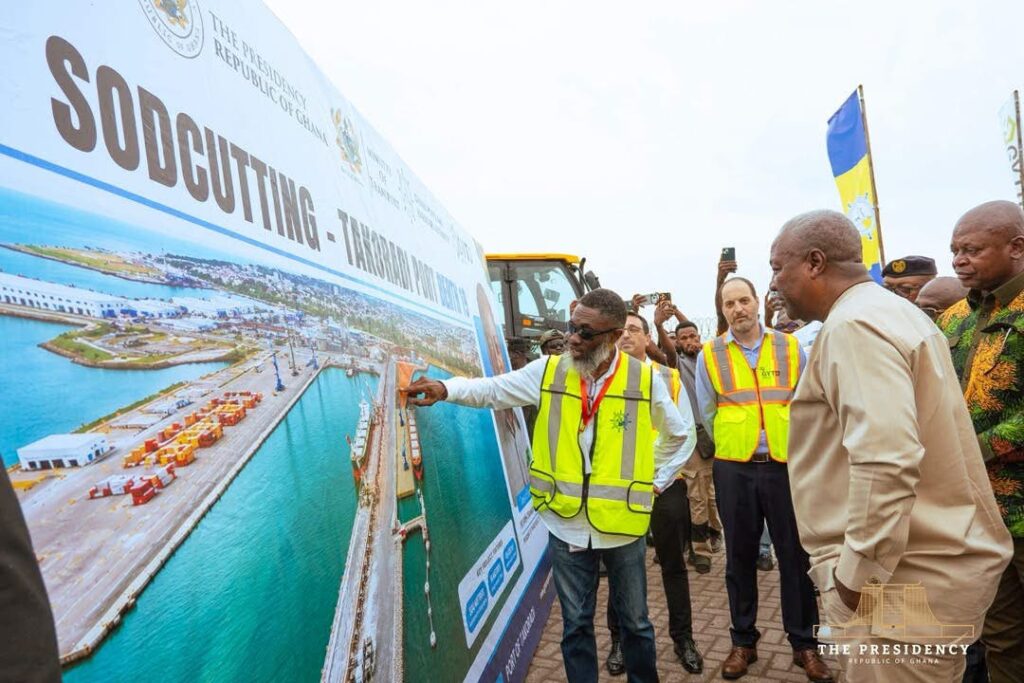
President John Dramani Mahama has commenced a US$98.41 million expansion of the Takoradi Port, in a major infrastructure investment expected to strengthen Ghana’s mineral export capacity, improve industrial logistics and increase the country’s competitiveness in international maritime trade.
The 300-metre Berth 19 facility, being financed entirely through the Ghana Ports and Harbours Authority’s (GPHA) internally generated funds, is designed to accommodate vessels of up to 75,000 deadweight tonnes (DWT), expanding the port’s capacity to handle larger ships and increasing volumes of dry bulk cargo.
The project comes at a time when Ghana’s maritime trade is experiencing sustained growth, with the efficiency of port infrastructure becoming increasingly important to the competitiveness of mining, manufacturing and other export-oriented industries.
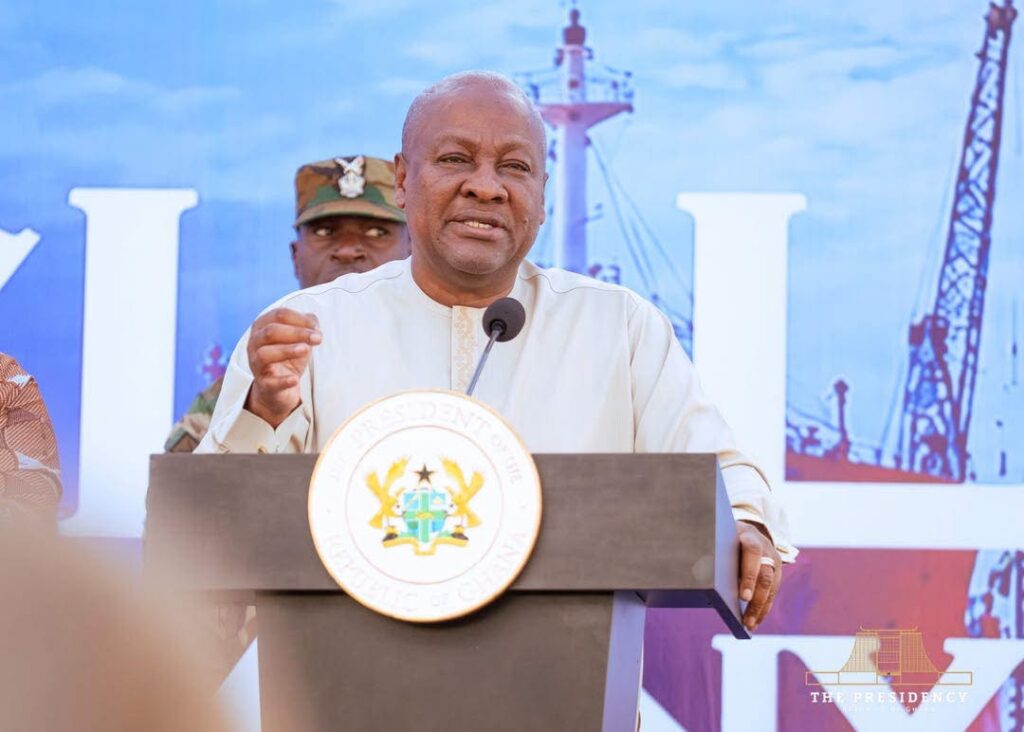
“Berth-19 is very important. A lot of work has gone on in Takoradi, including the dredging of the port to receive bigger vessels than it used to have before.”
President of Ghana, John Dramani Mahama
Mineral Exports Drive Port Expansion
The commercial significance of Berth 19 lies largely in its potential to improve the handling of Ghana’s mineral exports and imported industrial materials.
Takoradi Port is a critical gateway for the country’s mining industry, particularly manganese and bauxite exports, while also serving manufacturers importing clinker, gypsum, limestone and other essential production materials.
According to GPHA’s 2025 port statistics, Takoradi handled approximately 7.53 million metric tonnes of Ghana’s seaborne exports, accounting for about 78 per cent of the country’s total seaborne export traffic.
The port also handled approximately 3.75 million metric tonnes of imports during the same period.
These figures demonstrate the port’s importance to Ghana’s export economy and the need for infrastructure capable of accommodating increasing cargo volumes.
For mining companies, improved bulk-handling infrastructure could support more efficient vessel loading, reduce pressure on existing facilities and strengthen the movement of minerals from production sites to international markets.
The additional capacity is equally important to cement manufacturers and other industrial operators that depend on imported raw materials. Improved vessel accommodation and cargo handling facilities could help strengthen supply-chain efficiency and reduce logistical bottlenecks associated with the movement of essential production inputs.
President Mahama explained that previous investments, particularly dredging works, had significantly improved the port’s ability to receive larger vessels.
“Today, we are talking about 16 meters, that can accommodate the largest ship in the world at 16 meters. And so Takoradi has progressed quite well.”
President of Ghana, John Dramani Mahama
The expansion is expected to complement earlier investments in the port’s container terminal, oil and gas services infrastructure and marine facilities, reinforcing its position as a multipurpose maritime and logistics centre.
GPHA Turns Revenue into Infrastructure
Beyond the physical expansion, the Berth 19 project highlights the financial capacity of GPHA to mobilise internally generated resources for major capital investments.
According to Presidential Spokesperson and Minister of State for Government Communications, Felix Kwakye Ofosu, GPHA’s improved financial position has been supported partly by revenue generated through the expansion of Tema Port under the Meridian Port Services (MPS) arrangement.
He disclosed that since the commencement of operations at the expanded MPS Terminal, GPHA had generated approximately US$421 million, equivalent to nearly GH¢5 billion.
The revenue provides an important financing base for the Authority to reinvest in port infrastructure, expand operational capacity and strengthen its long-term revenue generating potential.
From a business perspective, the ability to finance infrastructure through internally generated funds is significant because it allows the Authority to channel resources from existing operations into additional productive assets.
However, the long-term commercial returns on the investment will depend on increased cargo throughput, efficient terminal operations, competitive port charges and the ability to attract additional shipping activity.
Trade Competitiveness and Industrial Growth
The Berth 19 investment also carries broader implications for Ghana’s ambition to strengthen its position as a regional trade and logistics hub.
Takoradi’s geographical location makes it an important maritime gateway for Ghana’s northern industrial and commercial hinterland, as well as neighbouring landlocked countries, including Burkina Faso, Mali and Niger.
Improved port capacity could strengthen the attractiveness of the facility to shipping operators and businesses seeking efficient routes for transporting goods within West Africa and to international markets.
The expansion is also relevant to Ghana’s wider industrialisation agenda, where reliable transport and logistics infrastructure remains essential to reducing production costs and improving the competitiveness of locally manufactured products.
President Mahama reiterated that port expansion must be supported by complementary investments in rail and road infrastructure to improve the movement of goods between production centres and maritime gateways.
“Expanding the nation’s ports, building railways, and reconstructing roads were all necessary to build a vibrant economy.”
President of Ghana, John Dramani Mahama
Berth 19 is expected to take 26 months to complete. When operational, its contribution will be measured not only by the additional vessel accommodation it provides but also by its ability to improve cargo movement, support industrial production, increase export efficiency and generate additional revenue for the port authority.
READALSO:Ato Forson Redirects Fiscal Surplus to Fund $10bn New Economy