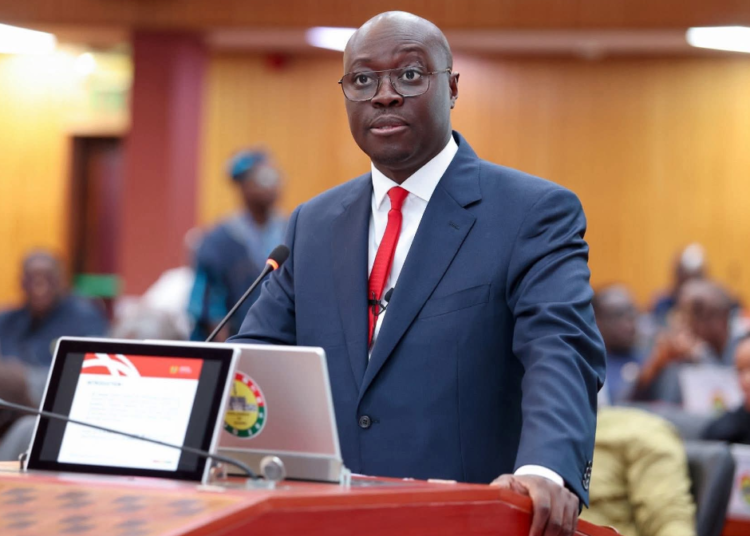
Ghana is preparing to redirect a significant portion of its fiscal resources into an ambitious economic transformation programme, with Finance Minister Dr Cassiel Ato Forson revealing that the government intends to commit the equivalent of US$10 billion to the New Economy initiative between 2027 and 2030 without resorting to additional borrowing.
The funding strategy, which places greater emphasis on domestic revenue mobilisation and a deliberate adjustment of the country’s fiscal surplus, signals a major shift in how government intends to balance debt reduction with its economic transformation ambitions.
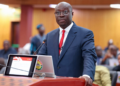
Speaking during a stakeholders’ engagement with manufacturers in Kumasi ahead of the 2027 Budget Reading scheduled for Thursday, November 12, 2026, Dr Forson explained that the government had identified specific domestic resources to finance the programme.
His disclosure comes amid growing interest in how the Mahama administration intends to finance its proposed New Economy programme, particularly at a time when Ghana remains committed to reducing its public debt and maintaining fiscal discipline.
Forson Unveils US$10bn Funding Strategy
According to the Finance Minister, the government plans to spend approximately 1.5% of GDP annually on the programme from 2027 through December 2030.
The funding will come from two principal sources: revenue equivalent to 0.5% of GDP and a reduction in the primary surplus from 1.5% to 0.5% of GDP.
Dr Forson described the estimated US 10 billion commitment as a conservative projection, suggesting that the total resources available could eventually increase to at least US13 billion.
“We’ll fund it initially through 0.5% of GDP in revenue, and by reducing fiscal space by 1%—from a surplus of 1.5% to 0.5% of GDP. So, overall, I will spend 1.5% of GDP annually from 2027 through December 2030.”
Dr Cassiel Ato Forson
He adde saying “Conservatively, that gives me the equivalent of 10 billion dollars. Again, this is a very conservative estimate. That amount could rise to at least US$13 billion.”
The projection places the New Economy among the government’s most ambitious spending commitments, with the potential to direct substantial financial resources towards productive sectors and economic transformation over the four-year period.
GoldBod Revenue Excluded From Funding Plan
One particularly important aspect of Dr Forson’s explanation was his clarification that the Gold Board would not be the source of funding for the Ministry of Finance’s New Economy programme.
The clarification is significant given the growing attention surrounding Ghana’s gold sector and its contribution to foreign exchange generation and broader economic recovery efforts.
The Finance Minister insisted that the government’s funding strategy would rely on conventional public revenue rather than treating GoldBod’s activities as a direct source of budgetary financing.
“The Gold Board will not generate revenue for Ghana’s Ministry of Finance. The Government of Ghana’s funds are generated through taxes—your taxes, not other tax revenues.”
Dr Cassiel Ato Forson
This suggests that the government intends to finance the programme primarily through domestic fiscal resources, with taxpayers’ contributions and adjustments to the existing fiscal framework forming the foundation of its strategy.
The distinction also raises the importance of effective revenue mobilisation, particularly as the government seeks to finance an ambitious investment programme without undermining its broader fiscal commitments.
Debt Reduction Takes a Back Seat as Spending Priorities Shift
Perhaps the most consequential aspect of the announcement is the government’s decision to slow the pace of debt reduction to create room for the New Economy programme.
Ghana recorded a primary surplus of 2.5% of GDP in 2025, which Dr Forson said enabled the country to pay down debt equivalent to that proportion of economic output.
The government is also targeting a primary surplus of 1.5% of GDP in 2026, representing another year of debt reduction.
“Put simply, that means we paid down debt equivalent to 2.5% of GDP,” he said, referring to the 2025 fiscal performance. Explaining the 2026 position, he added, “Put simply, we’re paying down debt equivalent to 1.5% of GDP.”
According to the Minister, Ghana has consequently paid down debt equivalent to approximately 4% of GDP over the past two years.
However, the proposed adjustment means the government will reduce its primary surplus target to 0.5% of GDP annually between 2027 and 2030.
This effectively creates additional fiscal space for investment while reducing the resources available for accelerated debt repayment.
The decision presents an important balancing act for the government. While the New Economy requires substantial investment, maintaining a sustainable debt trajectory remains critical to protecting the gains made under the country’s economic recovery programme.
Government Rules Out Additional Borrowing
Despite the scale of the proposed expenditure, Dr Forson maintained that the government would not increase public borrowing to finance the programme.
He argued that the resources had already been identified within the country’s fiscal framework and that the administration was confident about the sustainability of its funding arrangements. “We’re not adding to the public debt. We’ll keep the debt ceiling at 45% of GDP by 2034.”
He further emphasised saying, “so, it’s not that we’re borrowing to fund the program; we’re using our own resources to fund Ghana’s program.”
The commitment is particularly important given Ghana’s recent debt difficulties and the government’s efforts to restore confidence in public financial management.
Maintaining the debt ceiling at 45% of GDP by 2034 will, however, require careful expenditure management, stronger domestic revenue mobilisation and disciplined implementation of the proposed investment programme.
The Big Test Begins in 2027
The proposed funding arrangement introduces a new dimension to Ghana’s economic recovery strategy. Instead of directing the bulk of available fiscal resources towards faster debt reduction, the government intends to allocate a larger share towards investments expected to support economic transformation.
The challenge will be ensuring that the US$10 billion investment generates sufficient economic returns to justify the adjustment in the country’s debt reduction trajectory.
The government must also demonstrate that its revenue projections are achievable and that the programme will not create additional fiscal pressures that could eventually undermine debt sustainability.
With the possibility of raising at least US$13 billion, the New Economy programme carries significant expectations.
The real test, however, will not simply be the amount of money committed but how effectively the resources are deployed to expand productive capacity, stimulate private sector activity and create sustainable economic opportunities.
As the 2027 Budget approaches, Dr Forson’s disclosure provides an important indication of the government’s priorities for the next four years. Ghana is preparing to spend more on its economic transformation ambitions, even if that means slowing the pace at which it reduces its public debt.
READ ALSO: Majority Leader: More Narcotics Arrests Show Stronger Detection