

Ghana’s impressive external sector performance is providing fresh evidence of the country’s economic recovery, but the Bank of Ghana (BoG) is not ready to take chances with monetary policy easing.
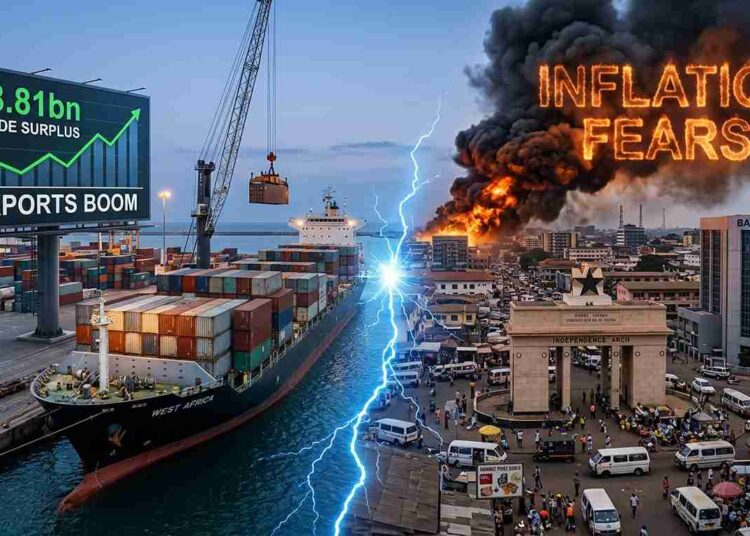
Despite recording a substantial US$8.81 billion trade surplus, a US$5.1 billion current account surplus and a significant improvement in international reserves, the central bank has maintained a cautious approach to interest rates.
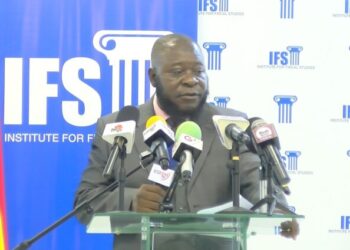
Bank of Ghana Governor, Dr. Johnson Asiama, has defended the Monetary Policy Committee’s decision to keep the policy rate at 14% between May and September 2026, explaining that the decision was necessary to preserve economic stability amid growing uncertainties in the global economy and emerging domestic price pressures.
His defence comes at a time when some market analysts had expected the central bank to reduce interest rates further, particularly after inflation declined significantly and several macroeconomic indicators pointed towards improved economic conditions.
However, the Governor believes that the country’s economic gains must be protected against potential risks that could undermine the progress made in stabilising the economy.
Ghana’s $8.81bn Trade Surplus Highlights External Sector Gains
One of the strongest developments highlighted by the Governor was Ghana’s improved external sector position, which has become an important component of the country’s broader economic recovery.
According to Dr. Asiama, Ghana recorded a trade surplus of US$8.81 billion, alongside a current account surplus of US$5.1 billion.
These figures point to a significant improvement in the country’s external balances, reflecting the strength of export earnings relative to import expenditure.
A sustained trade surplus is particularly important for an economy such as Ghana, where pressure on foreign exchange demand has historically contributed to currency instability and inflationary challenges.
The improvement in the external sector also provides additional support for the country’s capacity to meet international payment obligations while strengthening confidence in its foreign exchange position.
However, the Governor’s update suggests that the Bank of Ghana is not treating these positive developments as sufficient grounds to ease monetary policy aggressively.
The central bank remains conscious that external conditions can change quickly, particularly when international oil prices rise and global economic uncertainties intensify.
International Reserves Reach US$12.94 Billion
Ghana’s external sector performance has also been reflected in the country’s international reserves, which reached US$12.94 billion, equivalent to five months of import cover.
Dr. Asiama disclosed that “The country’s international reserves reached US$12.94 billion, equivalent to 5.0 months of import cover”.
The reserve position represents an important buffer against external shocks, providing the country with resources to support international transactions and manage potential foreign exchange pressures.
Adequate international reserves are particularly important for Ghana because of the economy’s exposure to imported goods, petroleum products and other essential commodities.
When global prices increase, the resulting pressure on import expenditure can affect foreign exchange demand and eventually feed into domestic inflation.
The accumulation of reserves therefore offers some protection against these vulnerabilities.
Nevertheless, maintaining a strong reserve position requires continued discipline in managing the external sector. A prolonged deterioration in global conditions could place pressure on the country’s foreign exchange resources, particularly if import costs rise significantly.
This is partly why the central bank continues to approach monetary policy decisions with caution despite the encouraging reserve figures.

Why BoG Refused to Cut the 14% Policy Rate
The decision to maintain the policy rate at 14% between May and September 2026 attracted attention because inflation had declined considerably during the period.
Some market analysts had argued that the improvement in inflation and other macroeconomic indicators created room for another reduction in interest rates.
However, the Monetary Policy Committee prioritised the need to preserve economic stability rather than respond solely to the downward movement in inflation.
At its September 2026 meeting, the majority of MPC members identified external risks to the economy and concerns about rising inflation as major reasons for maintaining the policy rate.
Rising global oil prices were among the developments that informed the Committee’s cautious position.
Oil price increases can quickly translate into higher domestic fuel costs, transportation expenses and production costs, potentially reversing some of the gains achieved through inflation reduction.
The Bank of Ghana therefore appears determined to avoid a situation where premature monetary easing creates renewed inflationary pressures.
The Governor’s explanation reinforces the central bank’s position that monetary policy decisions must consider both current economic conditions and the risks that could emerge in the months ahead.
Economic Growth Strengthens Ghana’s Recovery Story
Beyond the external sector improvements, Dr. Asiama also highlighted the contribution of fiscal authorities to Ghana’s economic performance.
He explained that coordination between fiscal and monetary authorities had supported economic growth, with Gross Domestic Product (GDP) expanding by 6.4% in the first quarter of 2026.
The performance represents an important development for an economy that has spent considerable time dealing with high inflation, currency depreciation, fiscal pressures and elevated borrowing costs.
Inflation also declined to 3.2% in March 2026, remaining below the Bank of Ghana’s target band of 6% to 10%.
The decline provided evidence that the previous monetary tightening measures, alongside improvements in broader economic conditions, were helping to restore price stability.
However, the central bank’s decision to maintain the 14% policy rate suggests that it is unwilling to compromise the progress achieved through aggressive monetary policy adjustments.
The Governor’s comments also highlight the importance of fiscal discipline and coordination between government and the central bank in sustaining macroeconomic stability.
Ghana Targets 15 Months of Import Cover by 2028
Another major initiative highlighted by Dr Asiama is the Ghana Accelerated National Reserve Accumulation Programme (GANRAP), which targets the accumulation of foreign exchange reserves equivalent to 15 months of import cover by 2028.
The ambitious target reflects the country’s determination to strengthen its external buffers and reduce vulnerability to international economic shocks.
Foreign exchange reserves play a critical role in supporting exchange rate stability, meeting external payment obligations and providing protection against periods of heightened uncertainty.
A stronger reserve position could also improve Ghana’s capacity to withstand commodity price fluctuations, global financial tightening and unexpected disruptions to foreign currency inflows.
Achieving 15 months of import cover, however, will require sustained reserve accumulation, disciplined external sector management and stronger foreign exchange inflows.
The performance of exports, particularly gold, cocoa and other major commodities, alongside foreign investment and broader economic activity, will remain important to achieving this objective.
The Next Test for Ghana’s Monetary Policy
Ghana’s strong trade surplus, improving current account position and rising international reserves provide important support for the country’s economic recovery.
The 6.4% GDP growth recorded in the first quarter and the decline in inflation to 3.2% in March further strengthen the case that economic conditions have improved considerably.
Yet, the Bank of Ghana faces a delicate balancing act.
Reducing interest rates too quickly could stimulate economic activity and ease borrowing costs, but it could also expose the economy to renewed inflationary pressures if external conditions deteriorate.
Maintaining relatively tight monetary conditions, on the other hand, could help protect price stability but may prolong the period of expensive credit for businesses and households.
The challenge will be determining when the economic environment provides sufficient room for further monetary easing without threatening the gains already achieved.
Ghana’s US$8.81 billion trade surplus offers a strong foundation, but the Bank of Ghana is making it clear through its policy stance that external sector strength alone will not determine the direction of interest rates.
The coming months will test whether the country’s improving economic fundamentals can withstand global uncertainties and create the conditions for another phase of monetary policy easing.
READ ALSO: GSE Ends Week on Positive Note as Market Indices Recover