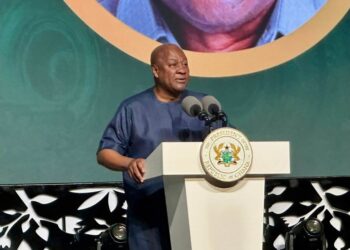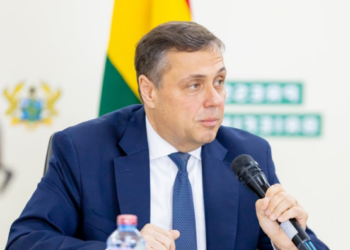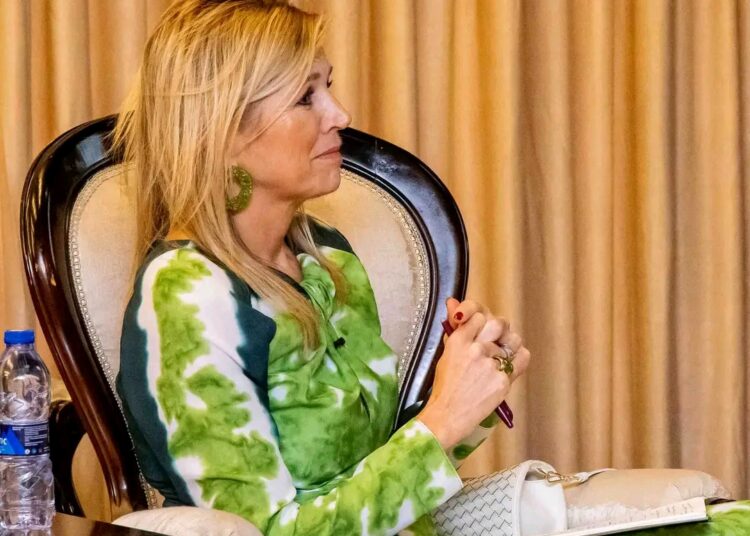
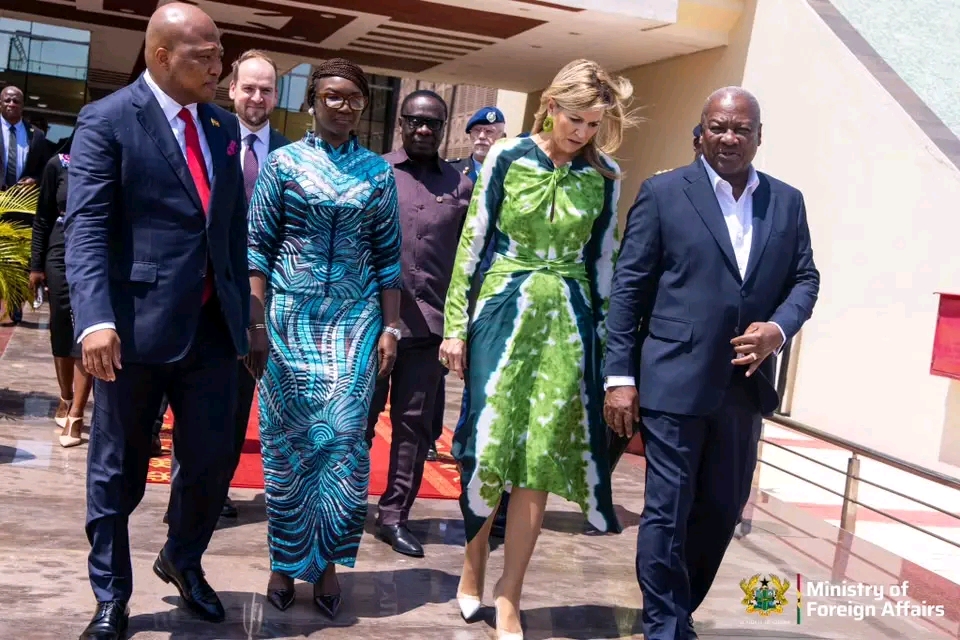
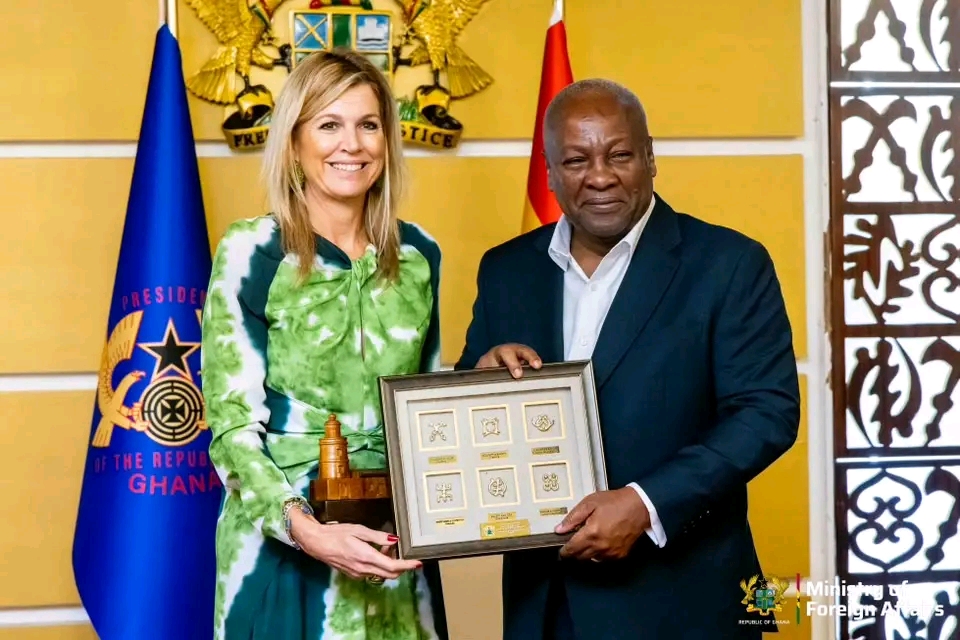
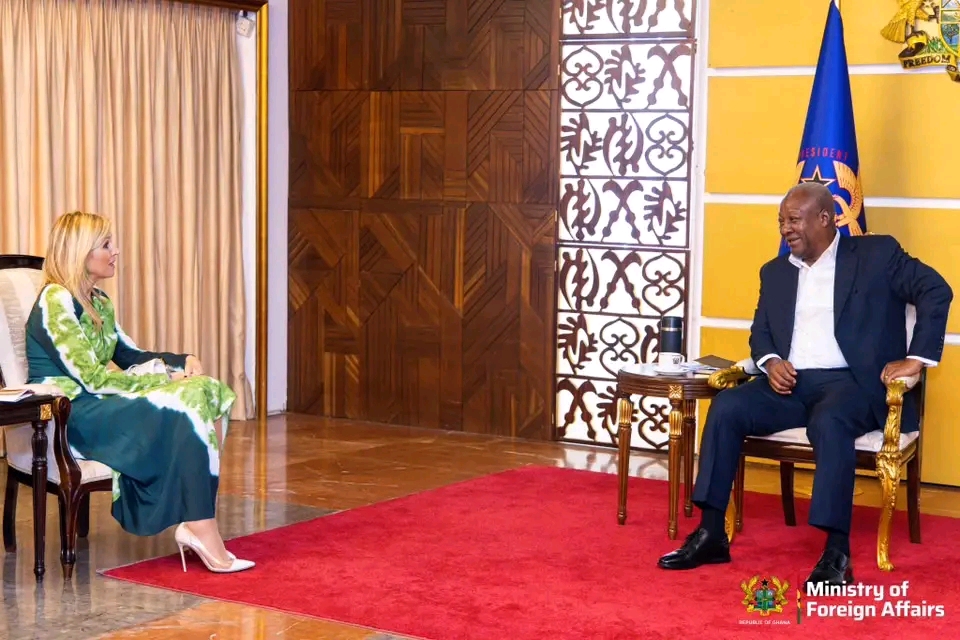
President John Dramani Mahama has received Her Majesty Queen Máxima of the Netherlands, who is visiting Ghana as the United Nations Secretary-General’s Special Advocate for Financial Health. They discussed how to widen access to affordable financial services, particularly for women, young people, farmers and small and medium-sized enterprises (SMEs).
The meeting took place on Thursday, November 5, 2026, at 11:00 a.m. at the Jubilee House in Accra. Ghana’s Minister for Foreign Affairs, Hon. Samuel Okudzeto Ablakwa, and his Deputy, Hon. James Gyakye Quayson, were present at the meeting.
Queen Máxima recalls earlier visit and market encounters
The Queen recalled her last visit to Ghana some 25 years ago, when she was still a Princess. She remembered the experience she had then with Her Royal Highness Lady Julia Osei Tutu, the wife and consort of the Asantehene, Otumfuo Nana Osei Tutu II. On this trip she again visited the Manhyia Palace in Kumasi.
She singled out her interactions with women traders at the Makola Market as a highlight of the current visit. She stressed the importance of “understanding their financial circumstances” and the challenges they face in getting suitable financial products.
She also described meeting farmers and women in the agricultural sector. She said she was fascinated to see that they could operate machinery such as tractors. She argued that better access to financing, insurance and other support would raise productivity and strengthen the livelihoods of these women and their families.
President Mahama outlines digital connectivity plans
President Mahama welcomed the Queen’s proposals and reaffirmed the Government’s commitment to expanding financial inclusion and access to digital services. He informed her that the Government is pursuing efforts to expand digital connectivity, including upgrading telecommunications infrastructure from 2G to 4G to improve internet access, particularly in rural communities.
He added that the Government is introducing a digital wallet linked to the national identification system. It is meant to ease access to digital services and financial transactions.
The accounts of the meeting gave no timeline for the network upgrade or for the digital wallet. They also did not say which agency will run the wallet or what services it will carry. For farmers and traders in rural areas, reliable internet access is a precondition for using digital financial products, which is why the network upgrade features in the discussion.
The President acknowledges the role of susu
President Mahama acknowledged the importance of traditional informal savings arrangements, especially the susu system. Under it, groups of people pool money and support their members in turns.
He noted that the growth of mobile money services has affected the traditional system. He also pointed out that taxes on mobile money transactions have pushed some users towards cash.
He agreed that reducing the cost of digital transactions, and finding new ways to digitise traditional savings arrangements, would draw more people into the formal financial system. He stressed that such innovations should preserve the social and communal benefits of savings groups.
The President’s remarks acknowledge a tension between the push for digital finance and the cost of using it. However, the accounts did not say whether the Government plans to change the mobile money taxes he mentioned. They also did not describe any specific plan to digitise susu groups.
Queen pledges support through partnerships
Queen Máxima thanked President Mahama for his support and leadership. She expressed confidence that Ghana is well placed to advance the financial health agenda through stronger public-private partnerships and effective use of digital technology.
She reiterated her commitment to supporting Ghana’s efforts through the relevant international partnerships and technical expertise. The accounts did not mention any funding, programmes or agreements arising from the meeting.
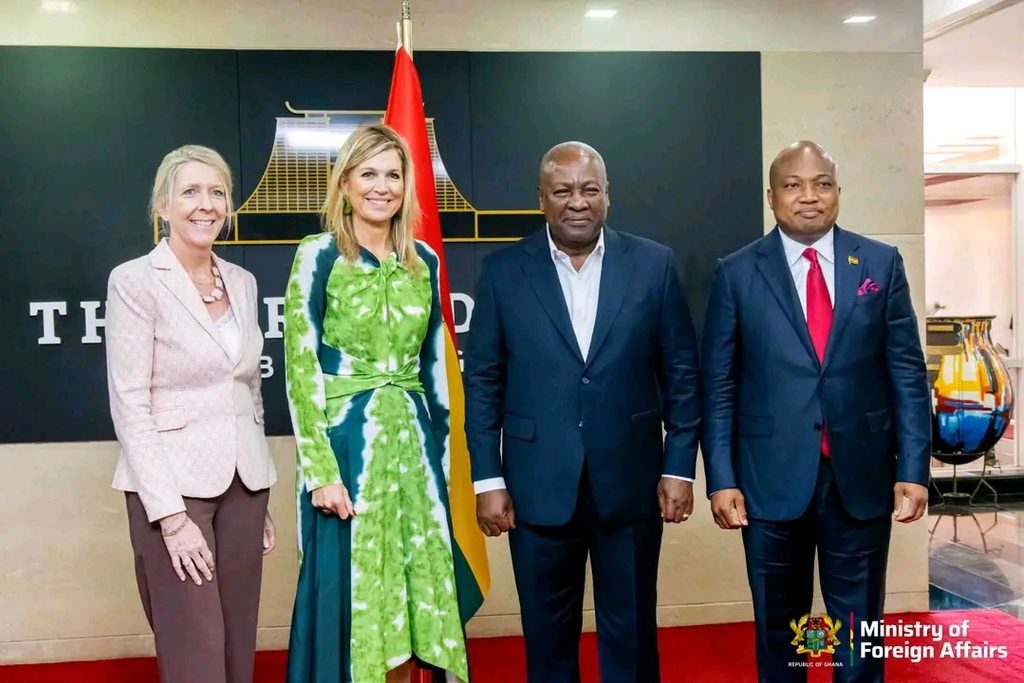
The meeting ended with Ghana and the Netherlands reaffirming their commitment to cooperation on financial health, wider financial inclusion and affordable, appropriate financial services. The priority groups are women, farmers, young people and SMEs.
Attention will turn to whether the talks lead to concrete partnerships, and to how the Government’s digital wallet and connectivity plans take shape.
READ ALSO: Morocco Halts Tomato Exports to Africa