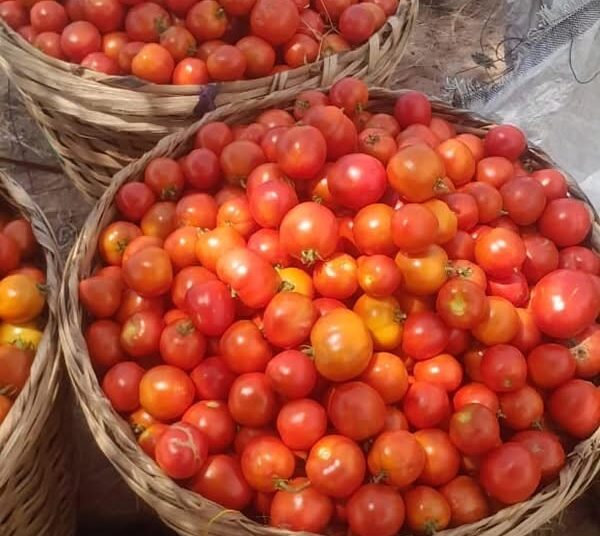
Morocco has temporarily suspended tomato exports to African markets as the government moves to protect domestic food supplies and contain rising prices, introducing a trade restriction that could disrupt regional agricultural supply chains while preserving shipments to higher-paying European destinations.
The decision follows a declining productivity in Souss-Massa, Morocco’s principal tomato producing region, alongside rising fertiliser and fuel costs that have increased production and distribution expenses.
The government says the restriction is temporary and that exports to African markets will resume soon.
The suspension, however, does not extend to European markets, where Moroccan tomatoes command higher prices, creating a distinction between the country’s regional and international trading commitments.
“The halt is temporary and aims to help organise the market,” The Moroccan Government.
The decision highlights the growing challenge facing agricultural exporting countries as they balance domestic food security, consumer affordability and the commercial interests of farmers and exporters.
For Morocco, the immediate priority is to increase the availability of tomatoes locally without significantly undermining the agricultural export industry.
Domestic Supply Pressures Drive Export Restrictions
The immediate concern is the weakening supply of tomatoes within Morocco, where lower productivity in Souss-Massa has contributed to rising market prices.
The region is central to the country’s commercial tomato production and plays an important role in supplying both domestic consumers and international buyers. Reduced output, combined with higher agricultural input costs, has intensified pressure on the domestic market.
Rising fertiliser prices have increased the cost of cultivation, while higher fuel expenses have affected irrigation, harvesting, transportation and distribution. These pressures have made agricultural production more expensive, with potential consequences for farm profitability and consumer prices.
The export suspension is intended to redirect some of the produce previously destined for African buyers towards domestic consumers.
However, the effectiveness of the intervention will depend on the volume of tomatoes retained, the speed at which supplies reach local markets and the extent to which traders reflect increased availability in retail prices.
Morocco’s intervention also forms part of a wider government effort to address food affordability through export regulation and improvements in agricultural distribution.
Government spokesperson Samir Belfquih reiterated the administration’s commitment to food sovereignty, while Finance Minister Fouzi Lekjaa has indicated that food exports would be regulated to help reduce domestic prices.
“The government gives priority to food sovereignty,” Samir Belfquih.
The government has also maintained transport subsidies to support food price stability and announced plans to establish regional distribution companies aimed at reducing intermediaries and lowering distribution costs.
These measures suggest that authorities are seeking to address not only supply shortages but also structural inefficiencies that contribute to the final prices consumers pay.
African Markets Face Trade Uncertainty
The suspension introduces uncertainty for African importers and businesses that depend on Moroccan agricultural supplies to maintain regular market availability.
Although Morocco’s African tomato export market is relatively small compared with its European trade, the restriction could affect individual importing countries depending on their reliance on Moroccan produce and their ability to secure alternative suppliers.
Businesses importing tomatoes from Morocco may now have to reconsider procurement arrangements, negotiate with alternative suppliers or absorb additional transportation expenses associated with sourcing produce from other markets.
The decision to maintain European shipments while suspending African exports is commercially significant because European markets offer higher prices and provide an important source of revenue for Moroccan exporters.
However, the distinction raises questions about how the government intends to balance domestic affordability with its agricultural trade relationships across Africa.
For African trading partners, the development also highlights the vulnerability of regional food supply chains when exporting countries introduce restrictions in response to domestic market pressures.
Export Growth and Food Security Trade-Off
Despite the domestic supply pressures affecting the tomato market, Morocco’s wider agricultural export sector continues to demonstrate growth.
Agricultural exports increased by 4.3 per cent year-on-year to 33.1 billion Moroccan dirhams, approximately US$3.4 billion, during the first nine months of 2026.
The figures cover agricultural exports broadly rather than tomatoes alone, but they demonstrate the economic importance of the sector and the financial interests involved in maintaining access to international markets.
For farmers, exporters and agricultural businesses, predictable trade policies are essential for investment decisions involving cultivation, harvesting, storage, transportation and export contracts.
Sudden restrictions can disrupt existing commercial arrangements, increase uncertainty and potentially weaken confidence among international buyers.
The challenge for Morocco is therefore to ensure that temporary export controls do not become a recurring source of instability for producers and trading partners.
“Exports would resume soon,” Samir Belfquih.
A clearly communicated resumption timetable would help African importers adjust their purchasing strategies and allow exporters to manage existing commercial commitments.
Beyond temporary restrictions, improving agricultural productivity, managing fertiliser and fuel costs, strengthening irrigation systems and reducing distribution inefficiencies could provide more sustainable solutions to domestic supply pressures.
Morocco’s experience also offers an important lesson for African agricultural trade: regional food security depends not only on production capacity but also on reliable cross-border supply arrangements and predictable trade policies.
The government’s immediate test will be whether redirecting tomatoes towards domestic markets translates into improved availability and lower consumer prices.
For African buyers, the priority will be how quickly shipments resume and whether alternative suppliers can bridge any supply gaps.
Ultimately, Morocco must navigate the delicate relationship between protecting domestic consumers and sustaining the agricultural export industry that contributes significantly to its economy.
The success of the intervention will depend on whether it delivers short-term price relief without creating longer-term uncertainty for regional agricultural trade.
READ ALSO:2027 Budget Promises New Economic Era as Ghana Targets Jobs