The 9th Annual Conference of the Ghana Association of Agricultural Economists (GAAE) is bringing together agricultural economists, researchers, policymakers, development partners and agribusiness stakeholders at the University of Ghana, Legon, to examine strategies for transforming Ghana’s agricultural sector through research, innovation and evidence-based policymaking.
The four-day conference, scheduled for November 4–7, 2026, is being held under the theme, “Inclusive Agri-Food Systems Transformation for Policy, Practice and Sustainable Development.”
The conference theme underscores the importance of ensuring that agricultural transformation benefits farmers, agribusinesses, consumers and other participants across the food value chain.
“Inclusive Agri-Food Systems Transformation for Policy, Practice and Sustainable Development.”
Ghana Association Agriculture Enterprise
The gathering comes at a time when Ghana’s agricultural sector faces increasing pressure to improve productivity, strengthen domestic food production, reduce dependence on imported food and build resilience against climate-related disruptions.
It also places renewed attention on the contribution of agricultural economics to national development, particularly in shaping investment decisions, agricultural policies and market structures.
Research and Policy for Agricultural Transformation
The conference highlights the relationship between agricultural research and effective policymaking, recognising that sustainable improvements in agricultural productivity require more than increased production.
Agricultural economists play an important role in examining the financial and economic conditions affecting farmers, including production costs, access to credit, market prices, technology adoption and the profitability of agricultural enterprises.
These considerations are particularly relevant to Ghana, where agriculture remains a major contributor to economic activity and rural livelihoods.
According to the Ministry of Food and Agriculture, the sector contributes approximately 20 per cent of Ghana’s Gross Domestic Product (GDP) and employs about one-third of the country’s workforce. More than 70 per cent of rural households also depend on agriculture for their livelihoods.
However, the sector continues to experience productivity constraints, post-harvest losses, limited access to financing and inadequate infrastructure, challenges that affect farmers’ incomes and the competitiveness of locally produced agricultural commodities.
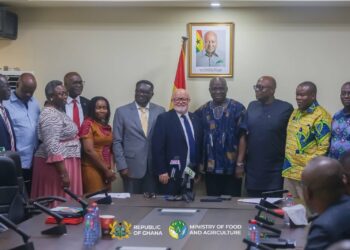
At the 2025 GAAE Annual Conference, held at the Kwame Nkrumah University of Science and Technology (KNUST), Minister for Food and Agriculture, Eric Opoku, emphasised the need to move beyond subsistence farming towards a commercially viable and sustainable agricultural economy.
He highlighted the importance of agricultural economists in providing the evidence required to guide government interventions and private-sector investment.
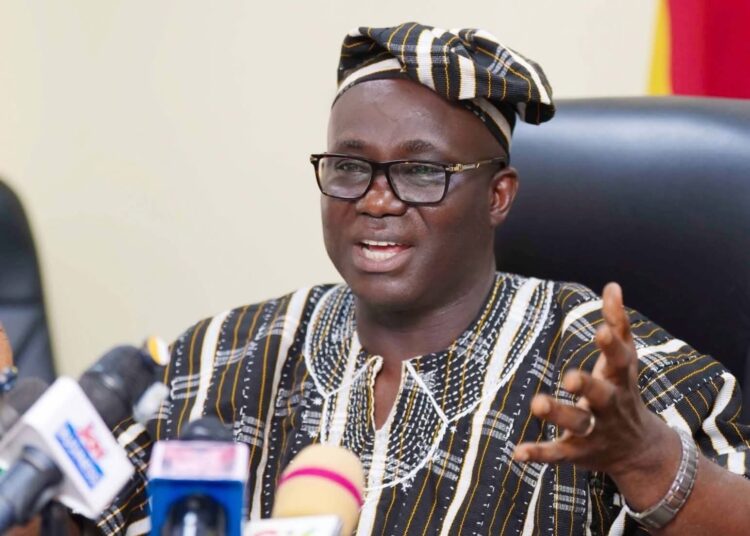
Minister for Food and Agriculture, Hon. Eric Opoku
“The challenge before us is not simply to produce more food, but to transform our entire agri-food system to ensure that the processes remain profitable, inclusive and environmentally responsible.”
Strengthening Food Security and Agribusiness
Another important dimension of the conference is the need to connect agricultural production with processing, storage, transportation, distribution and marketing.
Ghana’s food security objectives depend not only on increasing crop yields but also on ensuring that harvested produce reaches consumers efficiently and that farmers receive reasonable returns from their investments.
Post harvest losses remain a major concern. The Ministry of Food and Agriculture has previously estimated that losses can reach approximately 30 per cent of agricultural output, reflecting challenges associated with inadequate storage, transportation and processing facilities.
The country’s annual food import bill also exceeds US$3 billion, with rice, poultry and processed foods accounting for significant import expenditure.
These figures demonstrate the economic importance of strengthening domestic agricultural production and developing competitive local industries capable of meeting consumer demand.
The conference provides an opportunity for researchers to examine how agricultural financing, improved technologies, market information systems and private-sector participation can address these structural challenges.
The discussions also carry implications for the government’s Feed Ghana Programme, which seeks to increase domestic food production through improved access to seeds, irrigation, mechanisation, post-harvest infrastructure and agro-processing.
Agricultural economists can contribute to assessing the programme’s economic viability, identifying investment gaps and measuring the impact of interventions on productivity, household incomes and food prices.
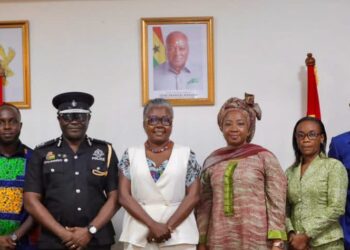
At the previous conference, GAAE President, Professor John K. M. Kuwornu, highlighted the importance of integrating the different components of agricultural value chains to achieve meaningful transformation.
“Agri-food transformation cannot be achieved without the proper integration of the various components of sustainable agribusiness, including financing, production, processing, logistics, distribution, and marketing.”
GAAE President, Professor John K. M. Kuwornu
Climate Resilience and the Future of Agriculture
Climate change, sustainability and technological innovation are also critical considerations for the future of Ghana’s agricultural economy.
Changing rainfall patterns, rising temperatures, flooding and prolonged dry periods continue to affect agricultural production, particularly among smallholder farmers who depend heavily on rain-fed farming.
The challenges increase production uncertainties, influence commodity prices and expose rural households to income fluctuations.
The conference also presents an opportunity to strengthen collaboration between universities, government institutions, research organisations, financial institutions and private agribusinesses.
Such partnerships are necessary to ensure that research findings translate into practical solutions rather than remaining within academic publications.
At the 2025 conference, Minister Eric Opoku stressed that climate-related threats must inform the country’s agricultural development decisions.
“The choices we make today will shape the food systems of tomorrow, systems that feed our people, create jobs, and sustain our planet.”
Minister for Food and Agriculture, Hon. Eric Opoku
The 2026 gathering is expected to contribute to the development of research networks, professional relationships and knowledge-sharing opportunities among established agricultural economists and emerging researchers.
READ ALSO:Ghana-Canada Trade Surges as Mahama, Carney Eye New Framework