

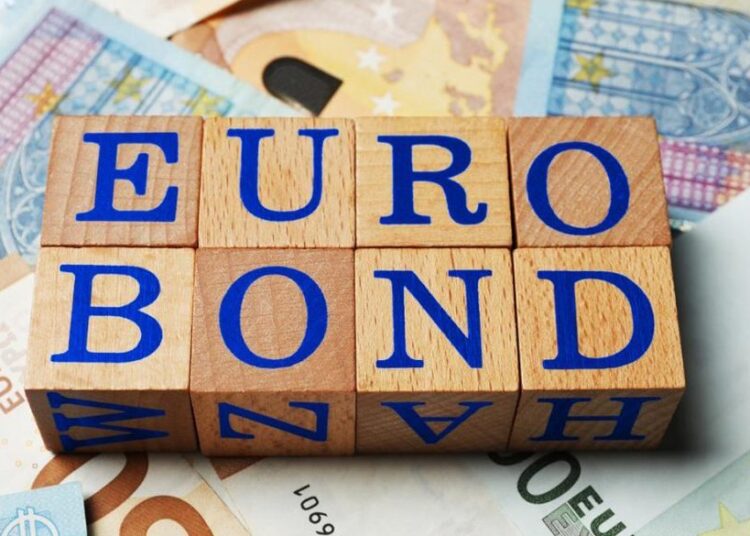
Ghana is preparing for a major shift in its borrowing strategy, with the Government ruling out Eurobond issuance between 2027 and 2030 as it seeks to protect the country’s debt sustainability and avoid another cycle of external financing pressures.
The decision, captured in the 2027 Fiscal Strategy Document, signals a significant departure from the country’s previous dependence on international capital markets to finance budget deficits and meet major spending obligations.
Under the new arrangement, Government intends to rely primarily on domestic borrowing, project loan disbursements from development partners and other prudent debt management measures to finance its activities over the four-year period.
The move comes at a critical time when Ghana is still working to consolidate the gains from its fiscal reforms and extensive debt restructuring programme following the economic crisis that forced the country into a painful debt overhaul.
Although the Government’s decision could help shield the economy from external borrowing vulnerabilities, it also places considerable responsibility on the domestic financial market to provide the resources needed to support public expenditure.
Government shuts the door on international borrowing
The decision to rule out Eurobond issuance from 2027 to 2030 represents one of the most consequential elements of the Government’s medium-term debt management strategy.
Rather than returning to international capital markets to raise funds, authorities intend to deepen reliance on domestic financing from both banking and non-banking sectors.
The 2027 Fiscal Strategy Document indicates that domestic financing would serve as the residual source of budget financing over the period, with renewed emphasis on expanding the local bond market.
This approach is designed to reduce the country’s exposure to external debt risks, particularly the volatility associated with international interest rates, currency movements and changing investor sentiment.
Ghana’s experience with international borrowing has demonstrated how quickly external financing obligations can become difficult to manage when economic conditions deteriorate.
The suspension of access to international capital markets followed the country’s debt crisis, which culminated in the Domestic Debt Exchange Programme in 2022 and subsequent external debt restructuring efforts.
The latest policy direction suggests that the Government is determined to avoid repeating the circumstances that pushed the country into one of its most difficult economic periods.
Domestic bond market faces a bigger responsibility
With Eurobond issuance off the table, Ghana’s domestic bond market is expected to play a significantly larger role in financing Government operations.
Authorities plan to increase the issuance of medium and long-term domestic bonds as part of efforts to reduce refinancing pressures associated with short-term debt instruments.
This strategy is particularly important given the risks of depending heavily on Treasury bills to meet government financing requirements.
Short-term borrowing can create considerable repayment pressure when large volumes of debt mature within relatively short periods. By extending the maturity profile of domestic debt, Government hopes to spread repayment obligations over a longer period and reduce the frequency of refinancing.
The strategy could also create opportunities to strengthen the local capital market by encouraging greater participation from institutional investors, pension funds, insurance companies and other domestic financial institutions.
However, increased reliance on domestic borrowing will require careful coordination to prevent excessive Government demand for funds from crowding out private sector borrowers.
Businesses already depend on banks and other financial institutions for credit to finance expansion, investment and working capital requirements. A domestic financing strategy that places too much pressure on available liquidity could complicate efforts to increase private sector lending.
Seven per cent revenue allocation to strengthen Sinking Fund
Beyond changing its borrowing strategy, the Government is also strengthening its approach to managing future debt repayments.
The fiscal strategy document indicates that monthly transfers equivalent to seven per cent of gross domestic non-oil tax revenue will continue to be made into the Sinking Fund.
The funds are intended to support the redemption of domestic bond maturities falling due in 2027 and 2028.
This arrangement is expected to help the Government accumulate resources ahead of major repayment obligations rather than scrambling to raise funds when debt becomes due.
Building adequate cash buffers through the Sinking Fund is also expected to support future debt redemptions and liability management operations.
The approach is particularly significant because Ghana will need to manage substantial domestic repayment obligations while maintaining fiscal discipline and protecting the resources required for development spending.
Consistent transfers into the fund could therefore become an important pillar of the country’s broader debt management framework.
Development partners become critical financing sources
With international bond issuance excluded from the financing equation, multilateral and bilateral development partners are expected to assume greater importance in supporting Ghana’s external financing requirements.
The government intends to rely primarily on policy-based and project loans from multilateral development institutions, alongside project loan disbursements from bilateral partners.
However, the strategy will not permit unrestricted external borrowing.
The document indicates that project loan disbursements would be capped to ensure that new borrowing remains consistent with the country’s debt sustainability objectives.
This suggests that the Government wants to maintain access to development financing without exposing the economy to excessive external obligations.
Such financing could support critical infrastructure and development projects, particularly where the loans are tied to productive investments capable of strengthening economic activity.
Nevertheless, the availability and timely disbursement of these funds will be important in determining how effectively the Government can execute its development agenda without returning to international bond markets.
Ghana targets 44.8% debt-to-GDP ratio by 2034
Perhaps the most ambitious element of the medium-term strategy is the Government’s projection that public debt will continue declining relative to the size of the economy.
The fiscal strategy document projects that Ghana’s public debt-to-GDP ratio will fall to 44.8 per cent by 2034.
This would place the ratio below the statutory threshold of 45 per cent established under the amended Public Financial Management framework.
Achieving this target will require sustained fiscal discipline, controlled borrowing, stronger revenue mobilisation and effective management of public expenditure.
The Government must also ensure that its domestic financing strategy does not create new pressures within the financial sector.
Ultimately, Ghana’s decision to shut the door on Eurobond issuance until 2030 represents a major test of its post-debt restructuring economic management.
The country is seeking to rebuild fiscal credibility without returning to the international borrowing practices that contributed to its debt difficulties.
Whether the strategy delivers the desired results will depend not only on how much Government borrows, but also on how efficiently borrowed resources are deployed and how consistently fiscal commitments are maintained over the coming years.
READ ALSO: Over 80% of Ghanaians Have Bank Accounts, But Only 22% Are Financially Healthy