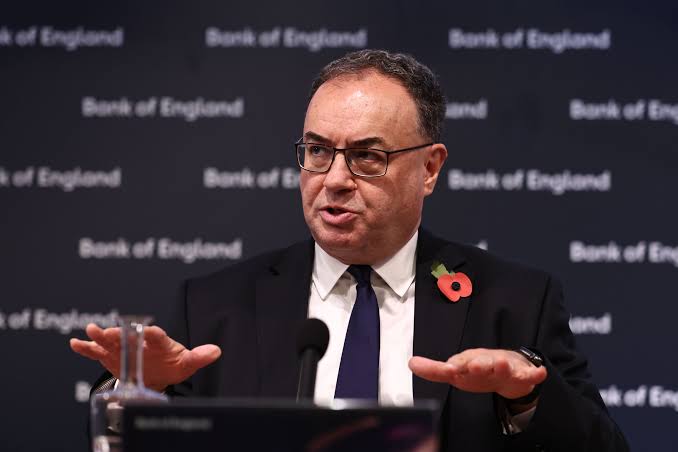
The Governor of the Bank of England, Andrew Bailey, has stated that closer trading relations between the United Kingdom and the European Union (EU) could strengthen economic growth.
Andrew Bailey made the remarks in a rare intervention on the Brexit debate, arguing that reducing trade barriers and improving market access with Britain’s nearest neighbours would benefit UK economy.
Speaking in an interview, he maintained that although he does not take a political position on Brexit, greater openness in trade with the EU could support economic growth and productivity.
“For over a decade now. I’ve been very clear that, as a public official, I do not take a position on Brexit per se. Having said that, the broader question that underpins that, which you rightly ask, is:
“Would the UK being able to trade more openly with its nearest neighbours, to have that trade, to have that market openness, be beneficial for growth in the UK? My view is yes, it would.”
Andrew Bailey
The intervention also follows the Bank of England’s decision on Thursday, November 5, to increase its benchmark interest rate by 0.25 percentage points to 4 per cent, the first rise since August 2023, amid mounting inflationary pressures linked to the conflict in the Middle East.
Burnham Prepares to Pursue Closer Relationship with Brussels
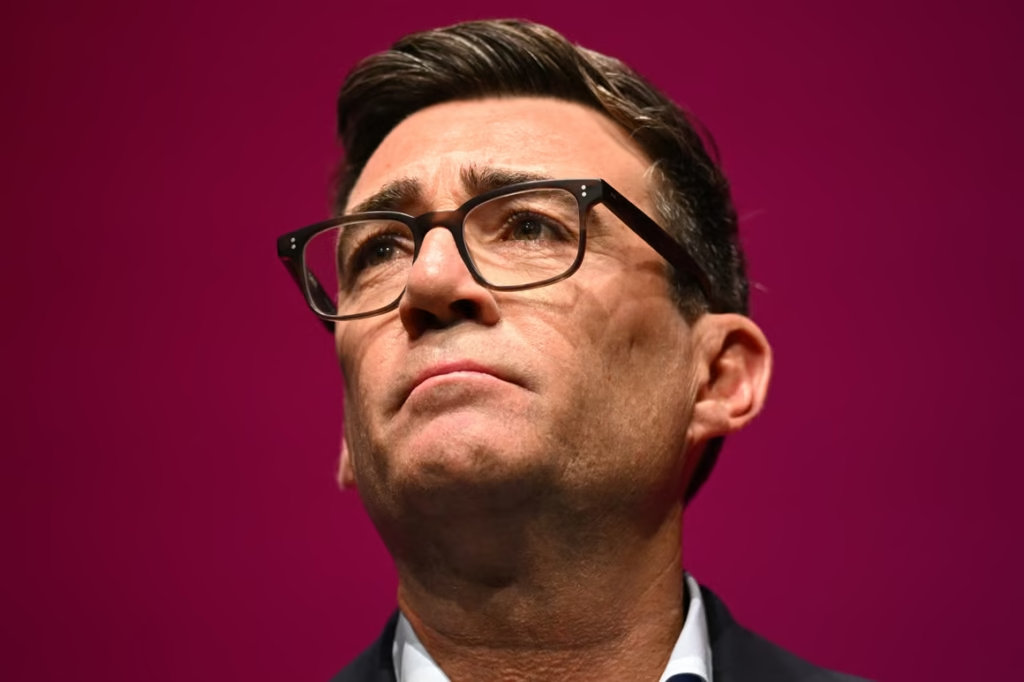
Meanwhile, Prime Minister, Andy Burnham is preparing to use the UK-EU summit scheduled for November 20 in Brussels to advance discussions on reducing trade barriers and strengthening economic cooperation between the two sides.
Earlier this week, Andy Burnham indicated that new agreements with the EU could add billions of pounds to the British economy, potentially increasing gross domestic product (GDP) by approximately 0.4 percent.
The proposed arrangements are expected to cover agricultural trade, food and drink standards, and a youth mobility scheme that would give people under 35 greater opportunities to live, work or study in European countries with fewer restrictions.
However, Burnham has indicated that he wants to go further than the previous administration in considering Britain’s long-term relationship with the bloc, including the possibility of eventual EU membership.
His proposals nevertheless remain subject to Labour’s existing policy commitments, which rule out rejoining the EU, customs union or single market, as well as restoring unrestricted freedom of movement during the current parliamentary term.
Economists and Business Groups Back Greater Trade Openness
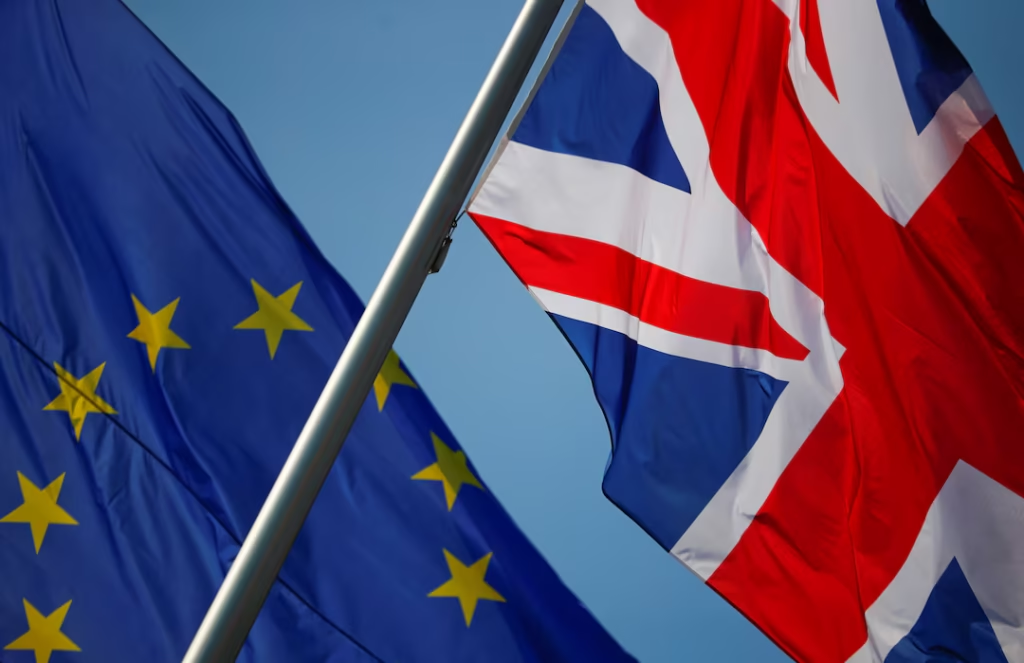
Andrew Bailey’s assessment has received support from economists and organisations advocating stronger economic cooperation between Britain and the European Union, who argue that reducing trade barriers could improve productivity and stimulate growth.
Jonathan Portes, an Economics Professor at King’s College London and former Chief Economist at the Cabinet Office, described the governor’s position as an acknowledgement of the economic consequences associated with Brexit.
“The governor is simply stating the obvious: Brexit has damaged the UK economy and reversing it partially or wholly would boost growth.”
Jonathan Portes
He, however, questioned whether a politically achievable middle ground exists between the current arrangements and full EU membership.
“The real question, however, which the governor unsurprisingly dodges, is whether there is any politically feasible half-way house, or whether the real choice is between some version of the status quo and Rejoin.”
Jonathan Portes
Also, Stephen Millard, Deputy Director for Macroeconomics at the National Institute of Economic and Social Research, also supported efforts to reduce trade restrictions between Britain and its largest trading partner.
“I would certainly agree that any move to reduce trade frictions between us and our nearest and largest trading partner has got to be good for productivity and growth.”
Stephen Millard
In addition, Naomi Smith, Chief Executive of Best for Britain, an organisation campaigning for the UK to restore its EU membership, argued that closer European integration could deliver substantial economic benefits.
“As independent modelling has projected, our GDP would be turbocharged by £92bn, at the very least, turning the page on the economic stagnation of the past decade, and opening up a fresh chapter for our country.”
Naomi Smith
Finally, Joe Meighan of European Movement UK has welcomed Bailey’s remarks, arguing that greater trade openness should encourage the government to pursue stronger economic relations with European partners.
Meighan maintained that reducing trade barriers could support British businesses, improve commercial opportunities and strengthen living standards.
READ ALSO: IMF Warns Ghana as Falling Reserves Expose External Sector Vulnerabilities