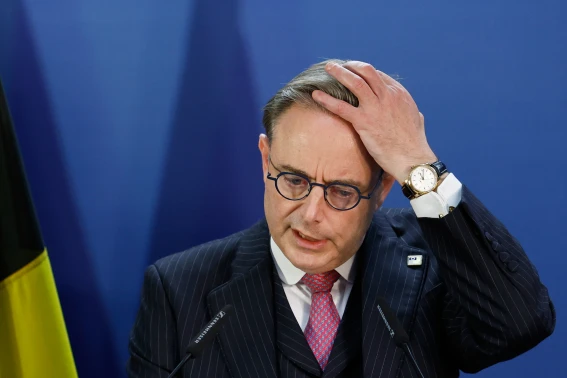
Belgian King Philippe has rejected Prime Minister Bart De Wever’s resignation and instructed him to immediately resume negotiations with coalition partners to resolve a prolonged dispute over the country’s budget.
The Royal Palace announced the decision after the King met De Wever and held consultations with the leaders of the five parties forming Belgium’s governing majority.
De Wever offered his resignation on Monday after the coalition failed to reach an agreement on the budgetary measures needed to address the country’s financial challenges.
However, the five party leaders reaffirmed their commitment to agreeing on a sustainable budgetary plan for the next three years and expressed their willingness to conclude negotiations as soon as possible, according to the palace statement.
They also formally committed to making concessions to secure an agreement within the coalition.
Following the consultations, King Philippe rejected the Prime Minister’s resignation and instructed him to return to negotiations immediately. De Wever is expected to report back to the Monarch on November 16.
The King emphasised the need to balance social cohesion with economic growth, urging the coalition leaders to demonstrate compromise and political responsibility.
Coalition Divided Over €10 Billion Budget Gap
The Belgian government is seeking to close a budget gap of approximately €10 billion by 2029, but coalition partners remain divided over how the additional revenue and savings should be secured.
The Flemish Socialist party Vooruit has called for higher contributions from the country’s wealthiest earners, arguing that those with greater financial means should shoulder more of the burden.
However, the French-speaking centre-right Reformist Movement has rejected the proposal to increase taxes on high earners and also opposed reforms to value-added tax.
The disagreement has complicated efforts to reach a common position on the government’s fiscal priorities, leaving De Wever under pressure to reconcile the competing demands of the coalition partners.
Belgium’s political impasse comes as the country faces growing pressure to contain its public debt and reduce its budget deficit. The European Commission has forecast that Belgium’s debt will reach 110% of gross domestic product this year.
The country is among the most heavily indebted members of the 27-nation European Union, alongside France and Italy. The debt burden has accumulated over several years, with the COVID-19 pandemic and the energy crisis adding to the strain on public finances.
Rising interest payments have further complicated efforts to balance spending priorities, including plans to increase defence expenditure.
Belgium recorded a budget deficit of 5% of GDP last year, exceeding the EU’s reference limit of 3%. Its public debt has also surpassed the bloc’s reference threshold of 60% of GDP.
The government’s inability to agree on a budget has added to uncertainty over how the country will meet its fiscal commitments. Interest rates on Belgian government bonds have risen, increasing the cost of servicing its debt.
The crisis is unfolding amid student protests and recurring labour strikes, including several nationwide days of action organised by trade unions.
The breakdown in negotiations has drawn criticism from opposition figures, who have accused De Wever of failing to unite his coalition behind a common approach.
The King’s intervention places renewed emphasis on compromise as the government attempts to establish a budgetary framework for the coming years.
Emergency Budget Option Returns
The dispute has also revived the possibility of Belgium relying on a temporary budget arrangement if the coalition fails to reach an agreement.
De Wever had previously ruled out beginning the new year with an emergency budget. However, he said this week that the government might have no alternative if negotiations remained deadlocked.
Under Belgium’s provisional budget system, the government is allowed to spend one-twelfth of the previous year’s approved budget each month.
The arrangement enables public spending to continue in the absence of a newly approved annual budget, but it limits the government’s ability to introduce new spending measures and implement its planned financial priorities.
The possibility of relying on the system again highlights the urgency of the negotiations, particularly as the government seeks to address the country’s projected budget shortfall by 2029.
With De Wever due to report back to King Philippe on November 16, the coalition now faces renewed pressure to reach an agreement and demonstrate that its governing majority can overcome the divisions threatening its budget plans.
READ ALSO: Bomb Threats Disrupt Flights Across Europe