


Ghana’s economic recovery is facing a fresh test after the International Monetary Fund (IMF) revealed that declining foreign exchange reserves have forced the government to introduce significant changes to the country’s gold and foreign exchange arrangements.
In a development that raises fresh questions about the strength of Ghana’s external position, the Fund disclosed that authorities have shifted forex intermediation responsibilities from the Bank of Ghana (BoG) to the Ghana Gold Board (GoldBod), while requiring large-scale mining companies to increase the volume of gold they sell.
The IMF revealed the corrective measures in a report after IMF reaches staff-level agreement with Ghana on the first review under the PCI, explaining that the changes were introduced in response to falling international reserves in recent months.
Although the Fund did not disclose the precise magnitude of the reserve decline or the new gold sale requirements imposed on large-scale miners, it stressed that both measures must be implemented consistently if Ghana is to rebuild its external buffers.
The development comes at a sensitive moment for the economy, particularly as Ghana transitions from its $3 billion Extended Credit Facility (ECF) bailout programme into a new 36-month Policy Coordination Instrument (PCI) arrangement with the IMF.
Falling Reserves Force Major Changes to Gold and Forex Operations
The decision to transfer forex intermediation from the Bank of Ghana to GoldBod represents a significant adjustment to Ghana’s foreign exchange management framework.
GoldBod has increasingly become an important institution in the country’s efforts to mobilise gold resources and strengthen foreign exchange inflows. Its expanded involvement in forex intermediation now places the institution at the centre of the government’s strategy to address reserve pressures.
The requirement for large-scale miners to sell more gold also signals an intensified effort to channel greater volumes of the country’s mineral resources into the national reserve-building programme.
Gold remains one of Ghana’s most important export commodities and a major source of foreign exchange. However, the country’s ability to translate strong gold production and exports into sustainable reserve accumulation remains an important policy concern.
The IMF wants the authorities to sustain these interventions while allowing greater flexibility in the exchange rate. According to the Fund, a combination of stronger reserve accumulation and appropriate exchange rate adjustments will be necessary to strengthen Ghana’s external position.
The changes also suggest that despite recent improvements in macroeconomic indicators, Ghana continues to face challenges in maintaining adequate foreign exchange buffers.
IMF Identifies External Sector as Ghana’s Biggest Vulnerability
Beyond the declining reserves, the IMF has identified several external risks that could undermine the country’s economic recovery. “Despite this progress, vulnerabilities persist, particularly from the external sector,” he said.
The Fund’s assessment highlights Ghana’s exposure to fluctuations in international gold, cocoa and crude oil prices. These commodities remain central to the country’s export earnings, making the economy vulnerable to movements in global commodity markets.
Geopolitical tensions and tighter global financial conditions could also complicate Ghana’s efforts to maintain external stability.
Such vulnerabilities are particularly important given the country’s history of foreign exchange shortages, currency depreciation and difficulties meeting external debt obligations.
While stronger commodity receipts can support reserve accumulation, unfavourable movements in global prices could quickly reverse some of those gains.
The IMF’s concerns therefore extend beyond the immediate decline in reserves to the broader resilience of Ghana’s external sector.
Growth and Falling Inflation Fail to Eliminate Economic Risks
The reserve concerns emerge against a backdrop of improving economic performance.
Ghana recorded economic growth of 6.2 per cent in the first half of 2026, while full-year growth is projected at 5.7 per cent.
Inflation also declined to 5.5 per cent in October, moving below the Bank of Ghana’s target range. Meanwhile, the government remains on course to achieve its year-end primary surplus target under the programme.
These developments represent significant improvements in the country’s macroeconomic conditions.
However, the IMF’s latest assessment suggests that stronger growth and lower inflation alone cannot guarantee economic stability when external vulnerabilities remain unresolved.
The Fund also highlighted substantial domestic debt refinancing requirements, fiscal pressures within the energy, cocoa and gold sectors, and lingering weaknesses in the financial sector.
These challenges could place additional pressure on government finances and complicate efforts to maintain the gains achieved through recent economic reforms.
IMF Pushes Ghana to Strengthen Debt Repayment Strategy
Another major issue raised by the Fund concerns Ghana’s future debt obligations.
With substantial domestic debt refinancing needs and external obligations approaching maturity, the IMF has called for the establishment of a sinking fund to support the repayment of maturing debt.
The proposal is particularly important as Ghana works to restore investor confidence following its debt restructuring exercise.
A properly funded sinking fund could help the government prepare for upcoming repayment obligations rather than relying heavily on fresh borrowing when debts mature.
The IMF also emphasised the importance of prudent monetary policy and greater exchange rate flexibility as part of a broader strategy to protect macroeconomic stability.
These recommendations indicate that fiscal discipline and effective debt management will remain central to Ghana’s engagement with the Fund.
Ghana Secures First PCI Review Agreement
The latest developments were disclosed alongside news that Ghana has reached a staff-level agreement with the IMF on the first review of its Policy Coordination Instrument.
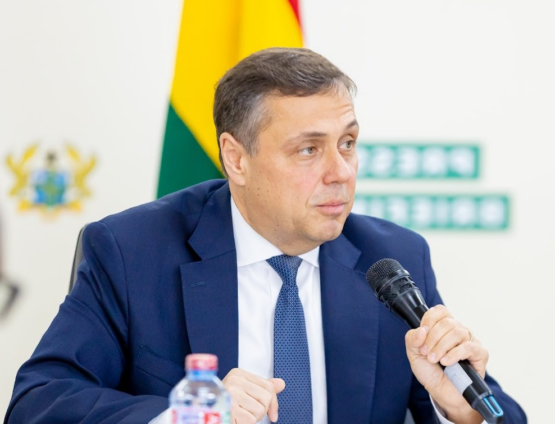
An IMF team led by Ruben Atoyan visited Accra to assess the country’s performance under the new programme. “IMF staff and the Ghanaian authorities have reached staff-level agreement on the first review of the PCI,” Mr Atoyan said.
The agreement is an important step in Ghana’s post-bailout relationship with the Fund, although it still requires approval from IMF Management and the Executive Board.
The IMF described programme performance as broadly satisfactory, noting that most quantitative targets had been achieved.
Ghana completed the final review of its $3 billion Extended Credit Facility programme in July 2026 before transitioning to the PCI, a 36-month arrangement that provides policy support without additional financing.
The new agreement is expected to sustain economic reforms and reinforce the country’s commitment to macroeconomic stability.
However, the latest reserve concerns introduce another layer of urgency into the reform agenda.
Reserve Recovery Becomes Critical to Ghana’s Economic Future
Ghana’s economic recovery has generated encouraging results, particularly in the areas of inflation reduction, economic growth and fiscal consolidation.
Yet, the IMF’s latest findings show that rebuilding international reserves remains an unfinished task.
The shift in forex intermediation to GoldBod, increased gold sale requirements for large-scale miners and the call for greater exchange rate flexibility demonstrate the measures authorities are prepared to pursue to strengthen the country’s external position.
The real test will be whether these interventions can generate sustainable reserve accumulation without creating new pressures elsewhere in the economy.
As Ghana moves deeper into its post-bailout reform programme, the ability to protect foreign exchange reserves will remain critical to maintaining currency stability, meeting external obligations and preserving the economic gains recorded so far.
The IMF has effectively placed external sector resilience at the centre of Ghana’s next phase of economic recovery.