The effectiveness of Ghana’s petroleum revenue oversight system will depend not only on the quality of its financial disclosures but also on the ability of the institutions responsible for scrutinising those disclosures to represent competing public interests and demand answers from government.
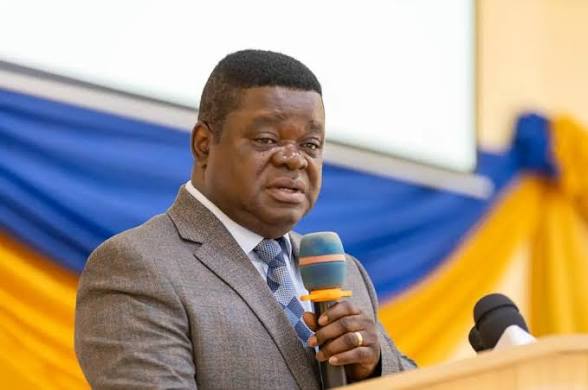
That responsibility now falls to Professor Peter Quartey, who has been elected chair of the Public Interest and Accountability Committee (PIAC) for a one-year term, at a time when questions about the use of petroleum revenues and access to expenditure information remain central to the committee’s work.
Quartey succeeds Richard Ellimah, whose tenure as chair ended in October. Samuel Bekoe, representing think tanks, was elected vice-chair for the same one-year period.
The leadership change comes as Ghana continues to rely on petroleum receipts to support public expenditure, infrastructure development and other national priorities.
It also places renewed attention on the composition of PIAC, whose ability to perform its statutory mandate depends on more than technical expertise.
The committee must bring together different institutional and societal perspectives while maintaining sufficient independence to scrutinise the management of petroleum resources.
Quartey represents the Ghana Academy of Arts and Sciences and has been sworn in for another two-year membership term following his renomination.
His professional background in development finance, private-sector development, monetary and financial-sector development, and digital finance provides experience relevant to the economic questions surrounding petroleum revenue management.
He holds a PhD in Development Economics from the University of Manchester, an MSc in Quantitative Development Economics from the University of Warwick, and an MPhil and bachelor’s degree in Economics from the University of Ghana. With more than 22 years of experience, his appointment brings an economist with a development-finance background to the committee’s leadership.
However, the challenge facing the new chair extends beyond interpreting petroleum revenue figures. It involves ensuring that the committee’s findings translate into meaningful public scrutiny of how the money is collected, allocated and spent.
Representation Must Translate Into Effective Oversight
PIAC’s institutional strength is partly derived from the range of interests represented in its membership. The committee is intended to provide a public accountability mechanism that goes beyond the Ministry of Finance and other state institutions responsible for petroleum revenue administration.
New members sworn in include Mama Agumekosua V, representing the Queen Mothers Association; Dr Edmund Adinkra-Darko of the Trades Union Congress; Alhaji Abdul Majeed Saeed, representing Muslim groups; Rev Johoiada Godwin Amuzu, representing Christian groups; Daniel Kissi, representing the Association of Ghana Industries and the Ghana National Chamber of Commerce and Industry; and Kyei Yamoah, representing civil society and community-based organisations.
Their inclusion brings perspectives from traditional leadership, organised labour, religious institutions, business and civil society into the committee’s work.
That diversity is important because petroleum revenue decisions have consequences across different parts of the economy. Government expenditure affects businesses, workers and communities, while decisions about the distribution of petroleum resources can influence infrastructure development and the delivery of public services.
But representation alone does not guarantee effective oversight. Members must be able to interrogate financial information, identify weaknesses in revenue allocation and communicate their findings in a manner that enables citizens to assess whether petroleum resources are producing the intended public benefits.
The committee’s statutory responsibility is to:
“monitor and evaluate compliance with the Act”.
This mandate places PIAC in a position to examine the entire petroleum revenue management process, from collections and allocations to expenditure and public reporting.
Its effectiveness therefore depends on timely access to relevant information and the capacity to independently assess the government’s explanations.
Access To Information Remains A Critical Test
The importance of that access became evident in the committee’s assessment of the first half of 2026.
According to PIAC’s 2026 semi-annual report, petroleum receipts reached US$561.41 million in the first six months of the year, compared with US$370.34 million during the corresponding period in 2025.
The increase was supported by higher crude oil prices and stronger corporate income tax collections.

While the improved receipts provide additional resources for the state, they also reinforce the need for close scrutiny of how the funds are distributed and used.
PIAC reported difficulties obtaining some information from the Ministry of Finance that it needed to fully assess the utilisation of the Annual Budget Funding Amount (ABFA).
The Ministry, however, rejected the suggestion that it had withheld information, maintaining that it had provided details on petroleum receipts and their distribution. It also explained that ABFA resources had been allocated to the Accra–Kumasi Expressway, describing the funds as:
“ring-fenced for the Accra–Kumasi Expressway”.
The Ministry further indicated that the five per cent allocation due to the District Assemblies Common Fund was paid from the Consolidated Fund.
The disagreement raises an important question about the standard of information required for effective petroleum revenue oversight.
Providing figures on receipts and allocations is not necessarily the same as enabling an independent assessment of how expenditure is progressing, whether projects are meeting their objectives and whether public funds are being used as intended.
For PIAC, the distinction matters. Its mandate requires more than reporting how much money entered petroleum accounts or identifying the institutions that received allocations.
It must also assess compliance with the Petroleum Revenue Management Act and provide the public with sufficient information to evaluate the management of the country’s petroleum wealth.
Higher Receipts Do Not Remove The Accountability Burden
The increase in petroleum receipts during the first half of 2026 also presents a broader challenge for the committee.
Ghana’s petroleum revenue performance remains exposed to movements in international crude prices and changes in production and corporate tax collections.
Higher receipts in one reporting period do not automatically establish a stable revenue outlook or guarantee that expenditure commitments can be sustained.
This makes transparent reporting particularly important. When revenues rise, public institutions must demonstrate how additional resources are being managed.
When receipts decline, the public should be able to understand the implications for budget allocations and development commitments.
The new leadership will therefore need to maintain attention on both the scale of petroleum revenues and the quality of decisions made with them.
The committee’s work is especially relevant as government continues to associate petroleum resources with major infrastructure and development priorities.
The public needs to know not only whether funds have been allocated to projects but also whether the spending is producing measurable results.

Quartey’s background in development economics and finance may prove useful in examining these questions. However, the credibility of his chairmanship will ultimately be judged by the committee’s ability to produce independent assessments, secure the information required for its work and communicate its conclusions without compromising its oversight role.
The swearing-in ceremony was conducted by Evelyn Amerley Nuno-Amarteifio, Director of Legal Affairs at the Ministry of Finance.
For PIAC, the transition is an opportunity to strengthen the relationship between institutional representation and public accountability.
Its new membership brings a broad range of interests into the oversight process, but the real test will be whether those perspectives can be converted into sustained scrutiny of petroleum revenue management.
As Ghana’s petroleum receipts continue to fluctuate, the committee’s responsibility remains constant: ensuring that the country’s oil and gas revenues are managed in accordance with the law and in the interest of the public.