
South Africa’s renewable energy market is seeing a growing shift towards corporate power-purchase agreements (PPAs), as developers increasingly structure solar projects around demand from private businesses rather than relying exclusively on government procurement programmes.
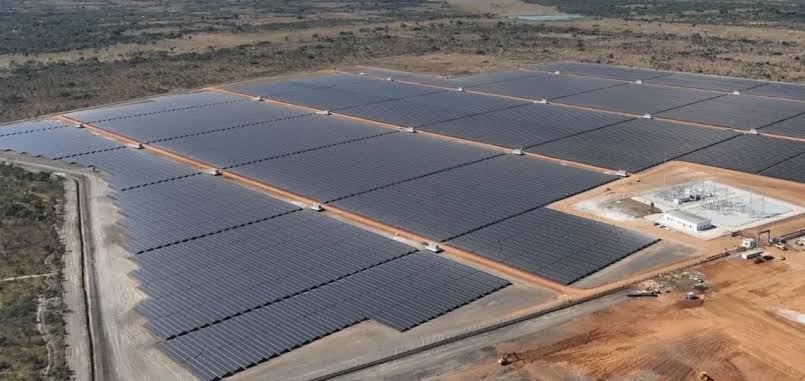
The latest example is the 126-megawatt (MW) Noko solar project, which has reached financial close and entered construction through Lyra Energy, a joint venture between Norwegian renewable energy developer Scatec and STANLIB Infrastructure Investments.
The development is significant beyond its generation capacity. Scatec has also decided to withdraw its 288MW Mercury solar project from South Africa’s Renewable Energy Independent Power Producer Procurement Programme (REIPPPP) and transfer it to Lyra to serve corporate electricity buyers.
The decision reflects growing demand for long-term renewable electricity agreements among commercial and industrial consumers, creating an alternative route for developers seeking to finance and deliver large-scale solar infrastructure.
For Ghana, where industrial energy costs, electricity reliability and private investment remain central to the renewable energy debate, the development raises an important question: can corporate power-purchase arrangements become a larger driver of solar investment?
Private Demand Drives Project Development
Lyra operates as a renewable electricity trading platform, supplying commercial and industrial customers through multi-year power-purchase agreements. Its model is designed to secure commitments from private electricity buyers before advancing projects into construction.
Scatec develops the projects and provides construction, operations and asset-management services, while Lyra acquires the developments once sufficient corporate demand has been secured. Scatec Chief Executive Officer Terje Pilskog described the Noko development as an important step in expanding the platform.
“Noko is the second project being realised through the Lyra platform and with our partners, Scatec is building a leader in the corporate PPA market in South Africa.”
Scatec Chief Executive Officer Terje Pilskog
He added that the company had secured a diverse portfolio of private offtake agreements, allowing it to create value through an integrated business model. The financing structure also illustrates how private demand can support project bankability.
Scatec will contribute approximately US$13 million in equity towards Noko, while Standard Bank will provide non-recourse project debt. Scatec expects to receive approximately US$100 million in design and construction revenues.
Commercial operations are expected to begin in the first half of 2028. Mercury, meanwhile, is expected to enter construction in the first half of 2027 after its transfer to Lyra.
The two developments demonstrate how renewable energy investment can be organised around identifiable electricity demand rather than depending solely on the outcome of public procurement rounds

Ghana Has a Comparable Industrial Opportunity
The model has relevance for Ghana, where industrial electricity demand is already attracting private renewable energy investment.
The 100MWp solar development at the Dawa Industrial Zone is one example. Its first phase is designed to supply electricity to more than 95 industrial customers, with financing structured around private-sector participation and dedicated electricity distribution arrangements.
The project demonstrates that Ghana’s renewable energy market is not limited to utility-scale generation sold to the national electricity distributor. Industrial consumers can also provide a defined market for privately developed solar capacity.
However, replicating South Africa’s corporate PPA model requires more than identifying businesses willing to purchase clean electricity. Ghana’s Renewable Energy Act permits bulk customers holding the relevant permits to purchase renewable electricity from wholesale suppliers at negotiated prices.
Power wheeling also provides a route for electricity to be transmitted through the national grid to off-site consumers. But regulatory compliance remains essential. The Energy Commission has warned that selling electricity to third parties within ECG and NEDCo’s operational areas without the required licence or permit constitutes an offence

The arrangements for wheeling charges, licensing and grid access must therefore be sufficiently predictable for developers and corporate buyers to negotiate commercially viable contracts.
Financing And Regulation Will Determine Growth
The financing implications are particularly important. Corporate PPAs can give developers greater visibility over future revenue by securing long-term buyers before construction. This can help lenders assess whether a project has sufficient contracted income to service its debt.
However, the model also depends on the creditworthiness of corporate customers, the enforceability of contracts and the ability to deliver electricity reliably. Scatec’s Sub-Saharan Africa Executive Vice-President and General Manager, Alberto Gambacorta, said the platform was moving towards expansion.
“With these important milestones, Lyra is moving from proving its model to scaling it. South African businesses need reliable, clean power at competitive prices, and Lyra is well positioned to deliver it at the pace the market demands.”
Scatec’s Sub-Saharan Africa Executive Vice-President and General Manager, Alberto Gambacorta
For Ghana, the challenge is to create conditions in which similar arrangements can attract financing without introducing uncertainty into the electricity market. The country must balance private investment with the responsibilities of existing distribution utilities, while ensuring that grid access, wheeling charges and licensing requirements are transparent.
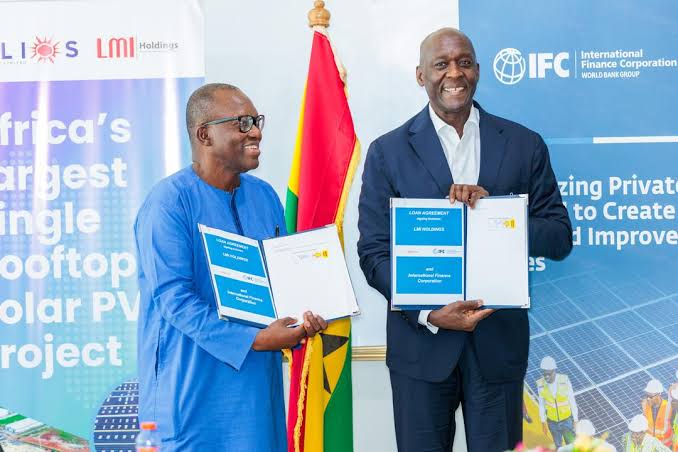
The International Finance Corporation-backed investment at Dawa offers evidence that private renewable energy projects can be developed around concentrated industrial demand. But expanding the model beyond industrial enclaves will require credible buyers, dependable payment arrangements and clear regulatory procedures
South Africa’s experience does not mean corporate PPAs should replace competitive public procurement. Both approaches can serve different parts of the electricity market. Public procurement remains important for system-wide generation requirements, while corporate arrangements can help meet the specific energy needs of businesses.
The larger opportunity for Ghana is to make these investment channels complementary. As industrial demand for reliable and lower-carbon electricity grows, the ability to convert private-sector demand into bankable renewable energy projects could become an important part of the country’s energy transition.
READ ALSO: Environment Minister Warns Water Pollution Threatens Ghana’s National Security