

Ghana’s indigenous oilfield service companies are being encouraged to strengthen their environmental, social and governance (ESG) practices as sustainability reporting requirements approach, raising fresh questions about whether local suppliers are adequately prepared for the changing expectations of the upstream petroleum industry.
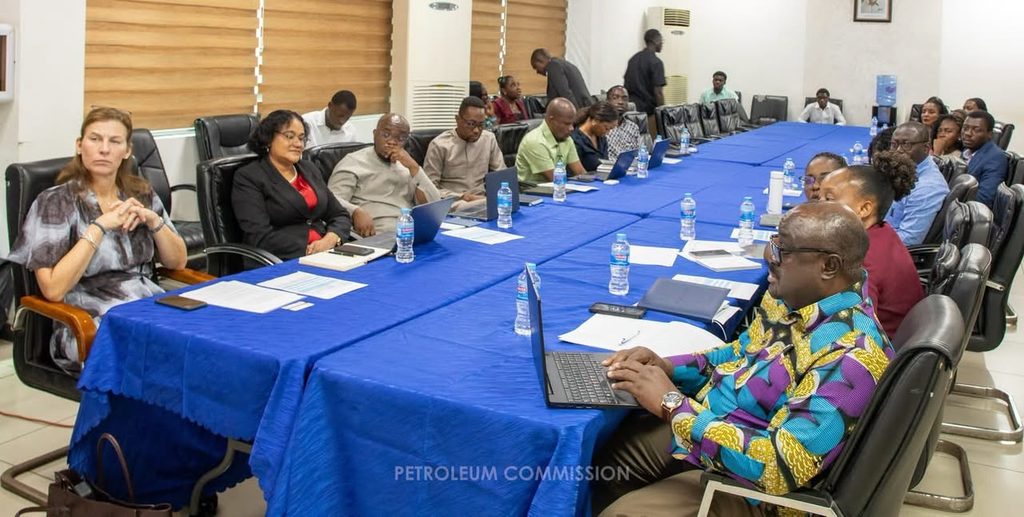
The Petroleum Commission and Tullow Ghana have intensified efforts to build the capacity of indigenous businesses through a virtual ESG Awareness Workshop organised for companies participating in the Commission’s Supplier Development Programme.
The engagement focused on how responsible environmental management, social accountability and sound corporate governance can improve business performance and strengthen the competitiveness of Ghanaian companies seeking opportunities in the upstream petroleum value chain.
The timing is significant. Ghana is preparing to introduce mandatory sustainability disclosures for specified categories of companies from accounting periods beginning on or after January 1, 2027.
The requirements form part of the country’s adoption of the International Financial Reporting Standards (IFRS) Sustainability Disclosure Standards, particularly IFRS S1 and IFRS S2. However, the distinction between companies directly covered by the first phase and those facing indirect pressure to comply is important.
Under the roadmap approved by the Institute of Chartered Accountants, Ghana (ICAG), upstream oil and gas exploration, development and production companies holding petroleum agreements fall within the first mandatory adoption group.
This means major operators will need to prepare sustainability-related financial disclosures covering material risks and opportunities associated with their operations. Indigenous contractors and suppliers are not automatically subject to the same 2027 deadline simply because they provide services to petroleum operators.

Other mandatory adopters generally fall under the January 2028 implementation phase, while certain smaller companies may qualify for non-mandatory status under the roadmap. Nevertheless, the distinction does not insulate local suppliers from the commercial implications of the transition.
Operators’ Expectations Could Reshape Supplier Requirements
As operators strengthen their sustainability reporting systems, the information they obtain from contractors, service providers and other business partners could become increasingly important.
Environmental performance, occupational health and safety, labour practices, community relations, emissions and governance arrangements are among the areas that can influence how companies assess the sustainability risks associated with their operations and supply chains.
Consequently, indigenous companies seeking to maintain or secure contracts may increasingly be expected to demonstrate that they have appropriate policies, procedures and records to support their ESG commitments.
This could affect businesses providing engineering, logistics, equipment maintenance, fabrication, inspection, waste management and other services to petroleum operators. For smaller companies, the challenge may extend beyond understanding ESG terminology.
Establishing environmental management systems, documenting workplace safety performance, maintaining transparent procurement procedures and producing reliable operational data can require additional financial and administrative resources.
The Commission and Tullow Ghana’s workshop therefore addresses an issue that extends beyond corporate reputation. It touches on the ability of local companies to remain commercially relevant as international operators respond to changing disclosure expectations and investor requirements.
Tullow has previously highlighted its collaboration with the Petroleum Commission on supplier capacity development. In its 2024 annual report, the company disclosed that three workshops delivered through the Ghana Upstream Petroleum Business Academy and the Commission’s local content programme attracted more than 850 participants from the local supplier community.
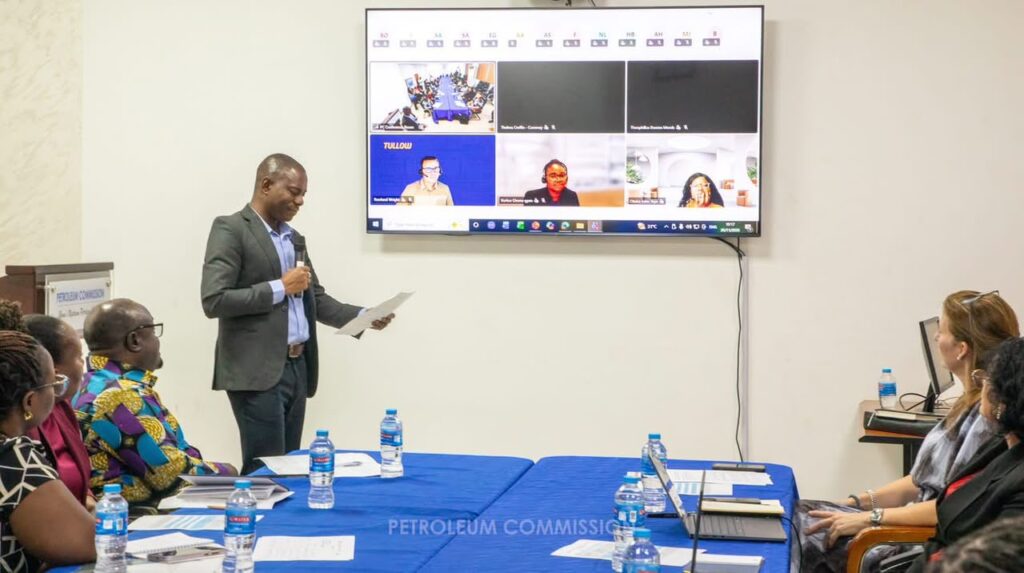
The latest ESG engagement adds sustainability awareness to the broader effort to improve the capabilities of indigenous service providers.
Ghana’s 2027 Reporting Transition
The national reporting framework is being introduced in phases. Under the ICAG roadmap, Significant Public Interest Entities, including listed companies, specified regulated institutions and public limited companies, are required to adopt IFRS S1 and IFRS S2 for reporting periods beginning on or after January 1, 2027.
The first phase also covers specified high-impact industries, including upstream petroleum exploration, development and production companies holding petroleum agreements.
Other mandatory adopters are scheduled to begin implementation from January 1, 2028, while companies meeting the roadmap’s non-mandatory criteria are encouraged, but not required, to adopt the standards.
The standards require companies to disclose material sustainability-related risks and opportunities that could affect their prospects. IFRS S2 specifically addresses climate-related disclosures, including governance, strategy, risk management, and relevant metrics and targets.
The Securities and Exchange Commission has also been preparing market participants for the transition. At a sustainability reporting workshop in July 2026, SEC Director-General Dr James Klutse Avedzi described the transition as an opportunity for companies to improve their internal systems and long-term resilience.
“The transition to sustainability reporting should not be viewed as another compliance obligation but rather an opportunity for companies to strengthen governance, improve strategic planning, enhance operational resilience and create long-term value for shareholders and society.”
SEC Director-General Dr James Klutse Avedzi
Although the standards are designed around sustainability-related financial information, their implications can extend beyond the companies directly required to publish disclosures. Operators may need information from contractors and other business partners to understand and explain material risks across their operations.
For indigenous suppliers, developing the ability to provide credible information could therefore become an important part of maintaining commercial relationships.
Local Content Must Include Sustainability Capacity
Ghana’s local content policy has traditionally placed considerable emphasis on increasing indigenous participation, developing local technical expertise and retaining more petroleum expenditure within the domestic economy.
But participation alone does not guarantee that local companies will secure higher-value contracts or remain competitive as industry requirements evolve. Companies must demonstrate that they can meet technical, financial, operational and regulatory expectations.
ESG performance is becoming another consideration within that broader competitiveness agenda. The Petroleum Commission’s Supplier Development Programme provides an avenue for addressing some of these capacity gaps.
However, the effectiveness of such interventions will depend on whether awareness workshops translate into practical improvements within participating businesses. Local suppliers may require more than introductory training.
They could need guidance on conducting ESG assessments, establishing internal reporting responsibilities, collecting reliable environmental and social data, preparing sustainability policies and understanding the disclosure requirements applicable to their businesses.
Access to finance will also matter. Smaller companies may struggle to invest in new systems, specialised personnel and certification while managing the cost of maintaining existing operations.
There is consequently a role for operators, regulators and financial institutions in ensuring that sustainability expectations do not become another barrier that disproportionately excludes indigenous businesses.

The Commission and Tullow Ghana’s latest engagement signals recognition that local suppliers must prepare for these changing demands. The larger question is whether Ghana’s supplier-development efforts can equip indigenous companies not only to understand ESG requirements but also to demonstrate measurable improvements in their operations.
As the 2027 reporting transition approaches, the ability to document responsible business practices could increasingly influence which Ghanaian companies are positioned to compete for opportunities in the upstream petroleum industry.
READ ALSO: Inherited Debts and Economic Shocks Squeeze Government Spending – Seth Terkper