
Ghana’s energy transition strategy must be designed around the country’s own development priorities rather than imported wholesale from global climate policies, the Public Interest and Accountability Committee (PIAC) has cautioned, warning that an unbalanced transition could undermine petroleum revenues, discourage investment and weaken energy security before alternative industries are fully developed.
Speaking during a lecture organised under the second cohort of the Africa Extractive Media Fellowship, PIAC Technical Director Mark Agyemang argued that while the global shift towards cleaner energy is inevitable, countries such as Ghana must pursue a transition pathway that reflects their economic realities instead of adopting policies that could prematurely diminish the value of their oil and gas resources.
The remarks, reported by Norvan Reports and corroborated by MyJoyOnline, come as Ghana seeks to maximise returns from its petroleum sector while simultaneously expanding renewable energy and reducing carbon emissions.
Global energy transition presents difficult choices for oil-producing economies
The warning comes at a time when international climate commitments, tighter financing conditions for fossil fuel projects and growing investment in renewable energy technologies are reshaping global energy markets.
While advanced economies have begun accelerating their transition away from hydrocarbons, PIAC believes developing producers such as Ghana face a more delicate balancing act because petroleum continues to finance critical areas of national development.

Energy transition is the main threat to the industry. Adopting a global policy could be problematic because countries could differ in their approaches to implementation.
Mark Agyemang, Technical Director, Public Interest and Accountability Committee (PIAC)
According to Mr. Agyemang, countries differ significantly in their stages of industrialisation, energy demand, fiscal dependence on natural resources and access to alternative technologies. Applying a uniform transition framework therefore risks placing developing producers at a disadvantage.
For Ghana, petroleum remains an important contributor to government revenue, foreign exchange earnings and electricity generation through domestic natural gas. Any sharp reduction in upstream investment before the country fully develops its petroleum resources could have wider economic consequences.
Investment risks could emerge before oil demand declines
Unlike popular perception that the greatest threat lies in declining global demand for crude oil, PIAC believes the immediate challenge may instead come from changing investor behaviour.
As international financial institutions, insurers and commercial banks increasingly tighten lending for fossil fuel developments, countries with undeveloped or maturing petroleum resources could struggle to secure financing for exploration and production projects.
That concern is particularly relevant for Ghana, which continues to pursue new upstream investments while extending the productive life of existing fields such as Jubilee, TEN and the Sankofa-Gye Nyame project.
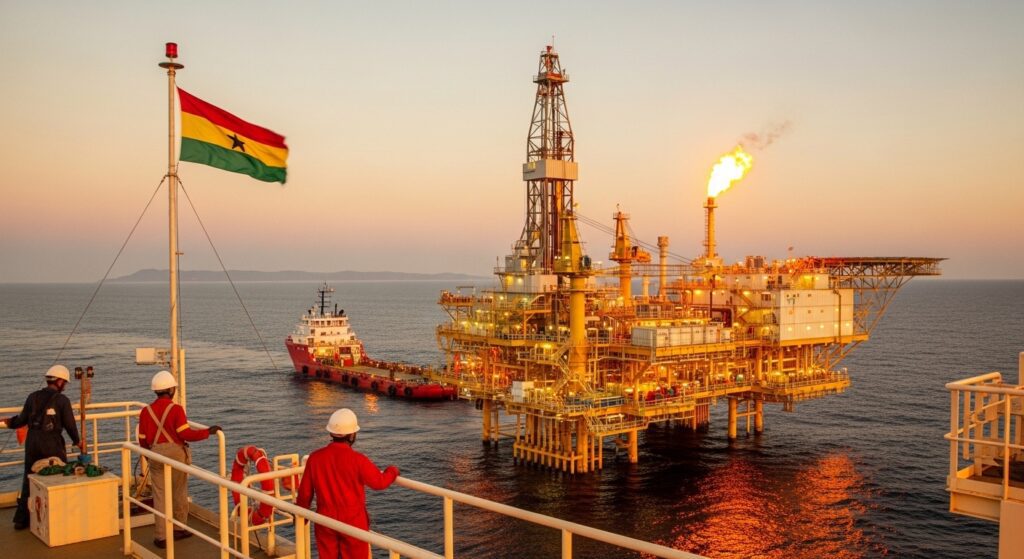
The warning also comes only days after Ghana celebrated renewed production growth at the Jubilee Field following Kosmos Energy’s successful drilling campaign, which reversed years of declining output and is expected to improve government petroleum receipts.
Analysts say such production gains demonstrate why Ghana still has substantial economic value to unlock from its petroleum sector even as it prepares for a lower-carbon future.
Rather than viewing petroleum production and energy transition as competing objectives, PIAC argues that the country should maximise current resource revenues while investing those proceeds into sectors capable of sustaining future economic growth.
Natural gas remains central to Ghana’s transition strategy
Mr. Agyemang stressed that Ghana’s circumstances differ from those of many developed economies because natural gas continues to play a critical role in supporting electricity generation.
Gas processed from Ghana’s offshore petroleum fields supplies several thermal power plants and helps reduce reliance on more expensive imported liquid fuels.
Treating all fossil fuels identically under international climate policies, he suggested, could unfairly disadvantage countries where natural gas serves as a transition fuel rather than a long-term substitute for renewable energy.
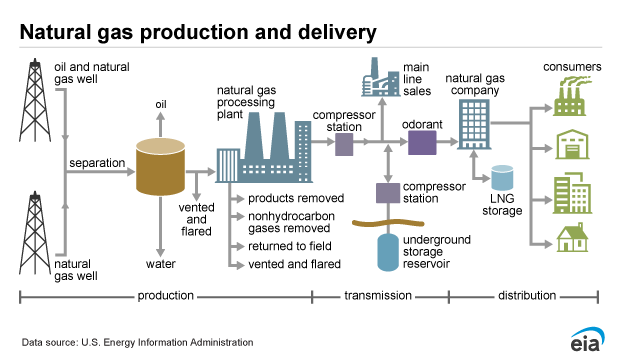
That position aligns with several recent government initiatives aimed at expanding domestic gas utilisation while simultaneously increasing investment in renewable energy.
Recent engagements between the Ministry of Energy and Green Transition and international investors, including ENI and Global South Utilities of the United Arab Emirates, have similarly highlighted Ghana’s intention to pursue both energy security and cleaner energy development simultaneously rather than choosing one over the other.
Regional cooperation could strengthen Africa’s negotiating position
Beyond domestic policy, PIAC believes Ghana should deepen collaboration with other African petroleum-producing countries to develop common positions on energy transition.
According to Mr. Agyemang, coordinated regional strategies would help countries protect their petroleum industries while advancing climate commitments in ways that recognise Africa’s development needs.

Countries could differ in their approaches to implementation.
Mark Agyemang, Technical Director, PIAC
Such cooperation could also strengthen cross-border investments in gas infrastructure, electricity trade, refining, petrochemicals and renewable energy integration while improving Africa’s bargaining position in international climate negotiations.
For Ghana, regional cooperation may become increasingly important as neighbouring producers confront similar questions about balancing resource development with climate obligations.
Transition must support development, not weaken it
PIAC maintains that supporting cleaner energy should not come at the expense of economic development.
The committee argues that Ghana must continue strengthening transparency in petroleum revenue management while investing oil income in productive sectors capable of sustaining long-term growth.
It also believes diversification should remain central to the country’s economic strategy, with greater emphasis on manufacturing, agriculture, renewable energy, logistics and digital industries to gradually reduce dependence on petroleum revenues over time.
The warning does not advocate delaying the energy transition, but rather ensuring that it proceeds in a manner that protects jobs, investment and fiscal stability while creating space for new industries to emerge.
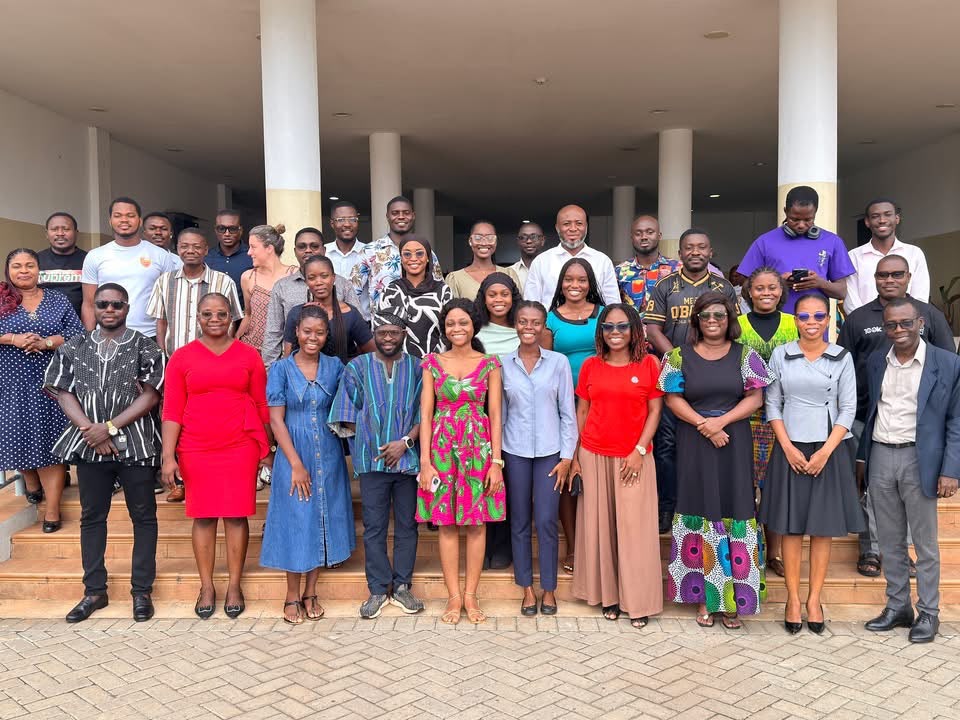
The lecture formed part of the Africa Extractive Media Fellowship, a programme designed to strengthen journalists’ understanding of petroleum governance, mining, natural resource management and energy policy.
For Ghana, the discussion highlights one of the defining policy questions facing the sector: how to continue generating value from petroleum resources while preparing the economy for an increasingly low-carbon global future. PIAC’s message is that achieving both objectives will require deliberate planning, sustained investment and transition policies shaped by Ghana’s national interests rather than external timelines alone.
READ ALSO: Mahama Vows Accra Will Bounce Back Stronger After Flood Clean-Up