


Ghana has made significant strides in bringing its adult population into the formal financial system, with more than 80% now owning a financial account.
Yet, beneath this impressive achievement lies a troubling reality: only 22% of adults are considered financially healthy, raising fresh questions about whether access to banking and other financial services is genuinely improving the economic lives of ordinary citizens.
The figures expose a widening concern within Ghana’s financial inclusion agenda. While millions of people can now access bank accounts, mobile money services and other formal financial products, a large proportion still struggle to secure affordable credit, protect their livelihoods against unexpected shocks, build savings and plan confidently for the future.
The World Bank’s Global Findex 2025 places Ghana’s financial account ownership above 80%, highlighting the progress made in expanding access to formal financial services. However, findings from Ghana’s 2021 FinScope survey indicate that only 22% of adults are financially healthy, revealing a significant gap between financial access and actual economic security.
The contrast has prompted government to reconsider how the country measures success in financial inclusion, with a stronger focus on whether financial services are making a meaningful difference in people’s lives.
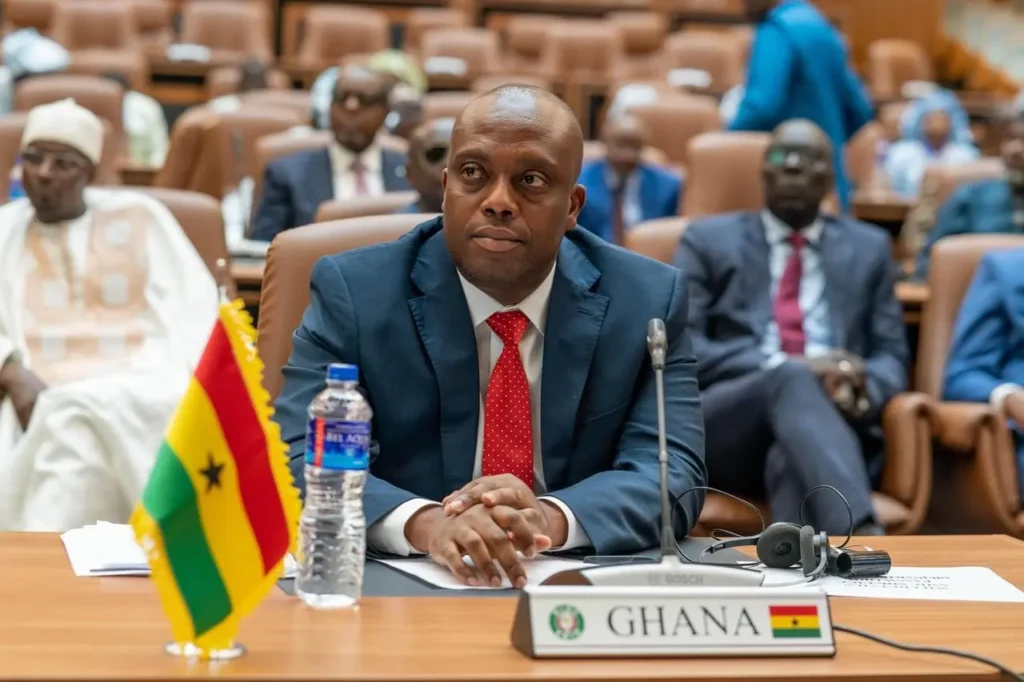
Speaking at the inauguration of the National Technical Working Committee for the development of the National Financial Inclusion and Development Strategy (2027–2031) at the Ministry of Finance, Deputy Minister of Finance Thomas Ampem Nyarko said Ghana must move beyond counting accounts and concentrate on the benefits citizens derive from using them.
“We have become good at opening accounts. We must now become better at making accounts improve lives.”
Thomas Ampem Nyarko
Bank Accounts Are Growing, But Financial Struggles Persist
The challenge facing Ghana is not necessarily the absence of financial accounts but the limited ability of many account holders to use financial services to improve their economic circumstances.
Owning a bank or mobile money account does not automatically mean that an individual can access affordable loans, purchase insurance, accumulate meaningful savings or withstand unexpected financial difficulties.
Mr. Ampem Nyarko illustrated this gap with examples of ordinary economic activities that demonstrate why financial inclusion must go beyond account ownership.
“We know that a market woman may receive payments digitally but still lack affordable credit to expand her business. It is also true that a farmer may own a mobile money account but have no insurance against a failed harvest.”
Thomas Ampem Nyarko
These examples reflect the difficulties confronting many households and small businesses, particularly within Ghana’s informal economy, where access to appropriate financial products remains a significant challenge.
A trader may process daily transactions electronically but struggle to secure a loan to increase inventory. A farmer may receive payments through mobile money but remain exposed to losses caused by poor weather or crop failure.
Such circumstances explain why the number of people entering the financial system cannot, on its own, determine whether financial inclusion policies are succeeding.
“Financial inclusion gives people access to the system, but financial health gives them the means to withstand shocks, build assets, and plan for the future.”
Thomas Ampem Nyarko
Government Prepares New Financial Inclusion Strategy
Against this background, government is placing financial health at the centre of its economic transformation agenda as it prepares the country’s second National Financial Inclusion and Development Strategy.
The proposed strategy, covering 2027 to 2031, is expected to prioritise affordable and responsible financial services, digital innovation, consumer protection, financial literacy and financial resilience.
Women, young people, farmers, informal sector workers and small businesses will receive particular attention because these groups frequently encounter difficulties accessing financial products suited to their needs.
Mr. Nyarko said the government wants to change the country’s approach from simply expanding access to ensuring that financial services deliver measurable improvements in economic well-being.
“Our goal is to move from access to meaningful usage, from financial transactions to financial security, and from financial inclusion to financial well-being.”
Thomas Ampem Nyarko
The government also intends to establish a Financial Inclusion Council to improve coordination and accountability among financial sector regulators and other stakeholders.
Another major proposal is the operationalisation of a financial health framework that will assess whether households can meet everyday expenses, withstand financial shocks, save and invest for the future.
The National Technical Working Committee, comprising the Ministry of Finance, financial sector regulators and other stakeholders, is expected to guide the development of the strategy ahead of its planned launch in the first half of 2027.
Economic Stability Must Translate Into Household Prosperity
The financial health debate comes at a time when Ghana has recorded improvements in key macroeconomic indicators.
Mr. Nyarko cited economic growth of 6.2% in the first half of 2026 and a decline in inflation from 23.8% in December 2024 to 5.5% in October 2026 as evidence of improving economic conditions. “In effect, we have restored stability and laid the foundation. Now we are ready to take off towards shared prosperity,” he said.
However, the Deputy Minister acknowledged that improved macroeconomic conditions must translate into tangible opportunities for households and businesses.
Lower inflation and stronger economic growth may improve the broader business environment, but their benefits could remain limited if citizens lack the financial tools to invest, expand businesses, accumulate savings and protect themselves against economic shocks. “But we recognise the fundamental truth that we cannot build a productive economy when productive citizens lack the financial tools to realise their potential,” he said.
Government therefore wants financial services to play a stronger role in agricultural investment, business expansion, household savings and the development of youth-led enterprises.
Investment Opportunities and Digital Finance Take Centre Stage
Beyond traditional banking services, government is also exploring ways to deepen access to investment opportunities through financial sector reforms and emerging technologies.
Mr. Nyarko highlighted a dialogue hosted by the Securities and Exchange Commission on asset tokenisation, which examined how technological innovation could broaden participation in investment markets.
The initiative reflects growing interest in using digital financial infrastructure to make investment opportunities more accessible to a wider segment of the population. “Our ambition is to democratise access to finance, investment, and wealth creation,” he said.
However, he stressed that innovation must be accompanied by appropriate regulation, investor protection and financial stability.
He consequently called on banks, fintech companies, insurers, pension providers, financial sector regulators and development partners to support the development and implementation of the new strategy.
Ultimately, Ghana’s financial inclusion ambitions will face a more demanding test than the number of accounts opened or digital transactions processed.
With more than 80% of adults already owning financial accounts but only 22% considered financially healthy, the challenge is ensuring that access becomes an opportunity to build lasting financial security.
As Mr. Nyarko put it, “Let us measure our success not only by the number of people we bring into the financial system, but by the number of people whose lives we improve,” he said.