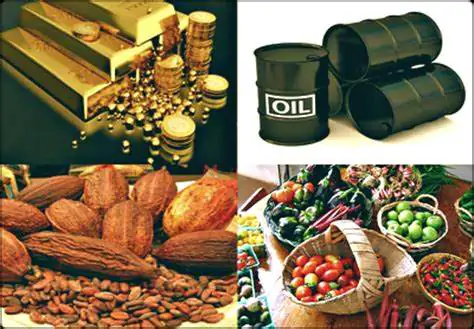
Ghana’s trade surplus surged to US8.80 billion in the first eight months of 2026, marking a significant improvement from US6.69 billion recorded during the same period in 2025, as stronger earnings from gold, cocoa and crude oil exports boosted the country’s external trade position.
The latest figures from the Bank of Ghana reveal that total export earnings climbed by 24.8% to US22.39billionbetweenJanuaryandAugust2026,upfromUS17.94 billion a year earlier. The strong performance reflects the combined impact of higher international commodity prices and increased export volumes in selected sectors, particularly crude oil and cocoa.
However, beneath the impressive export figures lies a growing concern for Ghana’s economic diversification ambitions. Earnings from other exports, including non-traditional exports (NTEs), declined by 3.0%, highlighting the uneven performance of the country’s export sector.
Ghana’s Trade Surplus Gains US$2.11bn
The expansion of Ghana’s trade surplus represents an improvement of US$2.11 billion compared with the corresponding period in 2025, as export growth outpaced the increase in imports.
The development provides a stronger external trade position, with the country generating substantially more revenue from goods sold abroad than it spends on imported goods.
The Bank of Ghana attributed the improved trade performance largely to higher export receipts, supported by favourable international prices for key commodities and increased crude oil and cocoa export volumes.
The figures underline the importance of commodity exports to Ghana’s foreign exchange earnings. Gold, cocoa and crude oil remain central to the country’s ability to generate export revenue and strengthen its external position.
Yet, the extent to which these gains can be sustained will depend partly on global commodity market conditions, domestic production capacity and the country’s ability to broaden its export base beyond traditional commodities.
Gold Delivers US$14.86bn Windfall
Gold emerged as the biggest contributor to Ghana’s export performance, generating US$14.86 billion during the first eight months of 2026.
Gold export earnings increased by 32.9% from the corresponding period in 2025, accounting for the bulk of the overall growth in export receipts.
The surge was primarily driven by a 44.0% increase in the average realised gold price to US$4,374.65 per fine ounce, reflecting sustained safe-haven demand amid heightened geopolitical tensions and financial market uncertainties.
Investors seeking protection against global uncertainty have continued to support demand for gold, strengthening the value of Ghana’s gold exports.
However, the rise in earnings came despite a decline in export volumes. Gold shipments fell by 7.7% to 3.4 million fine ounces, down from 3.7 million fine ounces a year earlier.
According to the Bank of Ghana, the reduction was largely associated with shipment disruptions following the onset of the Middle East conflict.
The development highlights a critical feature of Ghana’s export performance: higher international prices can significantly increase revenue even when the volume of commodities sold abroad declines.
Nevertheless, reliance on elevated gold prices also leaves export earnings exposed to potential shifts in global demand and market sentiment.
Crude Oil Exports Surge 32.8%
Crude oil provided another major boost to Ghana’s export earnings, with receipts increasing by 32.8% to US2.42 billion in the first eight month of 2026, compared with US1.83 billion during the same period last year.
Unlike gold, where higher prices were accompanied by declining shipment volumes, crude oil benefited from improvements in both production volumes and realised prices.
Export volumes rose by 8.0% to 27.6 million barrels, up from 25.6 million barrels in the corresponding period of 2025.
The increase followed higher output from the Jubilee field, reinforcing the contribution of domestic oil production to Ghana’s foreign exchange receipts.
At the same time, the average realised crude oil price climbed by 23.1% to US87.68 per barrel, compared with US71.25 per barrel a year earlier.
The combined effect of higher prices and increased volumes helped lift crude oil earnings, strengthening the contribution of the petroleum sector to the country’s trade surplus.
However, the performance also highlights the sensitivity of Ghana’s export receipts to international energy prices, which can fluctuate sharply in response to geopolitical developments, supply disruptions and changes in global demand.
Cocoa Earnings Climb Despite Price Pressures
Cocoa exports also recorded growth, although the increase was more modest than the gains posted by gold and crude oil.
Receipts from cocoa beans and processed cocoa products rose by 9.9% to US2.71 billion during there view period, compared with US2.47 billion in the first eight months of 2025.
The improvement was supported by favourable realised prices and higher export volumes.
Despite the increase in cocoa export earnings, the Bank of Ghana indicated that the broader commodity price environment remained mixed.
The composite weighted average price index for cocoa, gold and crude oil increased by 5.6% year-to-date to 261.86 in August 2026.
Crude oil recorded the strongest increase among the three commodity sub-indices, rising by 42.9%. Gold prices increased by 2.1%, while cocoa prices rose by 1.5%.
On an annual basis, the overall index increased by 15.4%, slower than the 20.3% growth recorded in August 2025. The Bank of Ghana attributed the moderation to the dampening effect of the contraction in cocoa prices, which more than offset the increases in gold and crude oil prices.
Non-Traditional Exports Raise Concern
While traditional commodity exports generated stronger receipts, Ghana’s other export earnings moved in the opposite direction.
Earnings from other exports, including non-traditional exports, declined by 3.0% to US2.39 billion from US2.46 billion in the corresponding period of 2025.
The Bank of Ghana attributed the decline to reductions across all sub-categories of non-traditional exports.
The contraction presents a challenge for Ghana’s efforts to diversify its sources of foreign exchange earnings. A stronger non-traditional export sector could help reduce dependence on gold, cocoa and crude oil while creating opportunities for domestic manufacturers, agricultural processors and other businesses selling goods abroad.
The latest figures suggest that although Ghana’s export performance has improved considerably, the benefits remain concentrated in a relatively small group of commodities.
Can Ghana Sustain the Export Momentum?
Ghana’s US$8.80 billion trade surplus represents a substantial improvement in external trade performance, supported by a combination of higher commodity prices and stronger export volumes in selected sectors.
The US$22.39 billion in export earnings also demonstrates the financial importance of gold, cocoa and crude oil to the economy.
However, the decline in non-traditional export earnings exposes a weakness that could become more significant if international commodity prices retreat or production and shipment disruptions intensify.
Sustaining the gains will require continued attention to production capacity, export competitiveness and the development of industries capable of generating foreign exchange beyond traditional commodities.
The challenge is not simply to increase export earnings during periods of favourable global prices. Ghana must also strengthen the range of goods it sells internationally to make its external position more resilient to changing market conditions.
With gold and crude oil leading the current export surge, the next test will be whether Ghana can translate its commodity windfall into a broader and more durable export growth story.
READ ALSO: Afreximbank Posts US$813.5m Profit Despite Global Economic Uncertainty