Ghana’s next fuel-price adjustment could deliver an uneven outcome for consumers, as a higher diesel benchmark threatens to offset some of the relief expected from lower petrol and liquefied petroleum gas (LPG) prices.
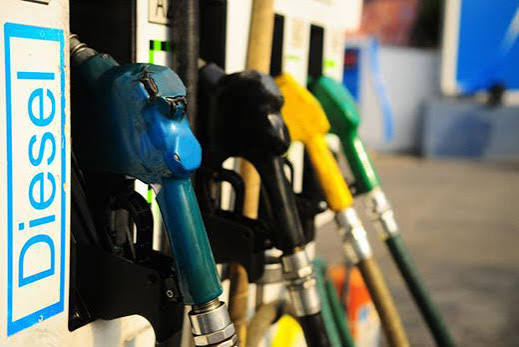
The National Petroleum Authority (NPA) has raised diesel’s minimum price floor by GH¢0.32 per litre for the November 1–15 pricing window, even as it cuts the corresponding benchmarks for petrol and LPG. The changes place diesel users on a different cost trajectory from motorists buying petrol and households relying on LPG.
Diesel’s floor has increased from GH¢17.09 to GH¢17.41 per litre. Petrol’s has dropped from GH¢16.09 to GH¢15.39 per litre, while LPG has declined from GH¢13.89 to GH¢13.73 per kilogram.
The contrasting adjustments raise a broader question about how fuel-price movements are distributed across the economy. Petrol users may benefit if marketers pass on the lower benchmark, but businesses dependent on diesel could face additional cost pressure if the increase is reflected at the pumps.
For transport operators, logistics businesses and firms that rely on diesel-powered equipment or backup generators, the direction of diesel prices can be particularly consequential.
Meanwhile, any reduction in LPG prices would matter to households and commercial users, although the size of any savings remains uncertain.
Diesel Moves Against The Earlier Market Trend
The increase in the diesel floor comes after the previous pricing period saw marginal reductions in petrol and diesel pump prices, while LPG prices were projected to rise by about 18.5% per kilogram.
The Chamber of Oil Marketing Companies attributed the earlier petrol and diesel reductions to movements in international refined-product prices and government subsidy measures.
Its report for that period recorded a 2.03% increase in average crude oil prices to US$126.73 per barrel, amid renewed supply concerns. Yet refined-product prices moved differently: international petrol prices declined by 3.93% and diesel by 6.68%, while LPG prices increased by 7.77%.
That divergence helps explain why changes in crude oil prices do not automatically produce uniform movements across fuels.
Each product responds to its own international market conditions, while domestic prices are also affected by currency movements and the local pricing structure.
The latest diesel adjustment indicates that the pressures feeding into the next pricing window differ from those behind the earlier reductions.
The supplied figures do not, however, establish how much of the new diesel increase is attributable to any individual factor.
The Cedi Could Help, But The Effect Is Not Automatic
The recent appreciation of the cedi could provide some protection against external fuel-price pressures by reducing the local-currency cost of imports, all else being equal.
That cushion may be important while international crude oil prices remain exposed to supply concerns. But currency appreciation does not guarantee cheaper fuel: movements in refined-product prices and other components of the pricing formula can offset some or all of the benefit.
The November adjustment illustrates why exchange-rate performance should be considered alongside product-specific market movements rather than treated as a reliable predictor of pump prices on its own.
For consumers, the relevant question is whether the combined effect of these variables results in lower retail prices.
For businesses, the distribution of changes across petrol, diesel and LPG matters just as much as the overall direction of fuel costs.
Price Floors Leave Marketers With A Role
The NPA’s price floors are benchmarks under the Petroleum Products Pricing Formula, not fixed retail prices. They exclude premiums charged by International Oil Trading Companies, operating margins applied by Bulk Import, Distribution and Export Companies, and margins set by Oil Marketing Companies and LPG Marketing Companies.
Those components are determined independently by the respective companies under the prescribed formula. Marketers may therefore adjust their final prices differently, meaning that the reduction in petrol’s floor does not guarantee an equivalent drop at every filling station. The same applies to LPG and the higher diesel benchmark.
This makes the actual prices announced by marketers from November 1 the critical indicator for consumers. Until those prices are established, the NPA’s revisions show the direction of benchmark pressure rather than the precise change in household or business expenditure.
The Real Test Is At The Pumps
The November pricing window will reveal whether petrol and LPG users receive tangible relief and how much of diesel’s higher benchmark reaches consumers.
The split in the new floors also cautions against describing the adjustment as a general reduction in fuel prices.
The outcome will vary by product, and the effect on consumers will depend on their fuel use and the prices charged by individual marketers.
For now, petrol and LPG have gained some room for downward price movement, while diesel faces a higher benchmark.
Whether that translates into cheaper fuel for some consumers and more expensive fuel for others will become clearer when marketers publish their pump prices.
READ ALSO: Ghana Boosts Ebola Surveillance Amid Outbreak Preparedness Efforts