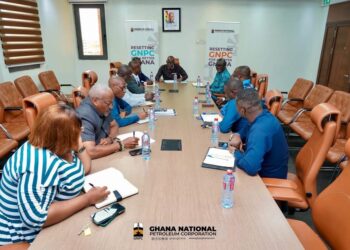
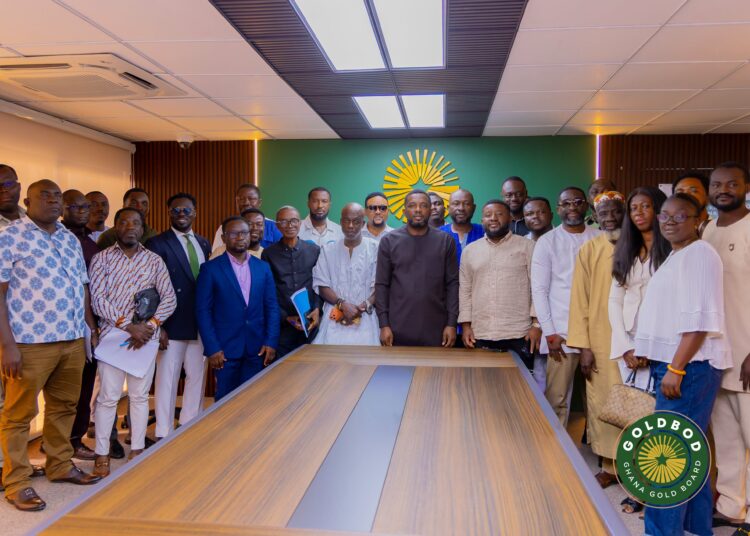
The Ghana Gold Board (GoldBod) leadership, under Deputy Chief Executive Officer Richard Nunekpeku, Esq., has officially opened stakeholder consultations to discuss the preliminary structure of its upcoming Artisanal and Small-Scale Mining (ASM) Formalisation and Financing Support Programme (FFSP).
The inaugural engagement assembled key industry representatives, including executives from the Ghana National Association of Small-Scale Miners (GNASSM), Concerned Small-Scale Miners, Hard Rock and Underground Miners, the Ghana National Association of Gold Traders, and the Chamber of Gold Buyers.
Scheduled for full implementation in 2027, the policy proposal addresses structural gaps that have long restricted operators within the informal gold extraction landscape from accessing regulated capital and operational support.
“The proposed Artisanal and Small-Scale Mining Formalisation and Financing Support Programme is designed to establish a sustainable operational pathway for operators across the gold value chain.”
Ghana Gold Board (GoldBod)
GoldBod’s management highlighted that the engagement forms an integral part of a broader regulatory roadmap aimed at restructuring small-scale mineral exploitation across the nation.

Deputy CEO Richard Nunekpeku, Esq., reiterated that incorporating direct input from active miners, traders, and aggregators remains critical prior to presenting the policy document for Cabinet approval and subsequent parliamentary scrutiny.
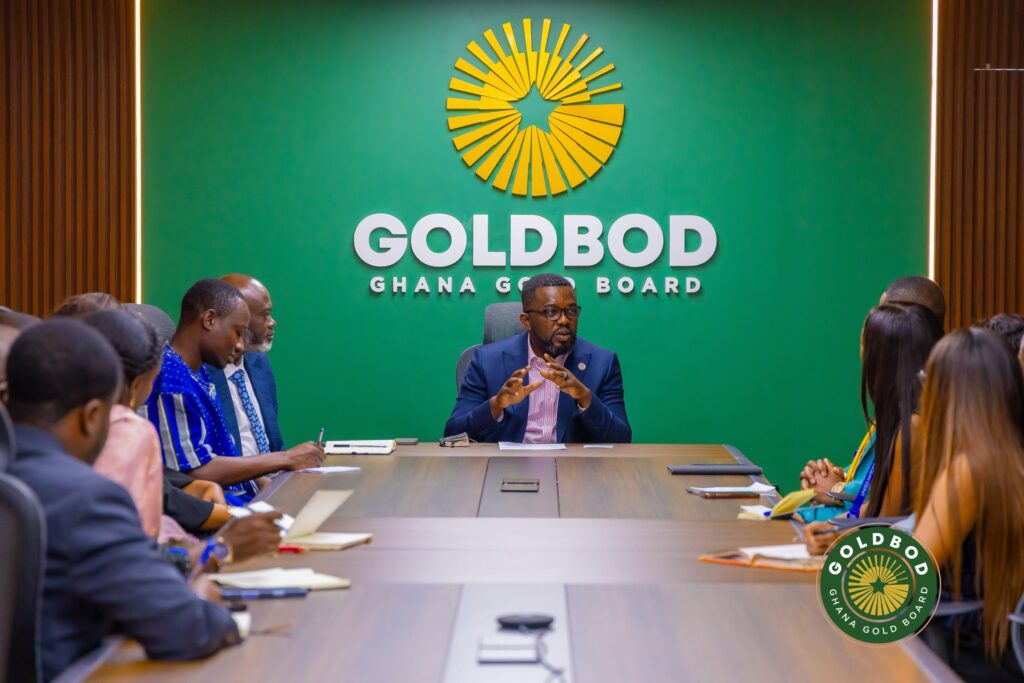
During the sessions, Professor Ishmael Quaicoo, Director of Responsible Mining at GoldBod, presented the operational mechanics and core components of the FFSP.
To ensure full regulatory alignment, upcoming consultative phases will engage additional statutory bodies, including the Minerals Commission, Ministry of Lands and Natural Resources, Minerals Income Investment Fund (MIIF), Environmental Protection Authority (EPA), and the Water Resources Commission.
Addressing the Imperative for Structural ASM Reforms
The urgency behind Gold Board’s formalisation drive stems from decades of structural challenges characterizing Ghana’s small-scale gold mining sector.
Despite accounting for a significant percentage of the country’s total annual gold output, the artisanal segment remains hampered by informality, limited access to commercial credit, and inadequate technical capacity.
Traditional commercial banks historically view unsanctioned small-scale mining operations as high-risk ventures due to the lack of verifiable geological data, informal land tenure arrangements, and inconsistent environmental compliance.

Consequently, operators routinely rely on unregulated pre-financing schemes, which often lock miners into unfair off-take agreements and incentivize illegal gold exports.
Through the FFSP framework, GoldBod seeks to establish an inclusive ecosystem where registered small-scale miners can access institutional funding, modern processing equipment, and environmental remediation technologies.
Providing a legal and financially viable pathway enables small-scale operators to transition into compliant medium-scale enterprises.
Furthermore, structuring financial assistance directly around responsible mining standards helps curb illicit financial flows, boost state revenue collection, and safeguard critical water bodies from uncontrolled alluvial degradation.
Inter-Agency Alignment and the Path to 2027
Achieving comprehensive formalisation across Ghana’s mining belts requires close cross-sectoral collaboration.
The planned involvement of the Minerals Commission and the Ministry of Lands and Natural Resources aims to streamline licensing protocols, reducing administrative friction for rural mining cooperatives.
Concurrently, aligning with the Minerals Income Investment Fund (MIIF) will assist in structuring targeted equity and debt instruments tailored specifically to the operational lifecycles of small-scale mines.
Environmental compliance remains a central pillar of the proposed policy. By integrating the Environmental Protection Authority (EPA) and the Water Resources Commission into subsequent consultations, GoldBod aims to embed mandatory land reclamation protocols and cleaner processing methods into the financing criteria.
As stakeholder sessions continue nationwide, GoldBod’s structured multi-agency approach provides a clear roadmap toward regularizing artisanal mining ahead of its targeted 2027 rollout.
READ ALSO: Black Sherif Claims One Billion Spotify Streams Mark