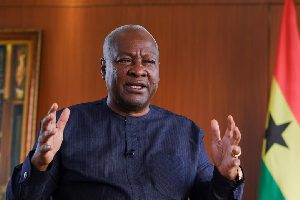
President John Dramani Mahama has asked the Media Foundation for West Africa (MFWA) and the Ghana Journalists Association (GJA) to jointly convene a national stakeholder engagement on hate speech and abusive content on social media.
The request came in a letter from the Office of the President at Jubilee House, Accra, dated Tuesday, September 22, 2026, and signed by the Secretary to the President, Dr Callistus Mahama.
The Presidency says the move responds to the growing incidence of hate speech, abusive language and harmful content on social media and emerging digital platforms. It wants a national roadmap that tackles genuinely harmful speech without punishing Ghanaians for criticising those in power.
Hate Speech Debate Shifts to a Changing Media Landscape
The letter argues that the forces shaping public conversation in Ghana have changed significantly. Traditional media organisations, it notes, operate within established professional and regulatory frameworks, yet much of today’s public discourse now flows through individual bloggers, content creators, influencers and users of platforms such as TikTok.

Many of these actors command substantial audiences and real influence. According to the Presidency, however, they are not necessarily subject to recognised editorial standards or clear accountability mechanisms.
The Office of the President describes this shift as a difficult but important public policy challenge. It maintains that hate speech, threats, incitement and other unlawful conduct must be addressed, while insisting on a firm limit to how far the state should go.
“Legitimate criticism, political commentary, satire and dissent must not be criminalised,” the letter states.
President Raises Concern Over Arrests for Online Commentary
The most striking passage in the letter addresses the conduct of state agencies. The President, it says, is particularly concerned that disproportionate arrests over mere criticism or politically charged commentary may be counterproductive.
Such arrests, the Presidency warns, risk creating undeserving martyrs and weakening public confidence in state institutions. The position signals a preference for measured responses over heavy-handed enforcement when citizens express political views online.
The letter calls for an urgent and coherent national roadmap that protects freedom of expression while providing an appropriate and proportionate response to genuinely harmful digital content.
Who Will Shape Ghana’s Response to Harmful Online Content
The Presidency wants the MFWA and GJA to lead a broad process that brings a wide range of voices to the table. The proposed participants include the National Media Commission, the Ghana Police Service, relevant religious bodies and civil society organisations.
Traditional media organisations will sit alongside social media content creators, bloggers and influencers, whose growing reach sits at the centre of the debate. Legal and human rights experts, relevant state regulatory and security institutions and, where possible, representatives of digital platforms are also expected to take part.
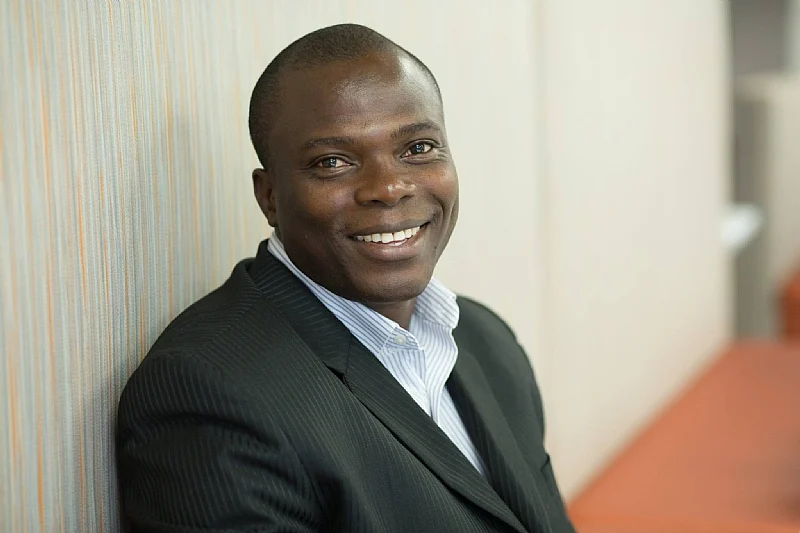
The inclusion of content creators and platform representatives marks a notable feature of the proposal, bringing the people most affected by any new rules directly into the conversation about them.
What the National Stakeholder Engagement Will Examine
The engagement carries a detailed mandate. Participants are expected to assess the adequacy of Ghana’s existing legal, regulatory and institutional framework for dealing with harmful speech.
They will also work to clarify the line between lawful criticism and unlawful speech, a distinction at the heart of recent public debate on free expression. The process is further tasked with proposing practical guidelines for law enforcement agencies and recommending policy, legislative, regulatory and non-legislative measures.
The Presidency has also widened the scope beyond enforcement. The engagement is to consider public education, media and digital literacy, professional and ethical standards for online content creators, and accessible complaints and redress mechanisms.
Crucially, it must explore alternatives to arrest and prosecution in cases that do not involve threats, incitement, violence or other clearly criminal conduct. That instruction reinforces the President’s stated concern about the use of arrests to deal with online commentary.
Framework and Timetable Expected From MFWA and GJA
The Office of the President has asked the MFWA and GJA to submit a proposed framework and timetable for the engagement. The two organisations are also expected to present recommendations arising from the process for the President’s consideration.

The letter did not set a deadline for these submissions or indicate when the engagement itself would begin. Copies of the request went to the Minister for the Interior, the Minister for Communication, Digital Technology and Innovations, and the Minister of State in charge of Government Communications.
The Chairperson of the National Media Commission and the Inspector-General of Police also received copies, placing the agencies responsible for media regulation and law enforcement squarely within the process.
A Test for Free Expression in Ghana’s Digital Age
The initiative places two of the country’s leading media institutions at the centre of a sensitive national conversation about speech, power and accountability online.
How the MFWA and GJA structure the engagement, and how far the government acts on its outcomes, will determine whether Ghana can curb genuinely harmful content while keeping space open for criticism, satire and dissent.
For journalists, content creators and ordinary social media users alike, the process offers a rare opportunity to shape the rules that will govern public expression in the country’s digital space.
READ ALSO: Top Banks Control Nearly One-Third of Ghana’s Deposits