President John Dramani Mahama has announced a significant expansion in Ghana’s renewable energy capacity, highlighting new solar projects, mini-grids and off-grid systems aimed at accelerating the country’s energy transition.
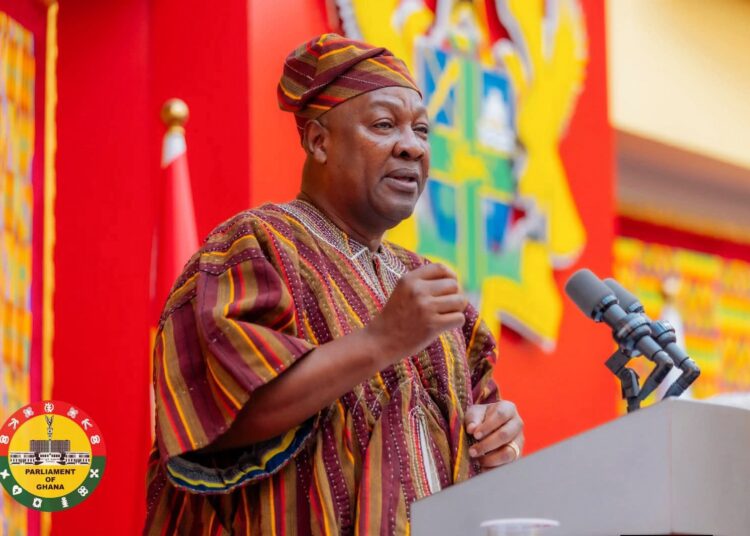
Delivering his 2026 State of the Nation Address in Parliament, the President detailed progress made in solar generation and rural electrification, positioning renewable energy as a central pillar of Ghana’s evolving power mix.
“The Bui Power Authority has completed an additional 50MW of solar plant,” he revealed, adding that distributed solar initiatives have also contributed substantially to installed capacity nationwide.
The President explained that in the distributed solar sector, 30 megawatts have been achieved through rooftop installations across the country. This has pushed total installed renewable capacity to 285 megawatts.
According to him, the current figure represents five per cent of renewable energy in Ghana’s overall generation mix, reflecting steady progress toward diversifying energy sources beyond thermal and hydro power.
The additional 50MW solar installation by the Bui Power Authority marks another milestone in integrating large-scale solar into the national grid.
The Bui enclave, originally known for hydroelectric power generation, has increasingly incorporated solar to complement existing capacity and enhance supply stability during dry seasons.
200MWp Solar Project at Dawa
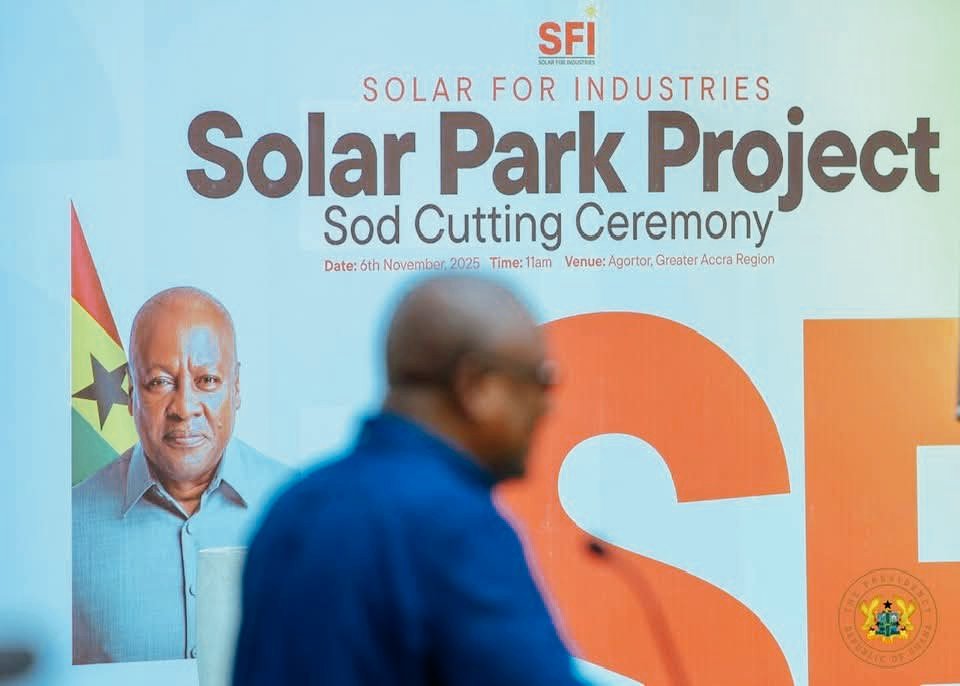
President Mahama also drew attention to a major upcoming project at the Dawa Industrial Zone, where he recently performed a groundbreaking ceremony for a 200 megawatt-peak solar power facility.
The Dawa project is expected to supply dedicated clean energy to industries operating within the enclave, reducing dependence on conventional grid power and lowering carbon emissions associated with industrial production.
Once completed, the facility will rank among the largest solar installations in the country and is anticipated to significantly boost Ghana’s renewable generation portfolio.
Beyond utility-scale projects, the government is prioritising energy access for remote communities through mini-grid systems.
The President announced that the Ministry of Energy and Green Transition is constructing 35 mini-grids to serve 47 island and lakeside communities in the Oti, Savannah and Bono East regions.
These communities, many of which are not connected to the national grid due to geographical barriers, have long faced limited access to reliable electricity. The mini-grids, powered primarily by renewable energy sources, are designed to provide stable and affordable power tailored to local demand.
The initiative forms part of a broader rural electrification strategy aimed at closing the access gap and promoting inclusive development.
Smart Net Meters and Off-Grid Systems

In addition to expanding generation capacity, the government is strengthening distribution infrastructure and energy management systems.
“The ministry will also supply 12,000 new smart net meters from the end of the first quarter of this year, 2026,” President Mahama announced.
Smart meters are expected to improve billing accuracy, reduce losses and enhance revenue collection within the power sector. By modernising metering systems, authorities hope to improve efficiency and build consumer confidence.
Meanwhile, under the off-grid solar home systems programme for public institutions, delivery of materials for the first phase of 350 systems has commenced.
These systems are intended to provide standalone solar solutions to schools, health facilities and other essential institutions located in hard-to-reach areas.
The deployment of off-grid systems is seen as a cost-effective way to deliver electricity to facilities where grid extension may be technically challenging or financially prohibitive.
The renewable energy expansion drive has received a major boost from international partners. President Mahama disclosed that the African Development Bank has committed $100 million to fund the construction of renewable energy-based mini-grids for underserved communities.
The funding is expected to accelerate implementation of mini-grid projects and ensure sustainability through technical and financial backing.
Driving the Green Transition
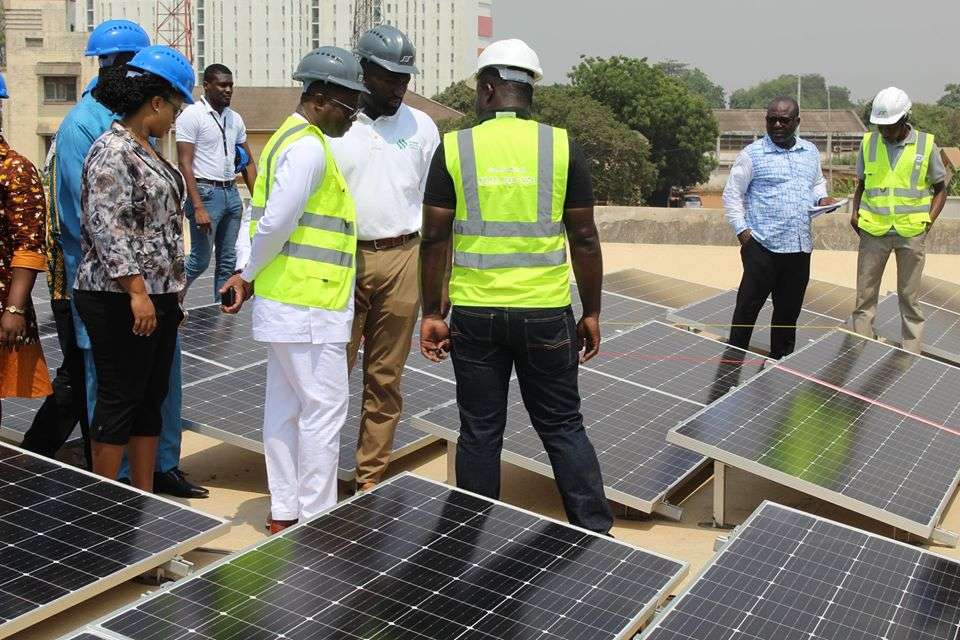
President Mahama framed the renewable energy push as part of a broader national vision to transition toward cleaner and more sustainable power sources.
By combining large-scale solar projects, distributed rooftop installations, mini-grids and off-grid systems, the government aims to reduce reliance on fossil fuels while expanding electricity access.
The expansion of renewable energy capacity not only supports environmental goals but also enhances energy security and resilience against climate variability.
As Ghana advances its energy transition strategy, the projects announced signal a determined shift toward a greener generation mix.
With additional capacity coming online and international financing secured, the country appears poised to strengthen its renewable footprint and extend reliable electricity to more communities nationwide.
READ ALSO: GFZA Courts Perry Ellis for Major Apparel Investment