Ghana’s ambition to become a major petroleum and energy hub in West Africa will depend not only on expanding refining and storage infrastructure, but also on whether the region can remove the regulatory and commercial barriers that still restrict cross-border energy trade.
The issue came into sharper focus at the West Africa Refined Fuel Market Conference in Abuja, where policymakers, regulators, investors and market operators discussed how fragmented national systems are preventing the region from fully capturing the economic value of its energy resources.
For Ghana, the debate is especially relevant. The country is investing in refinery revival, fuel storage, gas infrastructure and petroleum logistics, while positioning itself as a gateway for regional energy commerce.
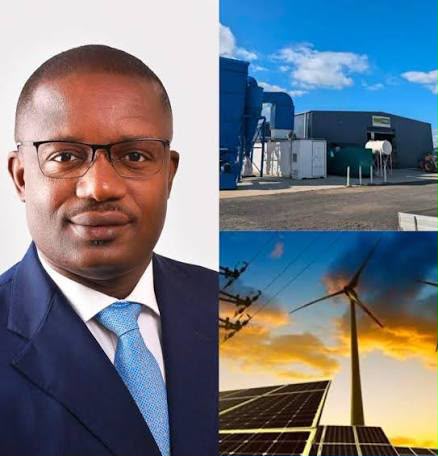
Suleiman Yahyah, Chairman of Rosehill Group Limited Advisory Limited, argued that West Africa is approaching a critical turning point and warned that isolated national approaches could limit the region’s long-term energy potential.
The region must build an efficient cross-border energy framework that facilitates the seamless flow of resources, capital and data.
Suleiman Yahyah
The bigger opportunity is regional, not domestic
The discussion is not simply about producing more fuel.
Ghana’s refining strategy, including the rehabilitation of the Tema Oil Refinery (TOR) and the expansion of Sentuo Oil Refinery, is often presented as a domestic energy-security project.

But the conference highlighted that the commercial value of such infrastructure increases significantly when it is connected to a larger regional market.
A refinery serving only domestic demand has a narrower revenue base than one linked to cross-border trading, storage and distribution networks.
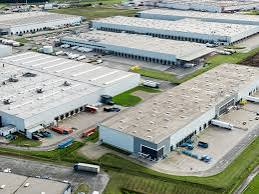
The same applies to fuel depots, marine terminals and gas infrastructure.
The implication is that Ghana’s strongest long-term opportunity may be less about competing with larger producers on volume and more about becoming a regional trading, storage and logistics platform.
Product standards remain a hidden obstacle
One of the most practical issues raised at the conference was the lack of uniform fuel specifications across West African countries.
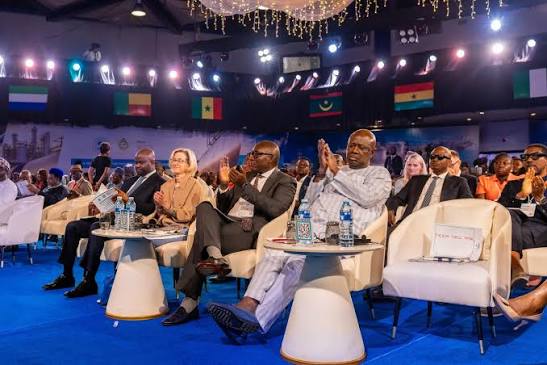
Rabiu Umar, Chief Executive of the Nigerian Midstream and Downstream Petroleum Regulatory Authority (NMDPRA), said differences in product quality create pricing distortions and complicate regional trade.
If you have a 50 PPM product or a 200 PPM product, they do not price the same way.
Rabiu Umar
For Ghana, which has invested in cleaner-fuel standards, regional harmonisation could protect higher-quality products from being undercut by lower-standard imports and make cross-border petroleum trading more efficient.
Ghana’s advantage is not scale
The conference discussions suggest that West Africa is unlikely to evolve into a single dominant energy market controlled by one country.

Nigeria may retain its position as the region’s largest crude and refining centre, but Ghana’s comparative advantages are different: political stability, an established downstream regulatory framework, a strategic Atlantic location and growing storage and logistics capacity.
Those strengths point toward a role as a commercial and logistical connector rather than a volume-driven refining giant.
That distinction matters because energy hubs derive value not only from processing fuel, but also from facilitating trade, financing, storage, information flows and market transactions.
The market around energy may become more valuable
Yahyah argued that some of the world’s most influential commodity-market institutions generate enormous value without owning the underlying oil or gas.

The lesson for West Africa, and particularly for Ghana, is that future gains may increasingly come from market infrastructure, pricing systems, trading platforms, data services, risk management and financial intermediation.
This is a different vision of energy development from the traditional focus on barrels and megawatts alone.
Integration is still far from reality
Despite years of regional discussions, petroleum trade in West Africa continues to face significant obstacles, including customs delays, inconsistent regulations, infrastructure bottlenecks and limited market liquidity.
Umar acknowledged that product standards, infrastructure and trade barriers must be addressed together if meaningful integration is to emerge.
The major focus is to move the region towards an integrated market and ensure that each country leverages its capacity.
Rabiu Umar
For Ghana, this means that domestic investments may not reach their full economic potential unless regional reforms progress alongside national infrastructure expansion.
A strategic question for Ghana
The deeper policy question is whether Ghana should continue planning its energy future primarily around domestic supply and demand, or around participation in a much larger West African market.
A fragmented regional system encourages duplication of infrastructure and limits economies of scale.
A more integrated market would allow countries to specialise according to their strengths and trade more efficiently.
For Ghana, that could mean focusing on refining where competitive, storing where strategic, trading where advantageous and connecting regional energy flows through logistics and finance.
The essence of the debate
The conference was not fundamentally about choosing between national development and regional cooperation.
It was about recognising that the economic value of energy infrastructure increasingly depends on the size and openness of the market it serves.
Ghana can build refineries, storage terminals and gas facilities, but the returns on those investments will be far greater if West Africa develops common standards, freer cross-border trade and stronger market institutions.
The real challenge, therefore, is not whether Ghana can expand its energy infrastructure.
It is whether the region can create a market large enough for that infrastructure to operate at its full commercial and strategic potential.
READ MORE: Iran Rejects Trump’s Claim of Hormuz Control