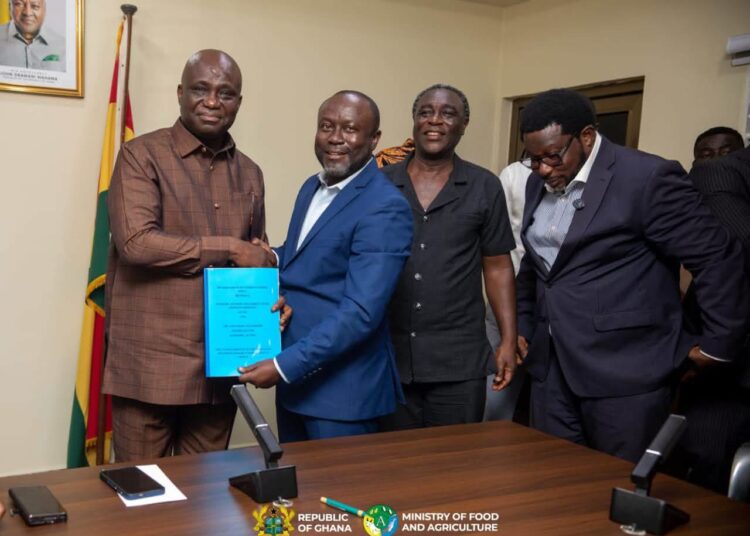
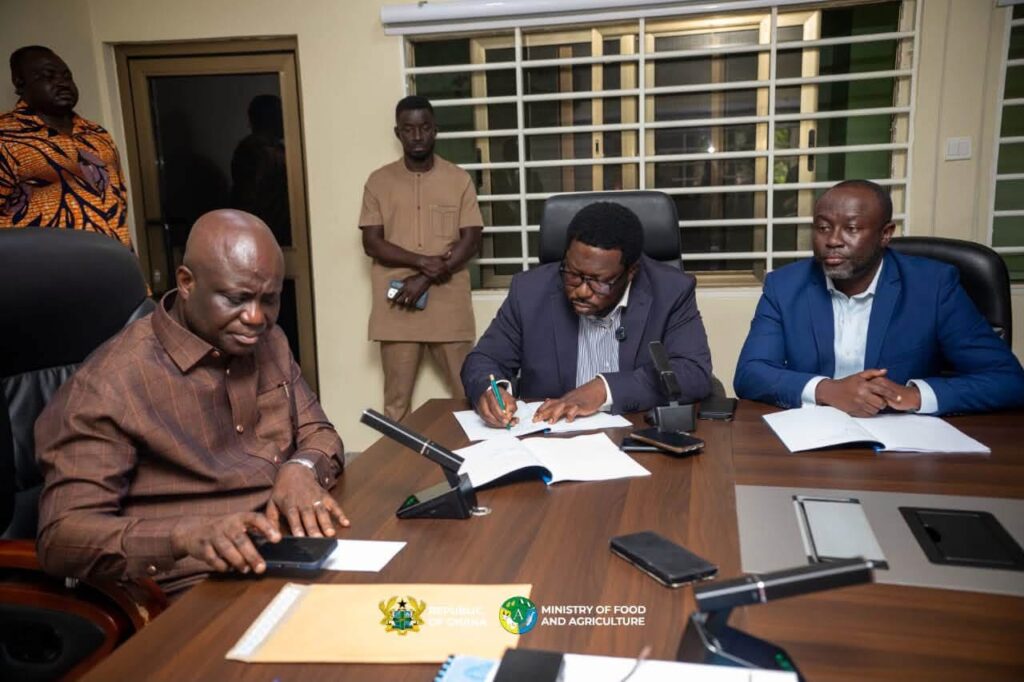
The Ministry of Food and Agriculture (MoFA) has signed a Memorandum of Understanding (MoU) with ABC Oyeasase Yie Ltd for the establishment of a large-scale fertiliser blending plant in Ghana’s Eastern Region, in a move expected to strengthen domestic agricultural input production and support the implementation of the Feed Ghana Programme.
The agreement, signed at the Ministry’s Conference Room in Accra, will pave the way for the development of a facility with an annual production capacity of 500,000 metric tonnes of organic fertiliser.
The project is expected to improve farmers’ access to fertiliser, promote soil health and reduce Ghana’s dependence on imported agricultural inputs. The investment is also expected to create opportunities for local industrial development, employment and value addition within the agricultural sector.
For an agricultural economy where timely access to inputs is critical to productivity, the proposed plant could become an important component of the domestic fertiliser supply chain.
Its planned capacity would provide a significant source of locally produced organic fertiliser for farmers while supporting the government’s broader objective of increasing domestic food production.
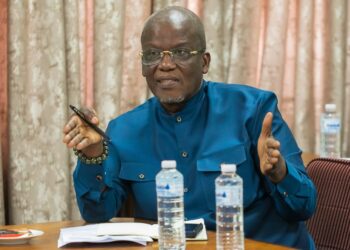
Speaking at the signing ceremony, the Minister for Food and Agriculture, Hon. Eric Opoku, said the Ministry recognised the role of organic fertiliser in improving agricultural production and maintaining healthy soils.
“We appreciate perfectly the benefits of organic fertiliser to food production everywhere. And all over the world, agriculture is shifting towards that direction.’’
Minister for Food and Agriculture, Hon.Eric Opoku
We are prepared to collaborate with ABC Oyeasase Yie Ltd to ensure that adequate quantities of organic fertiliser were produced to support farmers participating in the Feed Ghana Programme.
“We are 100% ready to work with ABC Oyeasase Yie Ltd to ensure that Ghana can produce organic fertiliser in sufficient quantities to support the Feed Ghana Programme.”
Minister for Food and Agriculture, Hon. Eric Opoku
The Minister, however, urged the company to move quickly from the signing of the MoU to the actual implementation of the project, emphasising that the agreement should result in tangible outcomes for Ghana’s agricultural sector.
MoFA to Support ABC Oyeasase Yie Through Feed Ghana Programme
According to information from MoFA, the Ministry is also prepared to take up some of the fertiliser produced by the company to support implementation of the Feed Ghana Programme. This could provide an important institutional market for the proposed facility while helping to connect local fertiliser production directly with national agricultural programmes.
The Feed Ghana Programme is the flagship agricultural transformation programme under Ghana’s Agriculture for Economic Transformation Agenda. It seeks to increase agricultural productivity, improve food security, strengthen agricultural value chains and create employment opportunities.
Government planning documents identify access to inputs, including fertiliser, as a key component of efforts to increase crop production and strengthen domestic food supply.
The 2026 Medium-Term Expenditure Framework for the Ministry of Food and Agriculture indicates that government planned to distribute substantial quantities of fertiliser to farmers as part of the Feed Ghana Programme.
The proposed private-sector investment therefore comes at a time when fertiliser availability remains an important part of efforts to expand agricultural production.
Representing ABC Oyeasase Yie Ltd at the ceremony, Mr. Samuel Adimado said the company’s investment was intended to contribute to sustainable agricultural production and national food security.
“Our intention of establishing the fertiliser blend is to support the national food security agenda, which will feed into our sustainable agriculture production strategy.”
Representative of ABC Oyeasase Yie Ltd, Mr, Samuel Adimako
The company indicated that the fertiliser would be developed with both crop productivity and soil health in mind.
It also plans to source raw materials from the West African sub-region, a strategy that could create opportunities for regional agricultural value chains while reducing reliance on imported finished fertiliser products.
US$50 Million Fertiliser Project for West Africa
The investment has also been reported as a US$50 million project, with the facility expected to serve not only Ghanaian farmers but potentially the wider West African market once operational.
Beyond fertiliser supply, the project is expected to have implications for employment and industrial development. The investment could create direct and indirect jobs in manufacturing, logistics, raw-material sourcing, quality control, distribution and agricultural services.
Young people and agriculture graduates have been identified as potential beneficiaries of employment opportunities associated with the project. This aligns with the Feed Ghana Programme’s broader emphasis on linking agricultural transformation with employment and private-sector development.
MoFA has previously described the programme as an initiative designed to generate employment across farming, processing and agribusiness activities.
The project could also contribute to import substitution, as increased domestic production of fertiliser would reduce the need to depend entirely on external suppliers.
A stronger local fertiliser industry could potentially improve supply-chain resilience and provide greater opportunities for Ghanaian businesses involved in agriculture and manufacturing.
However, the economic and agricultural benefits of the investment will depend on the timely construction and operationalisation of the plant, the quality and affordability of its products, access to raw materials, distribution networks and sustained demand from farmers.
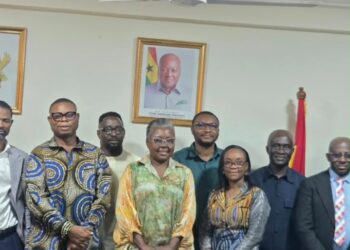
The MoU was witnessed by Mr. Paul Siameh, Chief Director of MoFA, while Mr. Mark Nyantakyi, Managing Director of ABC Oyeasase Yie Ltd, was also present at the signing.
The partnership between MoFA and ABC Oyeasase Yie Ltd therefore represents a move towards deeper private-sector participation in Ghana’s agricultural input industry.
If implemented as planned, the 500,000-metric-tonne facility could add substantial domestic production capacity while supporting the government’s objectives of improving input access, strengthening soil health, creating jobs and enhancing food security under the Feed Ghana Programme.
READ ALSO:GNPC Supplies TOR With 950,000 Barrels Of Sankofa Crude