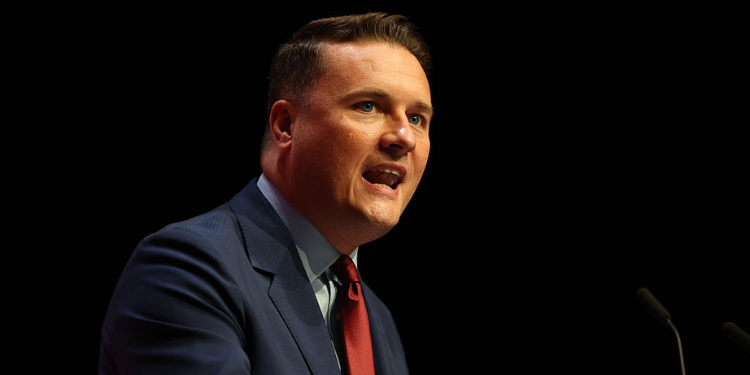
Defence Secretary Wes Streeting has warned that Britain faces the greatest risk of war in his lifetime, identifying Russia and President Vladimir Putin as the biggest threat to the country’s security.
Speaking ahead of Labour’s conference in Liverpool, Streeting indicated that the government’s decision to deliver the biggest sustained increase in defence spending since the end of the Cold War was directly linked to the changing security environment.
“Without a shadow of a doubt, the biggest threat facing Britain is Russia and President Putin. And so, the sobering reality is that we face a greater risk of war than we’ve done at any point in my lifetime.”
Wes Streeting
Streeting argued that Britain currently possesses the capabilities required to keep the country safe but cautioned that maintaining the same level of defence preparedness for several years would leave the country increasingly exposed.
He added, “Strength builds deterrence, and deterrence makes it far less likely that we will end up in a place we don’t want to be which is at war with Russia or, indeed, anyone else.”
The defence secretary linked the heightened assessment directly to Russia’s continued military activity in Europe and what he described as Putin’s imperial ambitions.
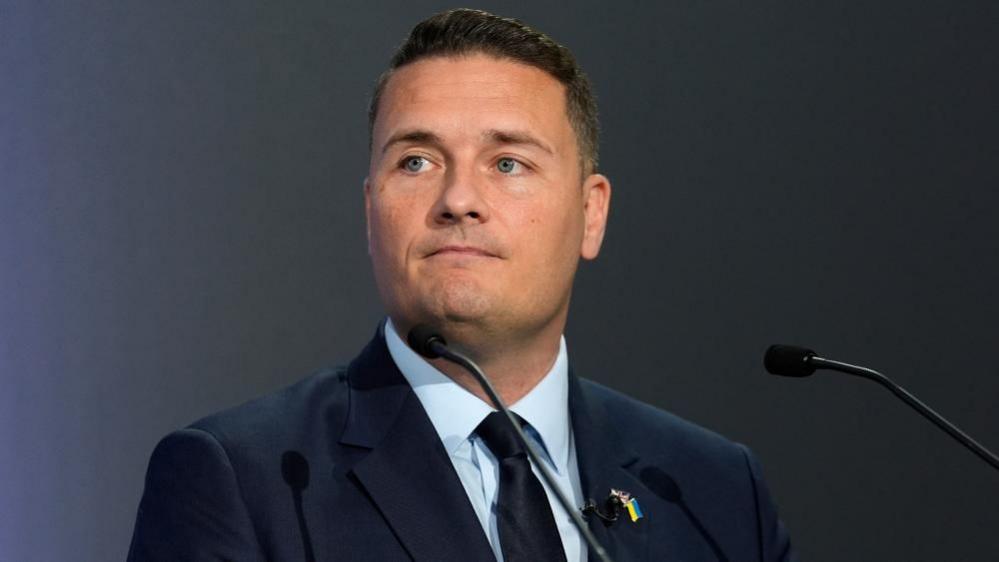
“We’ve got war in our continent. We’ve got a Russian President who has imperialist ambitions, who is constantly testing Britain’s defences, NATO defences and testing the strength of our alliances.”
Wes Streeting
Streeting’s remarks form part of a wider shift in Britain’s defence posture as the government seeks to respond not only to conventional military threats but also to activities below the threshold of open conflict.
The government has described Russia as an “enduring and significant threat” to Britain and British interests worldwide, with officials warning that Russian state actors and proxies are targeting organisations considered important to national security and everyday life.
Defence companies and providers of critical national infrastructure are now due to receive closed-door briefings on the risks posed by Russia.
The briefings will focus on threats including cyberattacks, sabotage and disinformation, with officials seeking to improve the ability of businesses and infrastructure operators to detect and withstand hostile activity.
Royal Navy Warns of Russian Pressure in North Atlantic
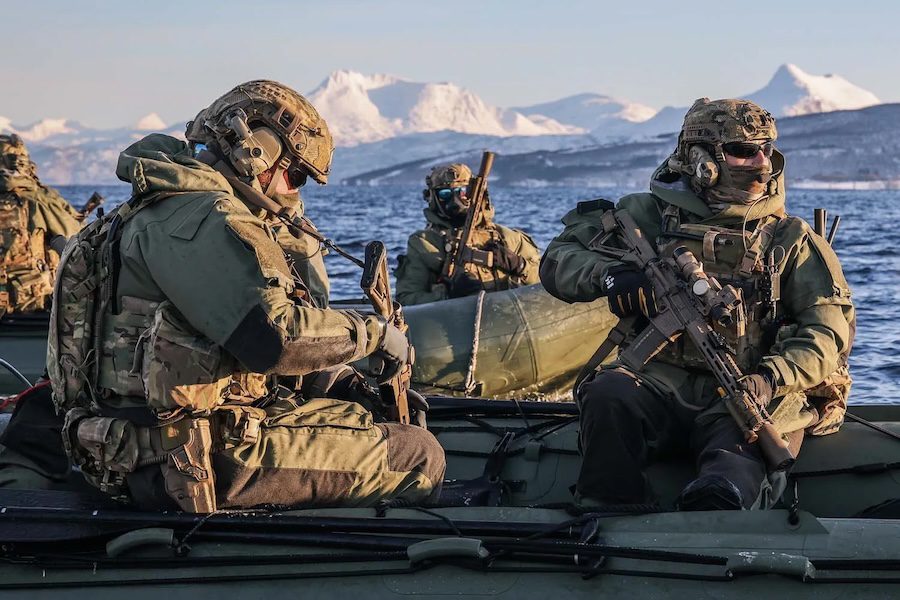
The warnings from Streeting come days after First Sea Lord General Sir Gwyn Jenkins identified Russia as the greatest security threat facing Britain and called for greater investment in the country’s maritime capabilities.
Speaking at Admiralty House in London, Jenkins argued that the threat was most acute in the North Atlantic and High North, areas he described as vital to Britain’s security and economic survival.
“The reason why we need this is simple: the greatest threat to our security today is Russia. That threat is felt most acutely in the maritime domain in the North Atlantic, in the High North.”
Sir Gwyn Jenkins
Britain remains heavily dependent on maritime routes for the movement of energy, food, raw materials and exports. Undersea infrastructure also carries communications and other services essential to the functioning of the economy.
Jenkins described the northern approaches to Britain as effectively part of the country’s security frontier.
“The Norwegian Sea, the Arctic and the northern approaches are not distant theaters. They are the gateway to our backyard; they form our open sea border with Russia. They are where British security, NATO and European stability come together. And it is also where the JEF makes an increasingly important contribution.”
Sir Gwyn Jenkins
The Joint Expeditionary Force, led by Britain, brings together 10 northern European countries: Denmark, Estonia, Finland, Iceland, Latvia, Lithuania, the Netherlands, Norway, Sweden and the UK to strengthen security cooperation across land, air and maritime domains.
The coalition is committed to maintaining a maritime presence in the High North, North Atlantic and Baltic regions in response to increased Russian activity.
“We have reached a dangerous paradox. The sea, the Atlantic, has arguably never mattered more to Britain. We are certainly much more reliant on it than we were in the 1930s. And yet it has become increasingly invisible in the public’s mind.”
Sir Gwyn Jenkins

According to the Royal Navy, Russia possesses advanced submarines that are difficult to track, long-range precision weapons and specialist systems designed to operate deep underwater.
Jenkins added that Russian activity around Britain’s maritime domain had consequently increased the resources required to monitor Russian vessels and the so-called shadow fleet.
According to him, an average of two Royal Navy warships are deployed each week to conduct such monitoring activities.
He nevertheless cautioned that the assessment should not be interpreted as an assertion that war is inevitable.
Instead, the Royal Navy’s response is centred on strengthening deterrence, improving surveillance and ensuring that Britain and its allies can respond quickly if circumstances deteriorate.
READ ALSO: It Was Humiliating: Mahama On Why Cabinet Threw Out US Health Compact