
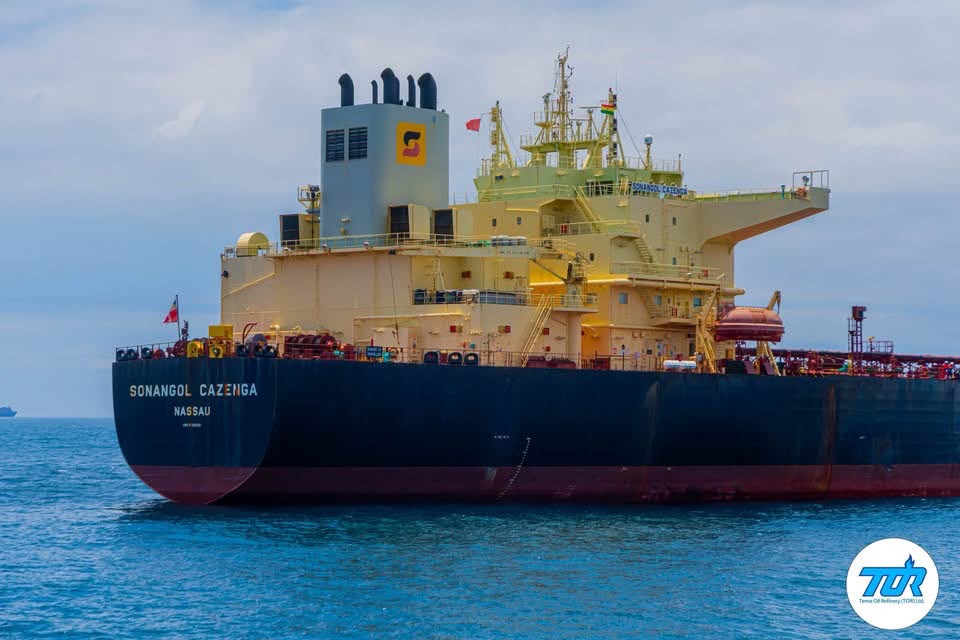
The Ghana National Petroleum Corporation (GNPC) has supplied about 950,000 barrels of crude oil from the Sankofa-Gye Nyame field to Tema Oil Refinery (TOR), strengthening the link between Ghana’s upstream production and domestic refining.
The shipment, delivered through a commercial arrangement between the two state institutions, marks the first time TOR has received a parcel of crude from the Sankofa field for refining, according to TOR’s management.
The development provides TOR with access to Ghanaian crude while creating a direct domestic outlet for locally produced petroleum resources.
Linking Upstream Production To Refining
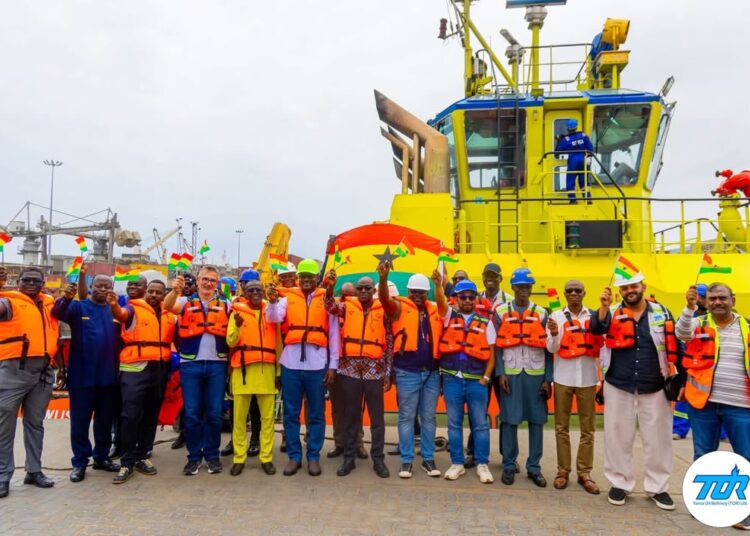
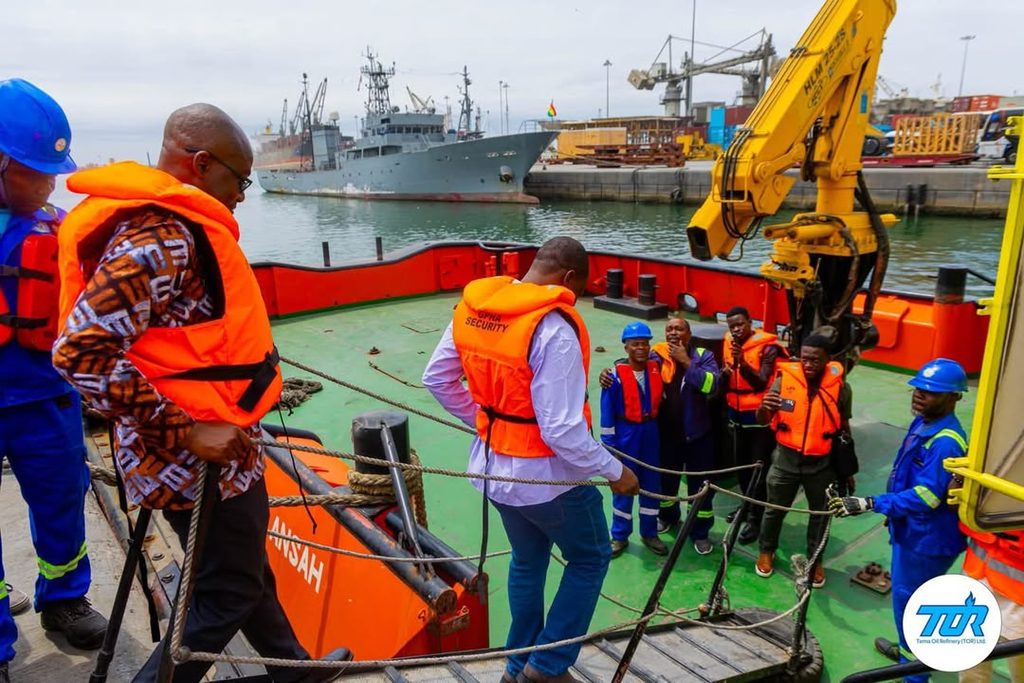
GNPC Chief Executive Kwame Ntow Amoah joined TOR Managing Director Edmond Kombat and other industry stakeholders to inspect the vessel carrying the crude shipment. The crude was produced from the Sankofa-Gye Nyame field under the Offshore Cape Three Points (OCTP) project and supplied through GNPC for processing at TOR.

For Ghana’s petroleum sector, the significance of the arrangement extends beyond the volume involved. It creates a clearer connection between crude produced offshore, refining activity at Tema and the eventual supply of petroleum products to consumers in the domestic market.
TOR said the crude would be processed into fuel products for the Ghanaian market, supporting efforts to increase local value addition. The refinery’s Managing Director, Edmond Kombat, said the arrangement demonstrates what can be achieved when state institutions coordinate their activities around Ghana’s energy-security objectives.
“This is the first time that a Ghanaian refinery would receive a parcel of crude oil from the Sankofa Field for refining. The receipt of this crude from GNPC is an important opportunity for TOR to strengthen its operations while contributing to Ghana’s broader objective of building a resilient and sustainable petroleum industry.”
TOR Managing Director Edmond Kombat
Domestic Crude Creates A Market For Ghanaian Production
The arrangement also addresses one of the structural challenges facing Ghana’s petroleum industry: ensuring that domestic crude production generates greater value within the country.
Producing crude locally does not automatically mean that the economic value associated with that resource is retained domestically. The availability of a functioning refinery provides an additional route through which locally produced crude can be transformed into products for domestic consumption.
For GNPC, the Sankofa supply therefore provides a dependable domestic market for Ghanaian crude. It also supports the Corporation’s broader role in connecting upstream resources with other parts of the petroleum value chain.
The partnership comes as Ghana seeks to strengthen domestic refining following the restart and continued operation of TOR. The refinery has been undergoing efforts to restore and expand its operational capacity, making reliable access to crude an important consideration for sustained operations.
TOR Revival Gains Upstream Support
The Sankofa shipment adds an upstream dimension to TOR’s revival. A refinery requires a consistent and commercially viable supply of crude to operate sustainably.
Establishing relationships with domestic producers and aggregators can therefore reduce reliance on purely external crude-sourcing arrangements, while also creating opportunities for Ghanaian production to feed domestic refining.
TOR described the shipment as another milestone in its ongoing operations and said the development demonstrates the potential for stronger cooperation between upstream and downstream petroleum operators.
Mr Kombat said the partnership could support improved crude supply, refinery operations and value creation from Ghana’s petroleum resources. The development also comes against the backdrop of efforts to make Ghana’s downstream petroleum industry more resilient to international supply and price disruptions.
Where commercially viable domestic crude can be processed locally, part of the value chain can be anchored within Ghana, although the overall benefits will still depend on refinery efficiency, crude economics, financing, product demand and the refinery’s ability to sustain operations.
Energy Security Depends On Value-Chain Coordination
The shipment illustrates why Ghana’s energy security cannot be considered solely in terms of crude production or fuel imports. The country can produce crude and still remain heavily exposed to international markets if domestic refining capacity is unavailable or unable to operate consistently.
Similarly, restarting a refinery without securing sustainable crude supply would leave its long-term operations vulnerable. The GNPC-TOR arrangement brings the two sides of that equation closer together by creating a commercial pathway from domestic production to domestic processing.

“The partnership demonstrates what can be accomplished when strategic state agencies work together,” TOR said, linking the shipment to efforts to strengthen domestic refining and energy security.
The arrangement could also provide a basis for deeper cooperation between GNPC and TOR. The two institutions are reportedly discussing further areas of collaboration, with the stated objective of generating mutual benefits while retaining greater value from Ghana’s petroleum resources for the domestic economy.
Retaining More Value From Petroleum Resources
The shipment aligns with the government’s stated objective of strengthening the connection between Ghana’s upstream, midstream and downstream petroleum activities. Rather than treating crude production and refining as separate parts of the industry, the arrangement places emphasis on connecting the different stages of the value chain.
That approach has implications for Ghana’s import dependence. Refining domestic crude does not eliminate the need for imported petroleum products, particularly where domestic refining capacity and crude characteristics do not fully match national demand.
However, sustained domestic refining can provide another source of supply and potentially reduce some exposure to international refined-product markets. The success of that model will ultimately depend on whether commercial arrangements remain viable beyond individual cargoes.

For TOR, the immediate priority will be converting the crude shipment into reliable refinery output while maintaining operational continuity. For GNPC, the arrangement demonstrates the potential value of creating domestic markets for Ghana’s upstream resources.
The 950,000-barrel shipment therefore represents more than a single crude cargo. It provides a practical test of how Ghana can connect its own petroleum resources to domestic refining and move towards a more integrated petroleum value chain.
READ ALSO: Bawah Mogtari: Mahama’s UN Speech Held A Mirror To Africa’s Leaders