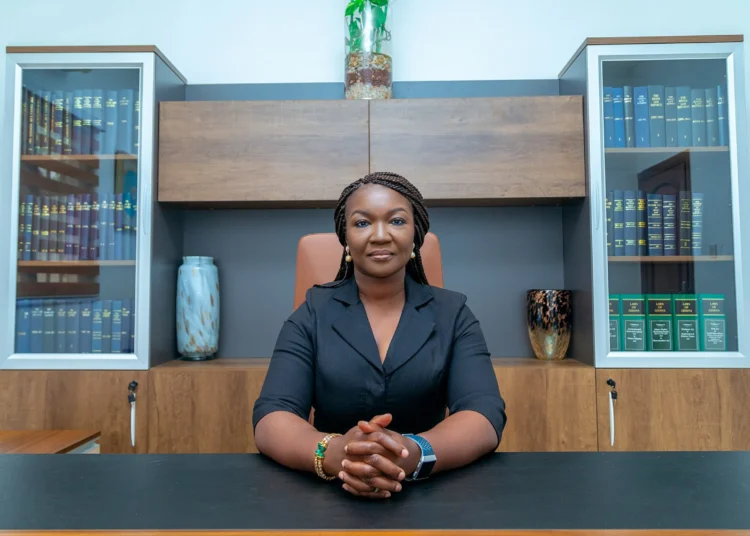
Presidential Aide and Senior Advisor Joyce Bawah Mogtari says President John Dramani Mahama’s address to the United Nations General Assembly turned as sharp a mirror on African leaders as on the international system.
She set out that reading in a reflection published after the President delivered Ghana’s national statement on Thursday, 24 September 2026, at the 81st Session in New York.
Her argument is that the speech’s organising idea, belonging, carries obligations in both directions. Governments that demand equity from the international order, she contends, must practise it at home, and citizens carry their own share of the burden.
From Becoming To Belonging
Bawah Mogtari opened by setting the address against a familiar theme in women’s public discourse, the language of becoming more and becoming better, before arguing that the President spoke to something equally fundamental.
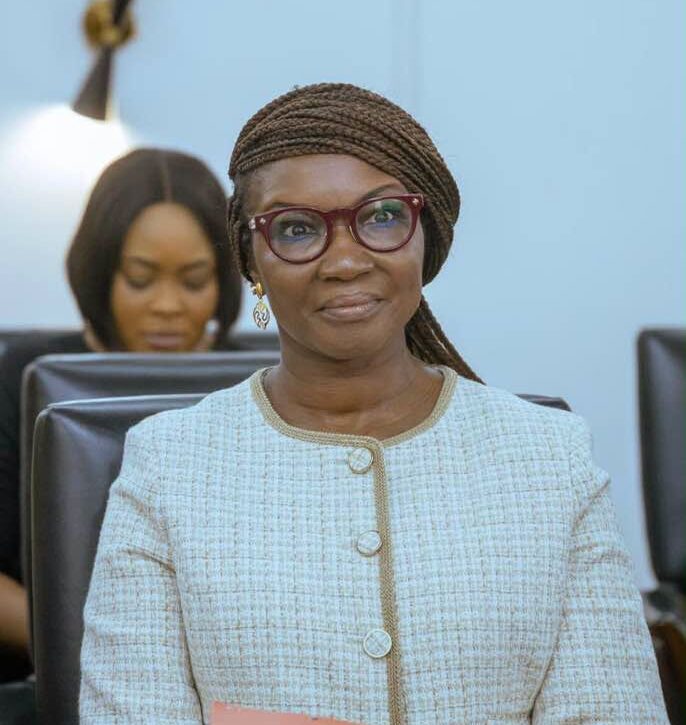
“Belonging, in its widest and deepest sense, is about the recognition of our shared humanity,” she wrote, describing it as the principle that every human being, black or white, male or female, is equal in dignity and worth.
From that she drew a conclusion about institutions as much as individuals. “No person, no nation and certainly no institution should consider itself superior to another.”
The Mirror Turned Homeward
The part of her reflection that moves beyond commentary is what she identifies as the address’s turn toward Africa itself. African leaders, she wrote, have a responsibility to do right by their own people, ensuring national resources are distributed fairly, and citizens receive the full benefit of the opportunities available to their countries.
She put the obligation plainly. “Fairness and equity must not only be demanded from the world; they must also be practised at home.” That formulation tracks an argument President Mahama has been making all week.
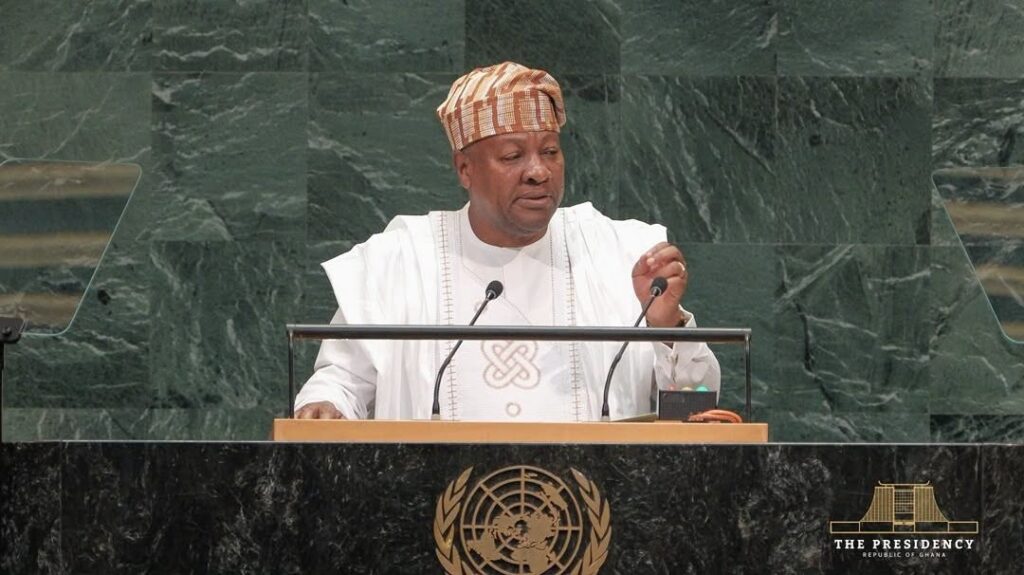
At the Accra Reset event on Monday, he told fellow leaders that moving power from boardrooms in Geneva or Washington into an unaccountable ministry in Accra or Abuja would produce no sovereignty at all, and that control must be earned through domestic accountability.
Read together, the two statements describe a bargain. Africa’s case for a larger share of global authority is weakened by every government that mismanages what it already controls.
The Inequalities She Lists
Bawah Mogtari catalogued the imbalances the President addressed, naming debt negotiations, representation on the Security Council, global trade, health financing and the manner in which conflicts and serious matters between states are handled.
Those map onto the demands in the address itself, where President Mahama called for permanent African representation on the Security Council, argued that developing countries borrow at rates far above those available to industrialised nations, and pressed for greater equity, transparency and accountability in international institutions.
Slavery And The Gravest Crime
On the transatlantic slave trade, she restated the principle behind Ghana’s campaign. “Human beings must never be trafficked, sold for profit, used as collateral or reduced to mere chattels,” she wrote.
The recognition she refers to came on 25 March this year, when the General Assembly adopted Resolution 80/250 by 123 votes to three, declaring the trafficking of enslaved Africans and racialised chattel enslavement the gravest crime against humanity.

President Mahama returned to it on Thursday, arguing that acknowledgement must now produce structural change in trade, debt and credit ratings.
Mottley And The Caribbean Voice
Bawah Mogtari reached across the Atlantic for a second voice, citing Barbadian Prime Minister Mia Mottley’s suggestion that the world must learn to live and let live so that every human being can truly belong regardless of race or circumstance.
The reference is apt. Prime Minister Mottley has been among the most forceful advocates of both reparatory justice and reform of development finance, and CARICOM supplied part of the majority behind the March resolution.
A Charge To Citizens
Her closing section widened the obligation beyond governments. “Let us be more patriotic. More nationalistic. More modest in our expectations and more generous in our contribution,” she wrote, urging Ghanaians to demand more of themselves and deliver more for their country.
She ended with a reformulation of the speech’s central idea. “Belonging is not only about having a place at the table. It is also about ensuring that others have a place there too.”
The domestic half of that argument is the harder one to act on. Demanding a Security Council seat costs a government nothing at home, while distributing national resources fairly requires choices that create losers inside the country, making them.
Whether Bawah Mogtari’s framing is adopted by others in government, or remains an adviser’s reflection, will say more than the reception the speech received in New York.
READ ALSO: Ghana Banks Near Crucial NPL Target With August Improvement