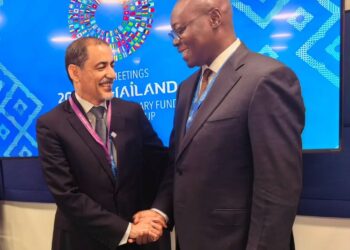
Ghana and other developing economies face mounting pressure to create employment opportunities as the global jobs market prepares for an unprecedented influx of young people, with World Bank President Ajay Banga warning that 1.2 billion young people will enter the workforce over the next 10 to 15 years while only about 400 million jobs are expected to be available.
The warning raises fresh concerns about Ghana’s ability to generate enough decent and sustainable jobs for its growing working-age population, particularly as the country pursues economic recovery, private sector expansion and a stronger foundation for long-term growth.
Speaking at the 2026 World Bank/International Monetary Fund Annual Meetings Plenary in Bangkok, Thailand, Banga stressed the urgency of addressing the growing mismatch between the number of young people seeking employment and the opportunities available to absorb them.
The figures point to a potential global shortfall of approximately 800 million jobs, highlighting the scale of the challenge confronting governments, development institutions and private businesses.
For Ghana, where youth employment remains a major economic and social concern, the warning reinforces the importance of translating economic growth into productive jobs, stronger household incomes and opportunities for young people entering the labour market.
Ghana’s Employment Challenge Meets a Global Jobs Crunch
The World Bank President warned that the generation entering the workforce over the coming decade will play a decisive role in shaping the global economy.
“This generation will shape the next century,” Banga said, underscoring the importance of decisions being taken by policymakers and development partners today.
He added that “the choices we make today will help determine how”.
The warning comes at a time when countries such as Ghana need to expand employment opportunities while managing competing demands on public resources. Although economic growth can strengthen business activity and improve government revenues, its impact on living standards depends partly on how effectively it creates jobs and raises productivity.
Ghana’s challenge is not simply to increase the number of available positions. The country must also create opportunities that provide reliable incomes, develop relevant skills and enable workers to contribute meaningfully to economic production.
A growing mismatch between the skills young people possess and those employers require could further complicate the situation, particularly if investment and business expansion fail to keep pace with the number of new entrants into the labour market.
Banga identified job creation and the effective use of limited resources as challenges that must be addressed together.
“Those are the twin challenges we have been working to address: Making scarce resources go further… while helping countries create jobs at scale. They must be addressed together”, he mentioned.
World Bank Pushes Reforms to Accelerate Development
Beyond highlighting the employment threat, Banga outlined reforms the World Bank has undertaken to improve its ability to support countries seeking stronger economic outcomes.
He said the institution had reduced project preparation time from 19 months to nine months, replaced 153 scorecard measures with 22 focused on impact, and increased pay-for-results financing from about one-third to half.
The Bank has also brought its public and private sector teams together around country-led strategies and reengineered its balance sheet to create more than $100 billion in additional International Bank for Reconstruction and Development lending capacity over a decade.
These changes could be significant for developing economies that need infrastructure, financing and institutional support to encourage investment and expand employment.
In Ghana, improved access to development financing could support projects that strengthen electricity supply, transport networks, water systems and digital connectivity. These investments can reduce operating costs for businesses and create conditions for companies to expand their activities and hire more workers.
However, the economic benefits will depend on how effectively financing is directed towards projects that generate lasting productivity gains and employment opportunities.
Banga also disclosed that the number of projects on the World Bank’s digital co-financing platform had tripled in two years to approximately 250 projects, seeking $138 billion in financing.
“We are cutting duplication by relying on each other’s work with the Asian Development Bank, Inter-American Development Bank and EBRD—and expanding that model”.
Private Investment Emerges as a Major Jobs Driver
The World Bank’s strategy places substantial emphasis on mobilising private capital, recognising that public financing alone cannot meet the enormous investment requirements associated with global job creation.
Banga said the institution’s Jobs Council had drawn on experiences across countries and sectors to identify policies and programmes capable of generating more and better jobs.
The resulting strategy rests on three pillars: physical and human infrastructure, regulatory and policy certainty, and scale.
Explaining the first pillar, he stressed that businesses need reliable electricity, water, transport and digital connections, while people require access to health services, education and skills development.
Last year, the World Bank committed $40 billion, representing nearly one-third of its financing, to these foundations.
For Ghana, these priorities are particularly relevant as businesses seek dependable infrastructure and a predictable policy environment to support expansion. Greater investment in technical education, vocational training and digital skills could also help prepare young people for changing labour market requirements.
The second pillar, regulatory and policy certainty, is equally important. Investors are more likely to commit capital when regulations are predictable, contracts are respected and economic policies provide a stable basis for long-term planning.
The third pillar, scale, reflects the need to expand successful investment models and bring more private financing into development.
Ghana Needs Growth That Delivers Jobs
Banga’s figures illustrate the increasing importance of private investment in addressing employment challenges across developing economies.
In 2022, before the World Bank’s work plan began, the institution mobilised roughly $35 billion in private capital. Last year, that amount reached $112 billion, representing more than a threefold increase.
Alongside its own financing, total financing exceeded $230 billion.
“That is how we bring more private capital into development”, he explained.
For Ghana, the broader economic implications extend beyond the volume of capital mobilised. The crucial consideration is whether investment supports productive businesses, strengthens local industries and creates employment on a scale that matches the needs of a growing workforce.
Public spending on infrastructure, improvements in the business environment and private sector investment must therefore work together to expand the economy’s capacity to absorb new workers.
The World Bank’s warning places renewed urgency on the task facing policymakers. With 1.2 billion young people expected to enter the global job market against approximately 400 million projected jobs, the consequences of failing to create opportunities could extend well beyond unemployment figures.
Ghana’s ability to turn economic progress into widespread employment will remain central to its long-term development ambitions, making investment, skills development and job-intensive growth increasingly important in the years ahead.
READ ALSO: Oil Nears $110, Putting Ghana’s Fuel Relief at Risk